In the Wake of Rebecca

Polridmouth, Cornwall

October 31 2014


‘Last night I dreamt I went to Manderley again…’

An unmistakable opening line.

Few with a knowledge of twentieth century literature would fail to recognise this as the first sentence penned by Daphne du Maurier in her masterpiece ‘Rebecca’.

.’du Maurier

This tale, set on the Cornish coast, is as deep and dark as its oceans, with a narrative crafted around stormy nights and equally tempestuous relationships.

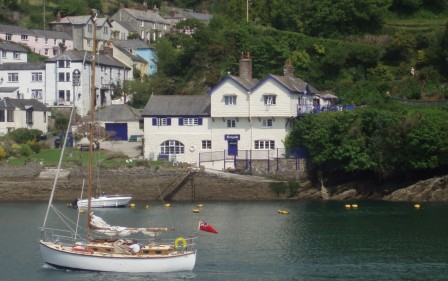
Du Maurier fell in love with Cornwall when her parents bought Ferryside,  a cottage adjacent to the slipway at Boddinick and facing across the estuary to Fowey beyond. Although intended as a holiday home, the young Daphne soon shunned her Hampstead family mansion, preferring to stay by the sea and embark upon a literary career.
OLYMPUS DIGITAL CAMERA


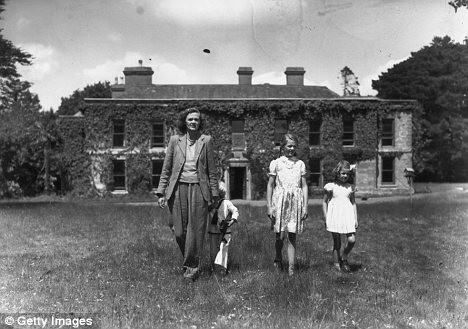
Years later she moved to Menabilly, inspiration for the fictional Manderley, and the starting point for my pilgrimage into the world of du Maurier and Rebecca.
menabilly


‘No-one would ever hurt Manderley. It would lie always in it’s hollow like an enchanted thing, guarded by the woods, safe, secure, while the sea broke and ran and came again in the little shingle bays below.’

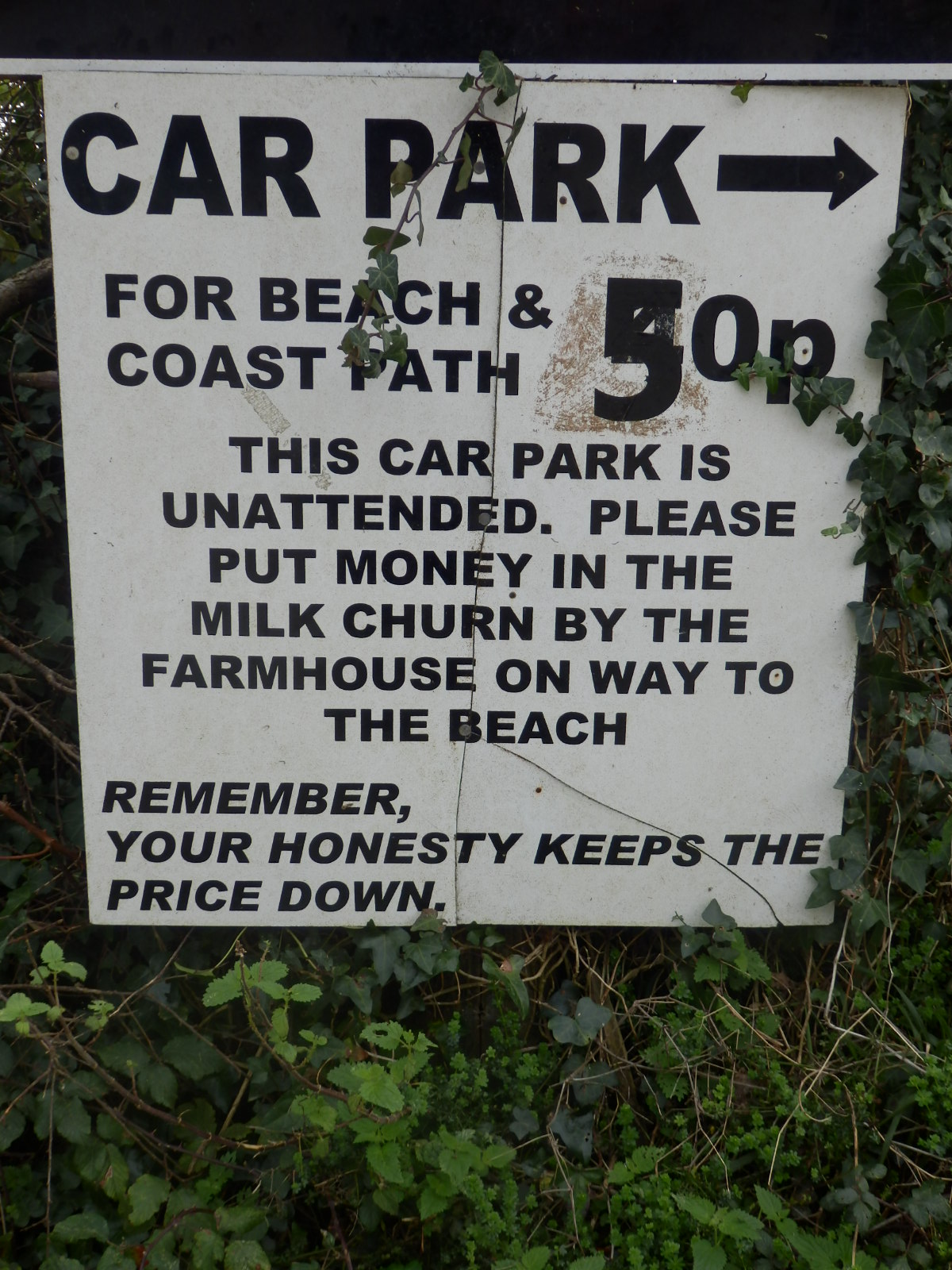
Parking in a field on the very boundaries of Menabilly and as the autumnal late afternoon sunshine began to falter, I started my 3/4 mile descent towards the bays, passing fields, farms and a quaint call to honesty …
 

OLYMPUS DIGITAL CAMERA


It had been a balmy day; at 18 degrees the warmest Halloween on record, but the wind was freshening and a brackish tang blew in from the sea.

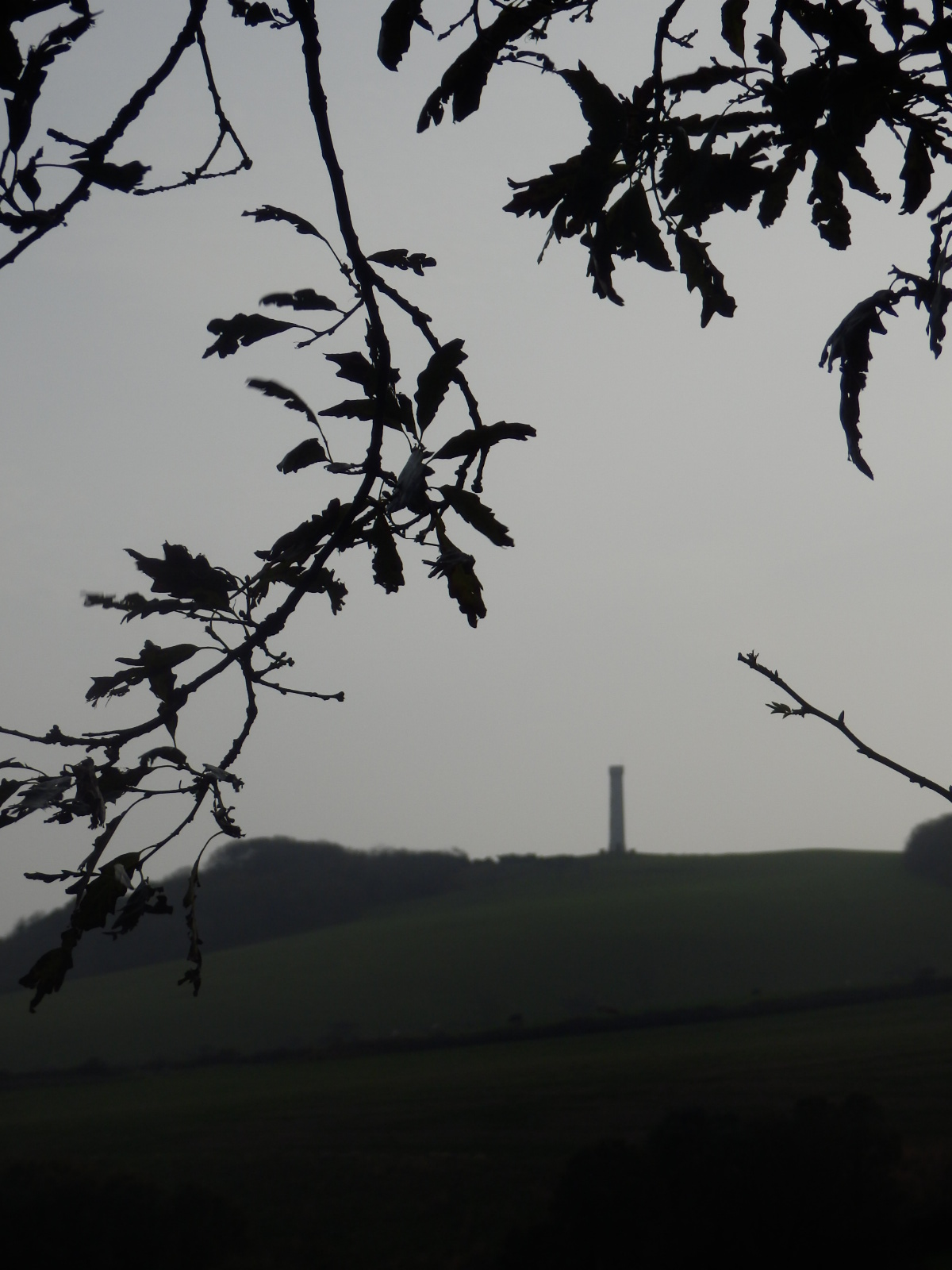
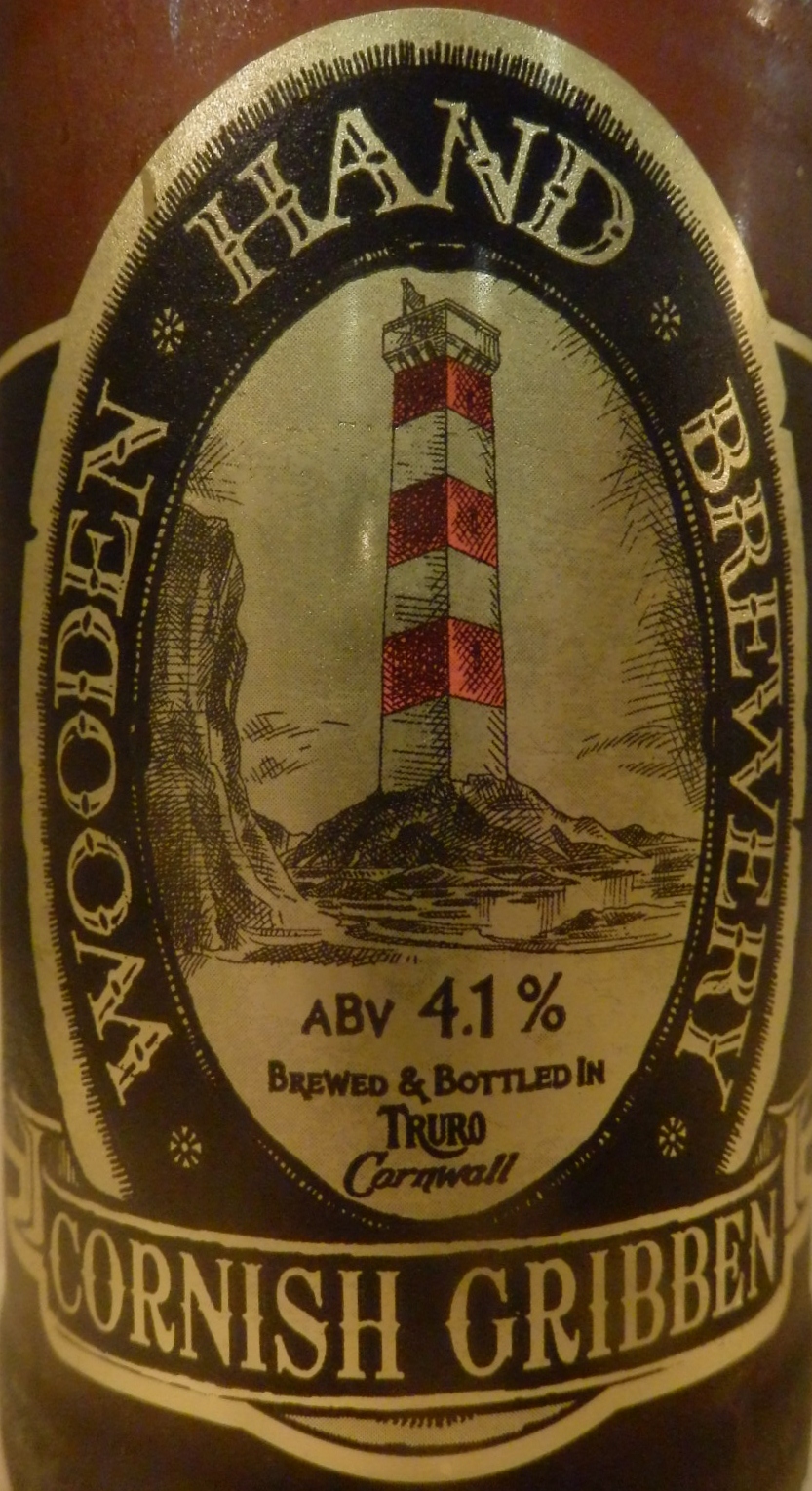
Soon the red and white stripes of the Gribben (or Gribbin) came into view. This commanding tower, 26m high, was erected by Trinity House in 1832 as an aid to navigation. Although never lighted, its bright colours served as a daymark to shipping, identifying Gribben Head – (Cornish: an Gribyn) – the promontory separating St Austell Bay from the Fowey estuary.

In their latter years, Daphne and her soldier husband Frederick ‘Boy’ Browning, would stride out to this headland on most days, scaling a steep clifftop path to savour the dizzying vista.
   OLYMPUS DIGITAL CAMERA               OLYMPUS DIGITAL CAMERA

The bay was a place I knew well through both film and page, but I had never before set foot on its sands. This was a journey I had yearned to make, but still I feared disappointment. Would it be the secluded, almost mystical cove of my mind’s eye or a sewage outlet heaped with rotting kelp? ( I had read that it can be weedy here.)

I need not have fretted, for Polridmouth (Pridmouth to the locals) was as perfect as I had hoped and imagined:

OLYMPUS DIGITAL CAMERA

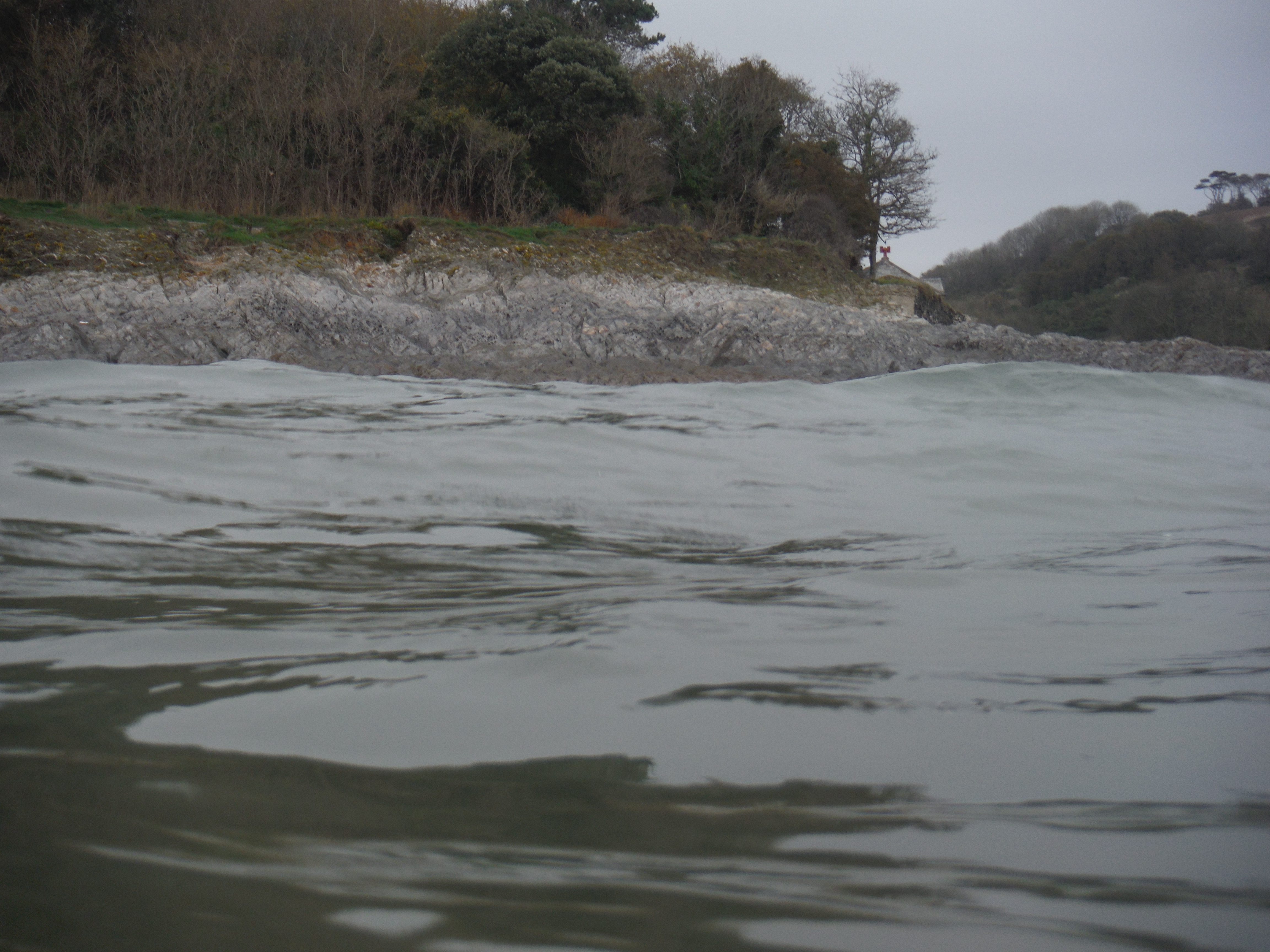
Ahead spread a wide, horse-shoe bay, bisected by a rocky outcrop and bordered by cliffs twisted into dramatic convulutions. The tide was at half ebb, spume drifted across the sand, shingle and shale of the beach. Wavelets rode across emerging rocks.

OLYMPUS DIGITAL CAMERA

Nestling between woodland and sea, like the wading curlews, lay a lone cottage; inspiration for the fateful fisherman’s hut in Rebecca.
DSCF3414

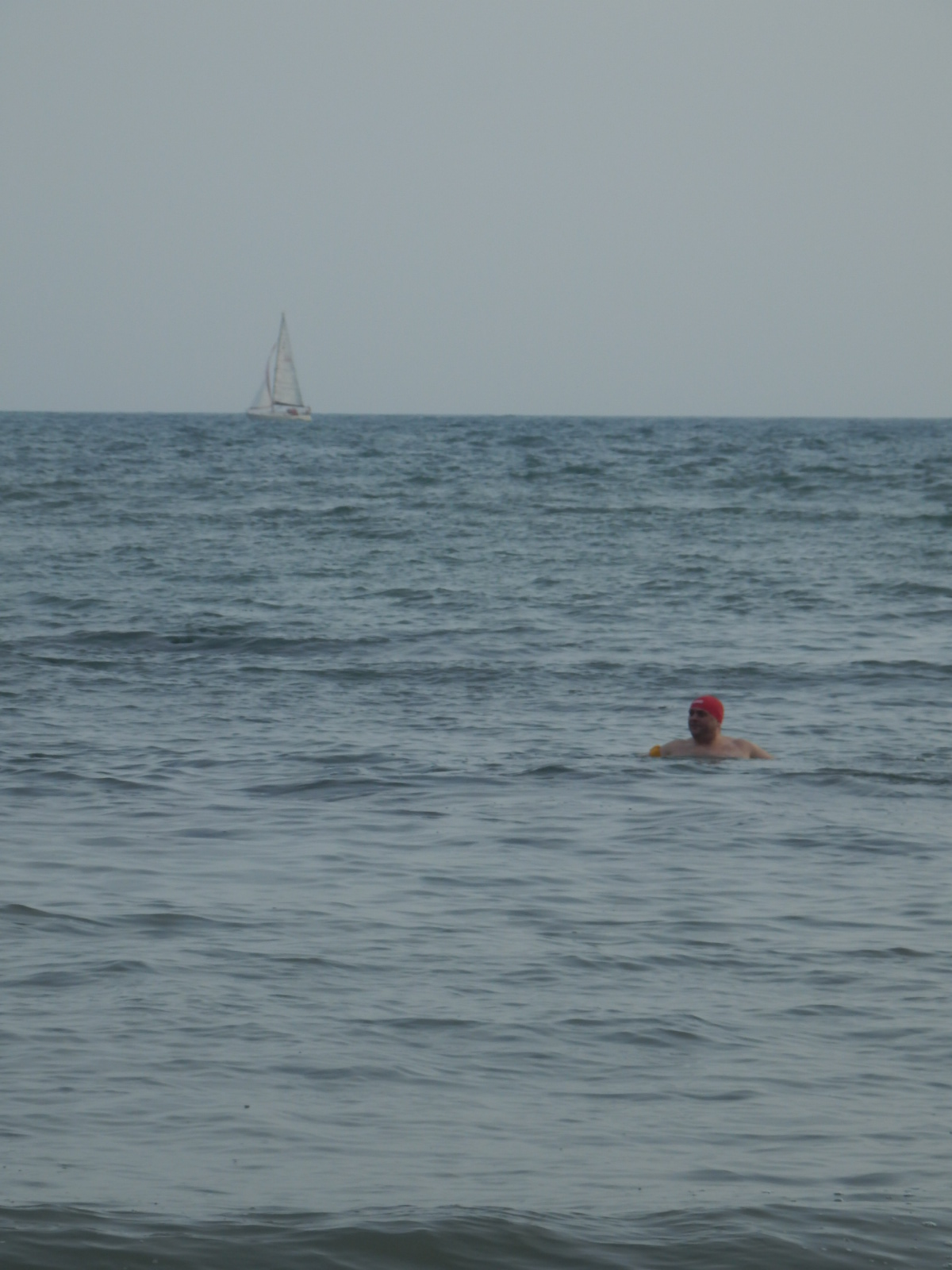
Donning the red cap I use for identification when swimming alone in the sea, I strode into the waves, through water that still clung to the heat of summer, and struck out across the bay.

Shafts of sunlight sparked across the gathering swell, portends to the force 8 gale that was fast approaching from the west. The Gribben became a distant silhouette as three, four, then six ducks crossed the twilit sky in noisy formation.

DSCF3397

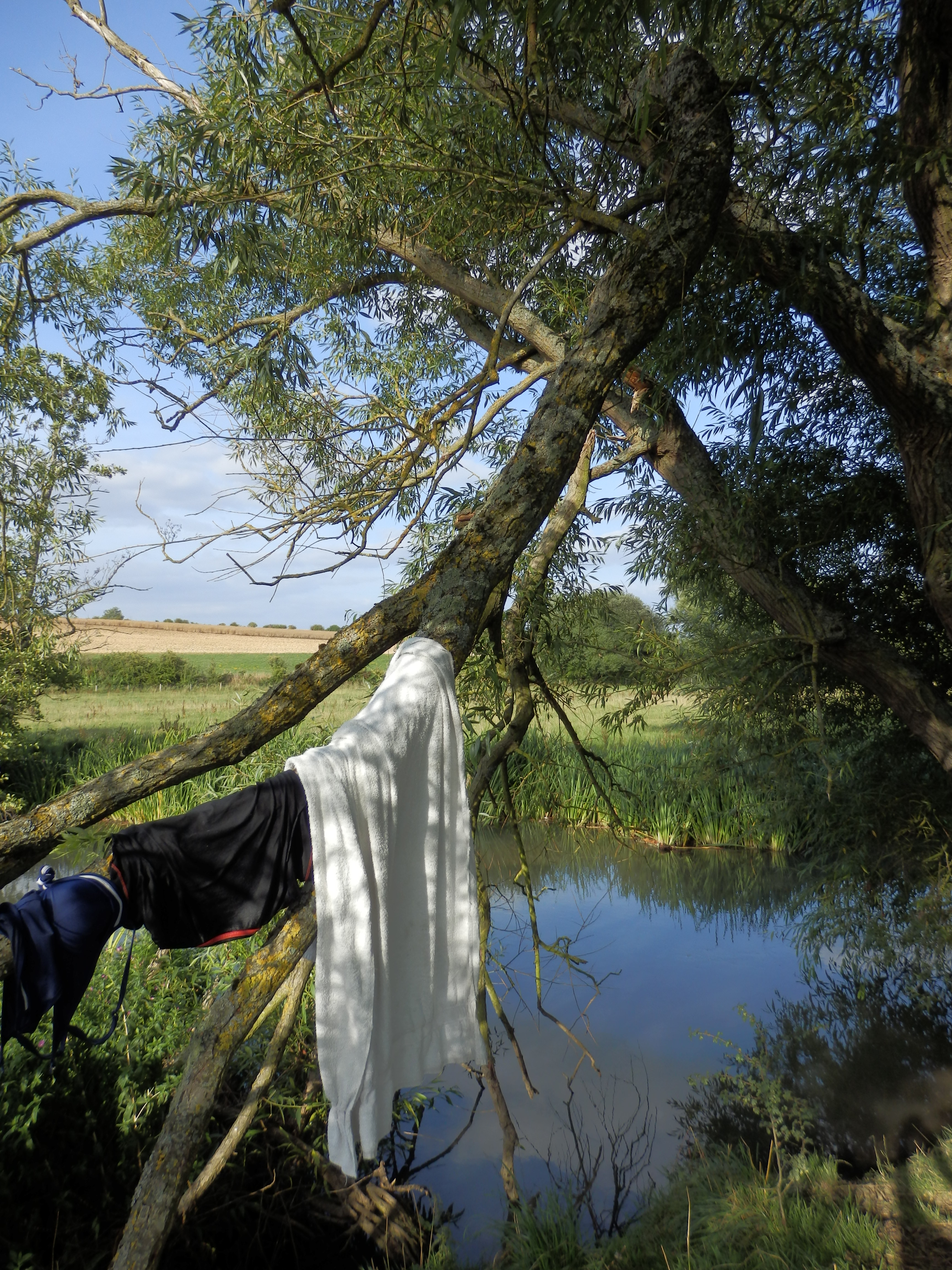
The beach was deserted now, so I hooked my shorts on a fiercely surf-sharpened outcrop and swam further and deeper, my slow and leisurely lull being only briefly interrupted by the shock of weed wrapping around my legs – I have never quite shaken off my childhood fear of jellyfish!

Looking towards the horizon, I floated and rolled, bobbed and was buffeted, drifted and dreamed, like the seals that sometimes claim this beach as a lido. I was swimming where and how du Maurier swam (often twice in a day) and, despite the solitude of the livening sea, I never felt alone.

A yacht slid quietly across the skyline.

And was Rebecca laughing?
OLYMPUS DIGITAL CAMERA

This was a long and luxuriant bathe. I did not want it to end, but the waves were growing higher and the sun was dipping lower, so reluctantly I headed for the sand.

OLYMPUS DIGITAL CAMERA

Tracking back uphill towards Menabilly, I heard the wind gathering behind me and, to use a Cornish expression, it was ‘ragging for rain.’

But the taste and feel of salt remained all about me.

I was still far offshore, floating somewhere, deep in the pages of a book…

‘If only there could be an invention that bottled up a memory, like scent. And it never faded and it never got stale. And then, when one wanted it, the bottle could be uncorked, and it would be like living the moment all over again.’

‘Rebecca’ by Daphne du Maurier

____________________________________________________________

This blog was posted on December 19th 2014.

On this night 33 years ago, the lifeboat Solomon Browne put to sea in 100mph winds and 60 foot waves at Penlee, a little to the west of Polridmouth.

The ocean was so wild that the Coxswain would only allow one crew member from each family to answer this call to mariners in distress.

They never came home.

penlee-lifeboat-610623873

Their memory sails on…

The Sound of Silence

Gold Diggings, Bodmin Moor, Cornwall.

September 2nd 2014


Silence is golden.

Or so the song goes.

Coincidence then that I should unearth this rare and precious commodity on the scrubby moorland  track that leads to Gold Diggings, a long abandoned and flooded granite quarry nestling among the tors of Bodmin Moor.

OLYMPUS DIGITAL CAMERA

It had been some 35 years since I last roamed the bleak beauty of these hills as schoolchild and Scout, but I felt instantly at home, surrounded by early heather, late gorse and the memory of friends.

And for a while, a sacred time, there was nothing else. No sound except the occasional business of bees and a far-off whoop of glee as trekking horses broke into a gallop.

No machines.

No engines, no planes, no motorcycles. No carhorns or chainsaws. No lawns being mowed. No man-made scars on the soundscape.

Nothing….. Just silence…..

I paused to luxuriate in this absolute absence of noise.

The air was clear and dew-dappled webs shimmered with morning sunlight as I looked east, towards the fields, farms, lanes, bike rides and adventures that were my childhood, so distant from the electronic prisons that trap and confine children now.

Close by lay the The Hurlers – (An Hurlysi in the Cornish tongue) – three large circles of standing stones whose origins likely date back to Neolithic or Bronze Age times. Tradition has it that they are the petrified remains of men who were turned to stone as punishment for taking part in a hurling contest on the Sabbath. Dowsers still visit from around the world to tap into the immense energy that is said to emanate from this ancient site.

OLYMPUS DIGITAL CAMERA

Mark the friendly falconer strolled by, fearsome talons clutching the thick leather gauntlet upon his wrist whilst piercing vigilant eyes darted alarmingly towards me.

OLYMPUS DIGITAL CAMERA

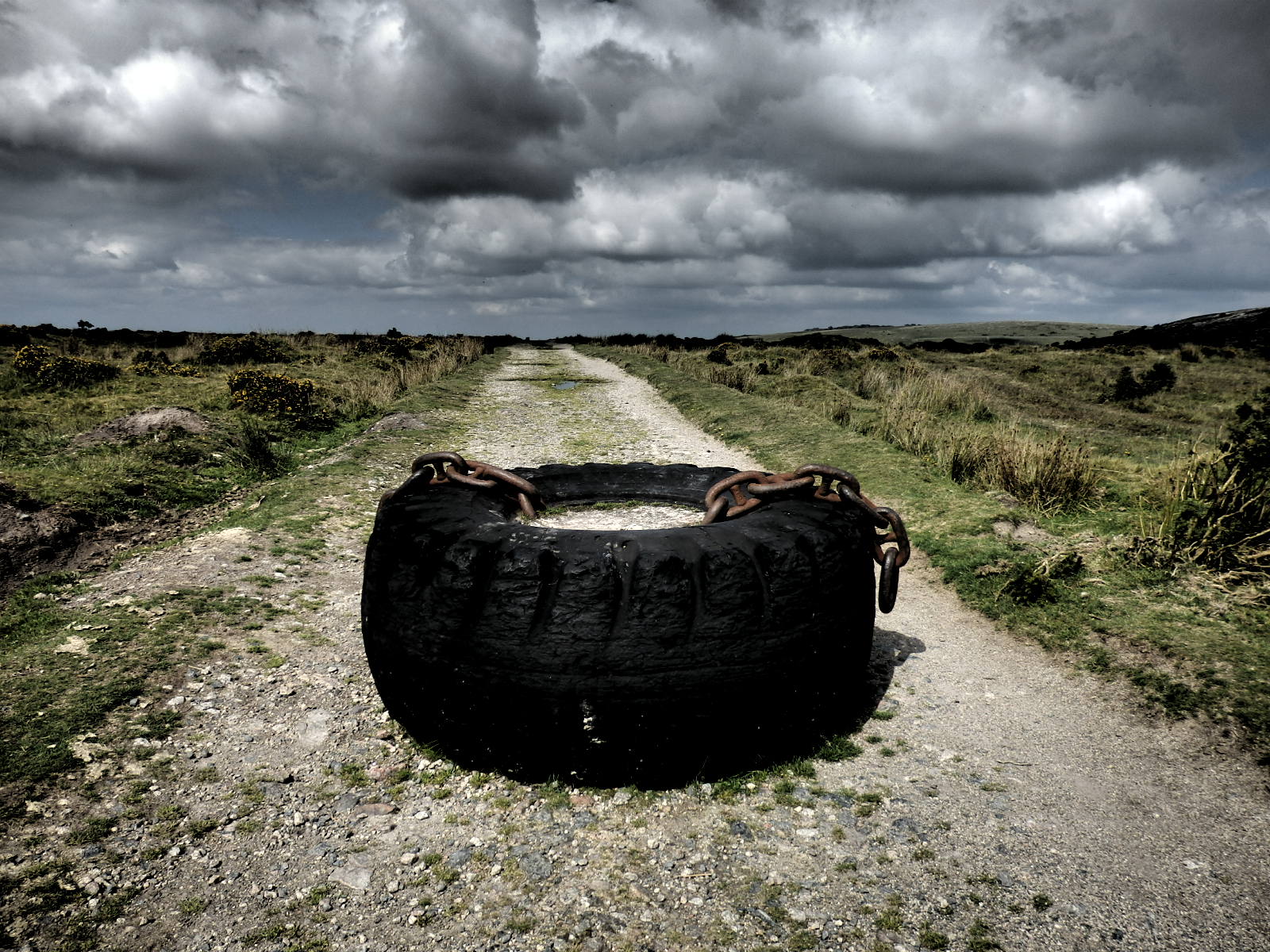
We strolled along the remnants of an abandoned railway that once bore locally quarried granite blocks on their journey towards Liskeard and the coast at Looe. Listless cows grazed, the eyes of foals followed us and a dragonfly hurried past.

OLYMPUS DIGITAL CAMERA

Above one distant quarry, sentinel-like, stood the Cheesewring, an improbable granite stack, sculpted by ice, wind and rain over the millenia.

OLYMPUS DIGITAL CAMERA

Heading west for a further twenty minutes brought us to our goal; a second quarry, known as Swit or more commonly, Gold Diggings – long abandoned as unprofitable and now flooded with both water and sunlight.

OLYMPUS DIGITAL CAMERA

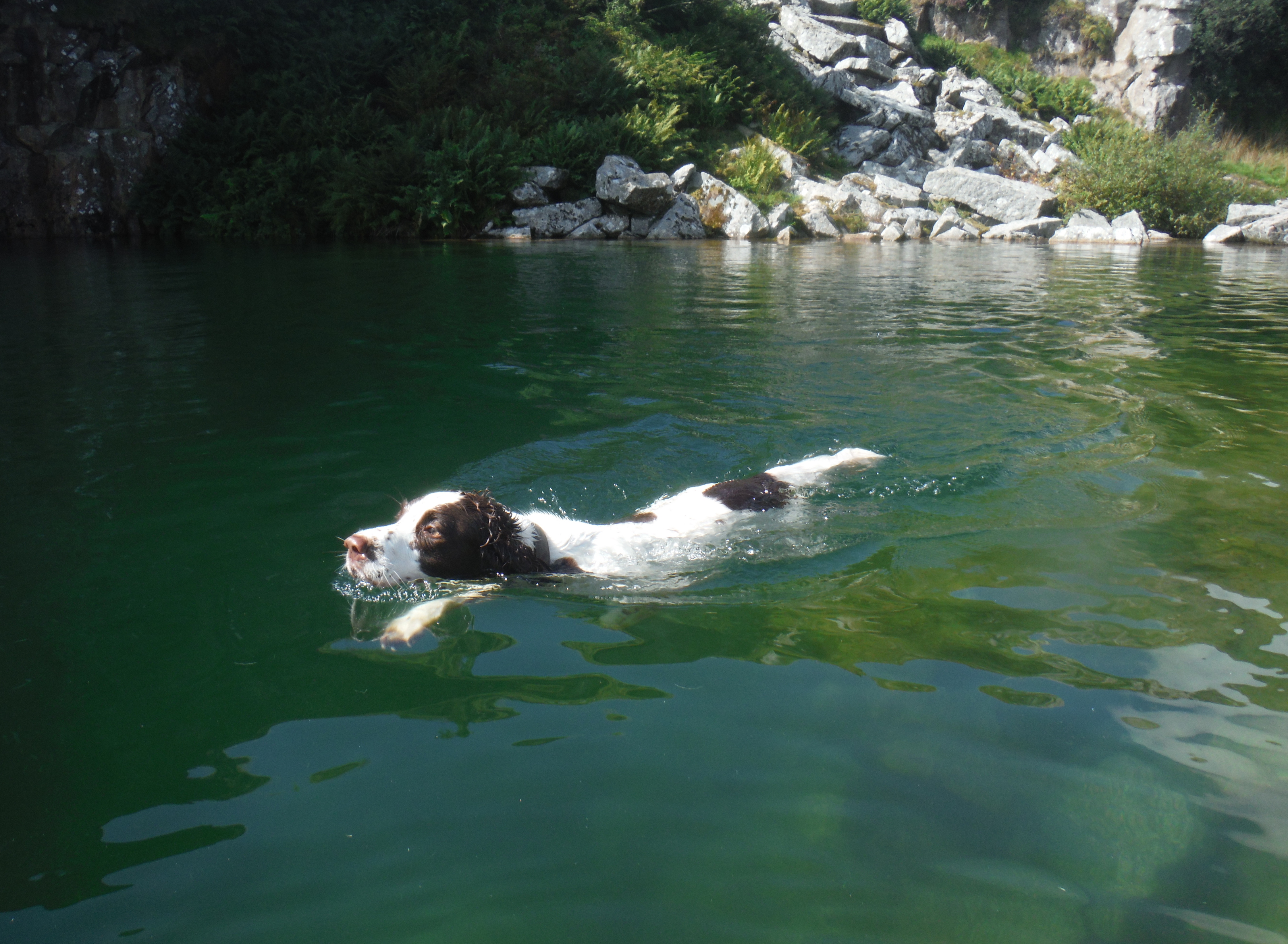
Deserted, except for the echoes of our footsteps, this was a place I had hoped to visit for some time – a swimming hole known to generations of moorland folk. The sun was high and the breeze warm, so I had no hesitation in discarding clothes on the grassy bank and plunging into the delicious (15C)  blue water, whose clarity revealed a myriad fish, some quite large and all inquisitive, nudging and probing my feet.

I set off across the mirrored water, secure in the solitude and serene calm of the lake. An effortless swim, a lazy drift and float. Perfection. Paradise.

OLYMPUS DIGITAL CAMERA

The sudden overhead appearance of a trio of smiling faces shattered the idyll and I hurriedly swam back to the shore and the reluctant modesty of my trunks.

But I needn’t have bothered, for as the happy family descended towards the shore I heard their German voices and relaxed, knowing they were likely to hold a much more liberal and enlightened view of natural swimming than that of the painfully prudish Brits!

DSCF1909

For the next 45 minutes I crossed over, cruised around and explored every outcrop and crevice, savouring the occasional brush of warm currents and heading into deeper, darker waters when another family passed by and paused to chat.

OLYMPUS DIGITAL CAMERA

A white stallion appeared on the skyline, haughty with extended neck and stare of disdain. I was instantly reminded of the Rain Horse in Ted Hughes’ haunting short story – another schooldays memory. I recalled the English teacher who brought me this tale and his son, my friend, who once walked these moors and maybe does still – I hope in peace now…

DSCF1921

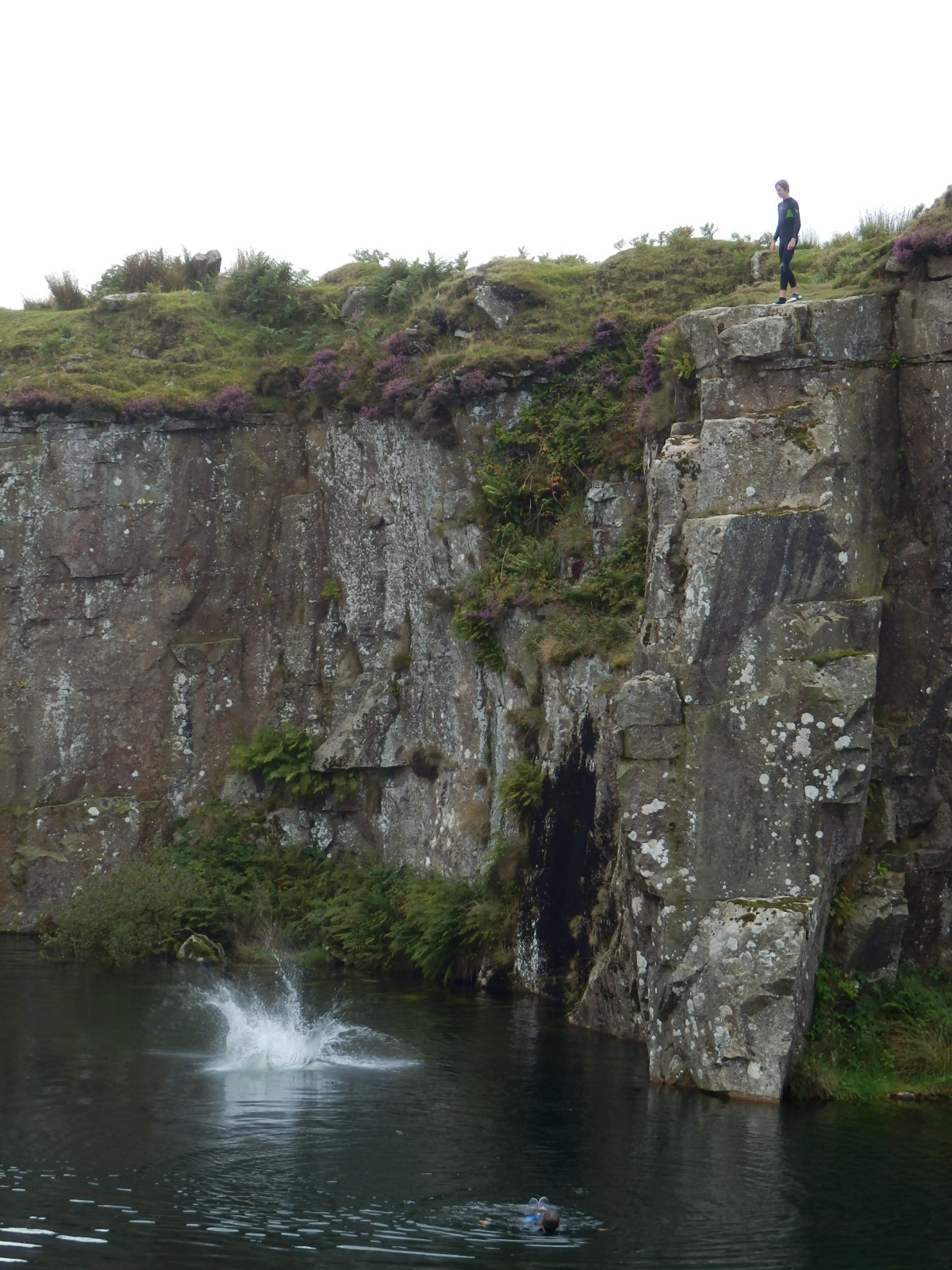
Three ‘tombstoners’ appeared, donned wetsuits and defied both death and logic by leaping from the sheer cliff sides. At least they had managed to escape from a virtual world and were now experiencing the thrill of reality – of the moment – without care for the past or concern for the future. They were just being.

OLYMPUS DIGITAL CAMERA

Unwrapping a pasty and throwing the crust to an ever-patient Marley Bone, I was perhaps a little envious as I recalled my careless, carefree teens and bit hard into an apple.

A mild wind blew across our faces as we retraced our route back. All was peace again.

Looking west, beyond the sealed quarry tracks, the outstretched fingers of granite waste, skeletal engine houses and undulating fields lay the sea.

And I realised that I was viewing the industrial heritage of my home county in a single, intense vista.

OLYMPUS DIGITAL CAMERA

Sensing decay, a carrion crow circled overhead.

The symbolism was overwhelming…

‘For Cornish lads are fishermen and Cornish lads are miners too,

But when the fish and tin are gone, what are the Cornish boys to do?’

(Roger Bryant)

A Denham Dawn

Denham Bridge

July 27th 2014

Sometimes beauty can be found right under your nose…

 DSCF0678

I have parked by the bridge at Denham on scores of occasions and as I’ve said before – (Introducing Denham,  July 8th 2014) – the Tavy here is my ‘local’ … my favourite watering hole.

This bridge is where I leave the car, put a lead on Marley Bone, receive a cold “Really?” stare in return, then get dragged along the mercifully short lane that leads to the woods. Here I usually unshackle the beast, this wild hairy bundle of kinetic energy, and attempt to regain some degree of equilibrium and composure before taking the leaf-shaded path to my riverbank sanctuary.

But last night I decided that the time had come to sample a swim at the bridge itself.

Knowing that the river here would doubtless morph into an horrendous honeypot on a sunny Sunday afternoon, I chose to beat the paddlers, rope swingers and tomb stoners.

I would swim at dawn…

So stupid o’clock found me up with the larks, brilliant light already streaming over the moors and in through my bedroom window. The light was even more intense as I entered the kitchen. Marley Bone opened one eye and I swear he raised a brow. His ‘all-seeing eye’ followed my every movement, silently swivelling in its socket.

Do you recall those war films in which depth charges shower down on a hapless submarine?

Claxons sound, lights flash, everywhere there is a frantic rush to ‘action stations’.

Well, the very same thing happens within Marley’s head whenever he sees our swimming towels being packed into my knapsack. He really believes that racing around the kitchen island thirty times will bring the river closer!

DSCF1462

Today, this canine commotion was clearly too much for the sun – by the time I had quaffed a coffee and buried a banana, it had pulled a comfortable cumulus duvet over its face and drifted back to sleep…

I began to wonder if my dawn departure was such an intelligent idea?

After a sticky, fan-filled night there was a slight chill in the air as I softly closed the front door. 16 degrees according to the car, two degrees below the river temperature at this time of year.

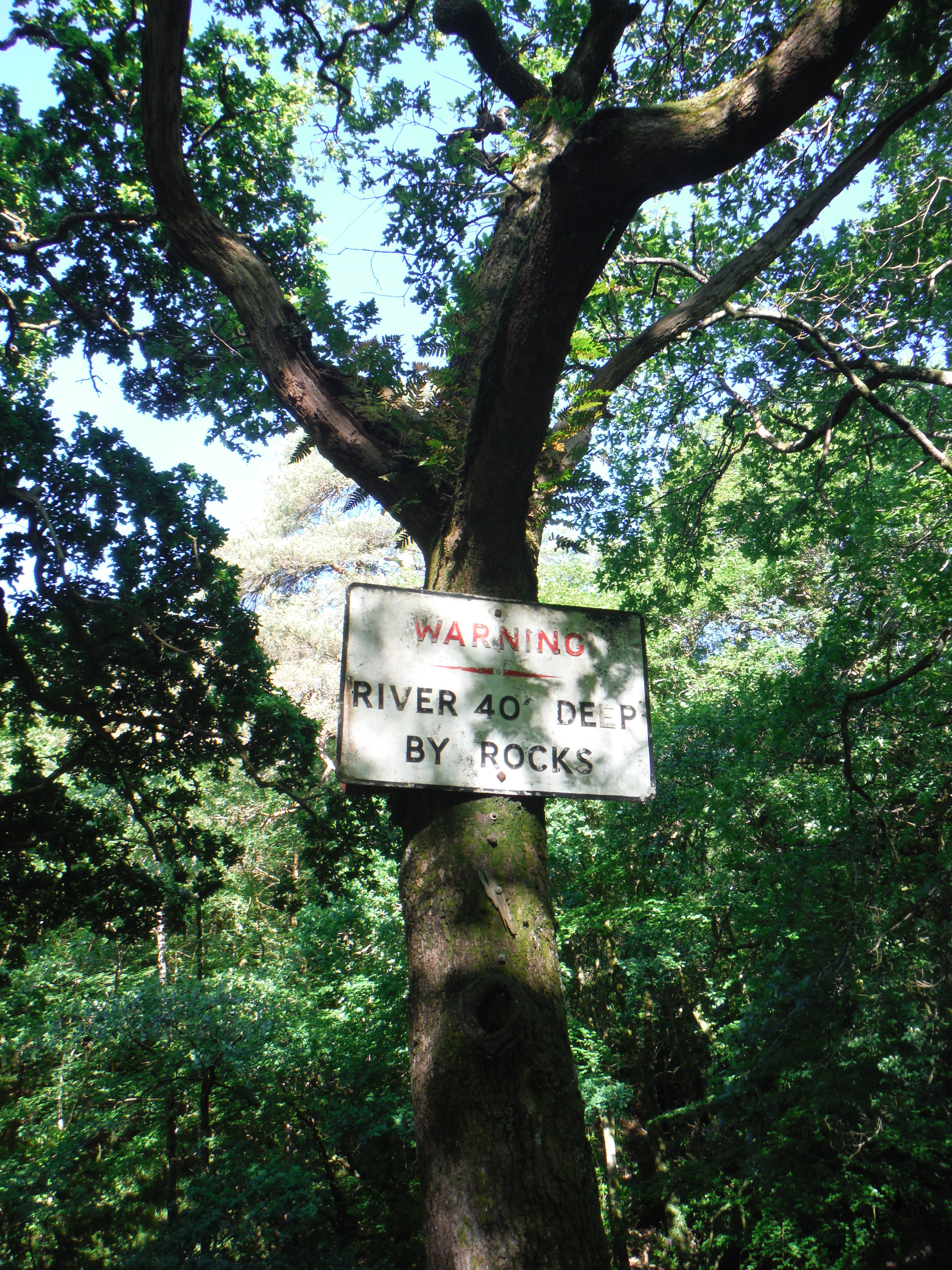
Arriving at the Tavy, we parked by the ‘abandon all hope ye who enter here’ type sign.

DSCF0679

The water was dark in the shallow ravine, straddled by this ancient packhorse bridge which links the Bere peninsula to the civilised world (or vice versa, depending on your point of view.) Beneath the first span the slate has been roughly hewn to create a perfectly hidden changing room.

DSCF1428

Within seconds, I had slipped off my clothes, was in mid air and eagerly anticipating the delicious grasp of the water.

DSCF1475

And it really was delicious. Enveloping. Consuming.

Rising towards the diffused green light of the surface, I could see MB paddling around erratically above me, frantically searching for his lost ‘master’ – the way he always does, bless him!

I swam slowly, circumnavigationg the quiet stillness of the pool, paddling and probing, assessing its delights and hidden hazards. The watery equivalent of getting the lie of the land.

Heading upstream, the flow quickened as I approached a shallow waterfall. Turning to drift down, the ancient arches framed a composition worthy of John Constable and I mused that he was famed for paintings of Dedham Vale, so close to this place in name and nature.

DSCF1431

For the best part of an hour I climbed and dived, dabbled and drifted, saw shimmering light on rockface and riverbed. Standing in the shallows where the water was crystalline, I watched salmon fingerlings straining against the flow to maintain a steady position. Occasionally they lost strength or concentration and were whisked sideways downstream. Soon they were struggling back, as if unwitting players in some giant aquatic game of snakes and ladders. These juveniles swam in small gangs and flexed their newly-formed fins, whilst others lurked in the lea of the granite pebbles that littered the sandy river bed.

And then a first for me – two kingfishers flying side by side.

Denham is a good place to see kingfishers, but usually their flight is low and fast – an electric spark discharging across the water.

This was different. Two together – and flying with less urgency. I had time to savour the moment, a joy intensified when both alighted on a nearby branch. Aquamarine and orange. Irridescent. Spellbinding.

Mindful that work duties would prevent my evening trip to church, I chose this place to make my prayers.

For this was my cathedral. The kingfishers were stained glass, the overarching oaks a mighty vaulted ceiling, the long aisle of the river stretched ahead and their Creator was all around.

DSCF1467

This was my daily bread …

sittingunhappyinmyclothes

Minster Lovell

August 21st 2013

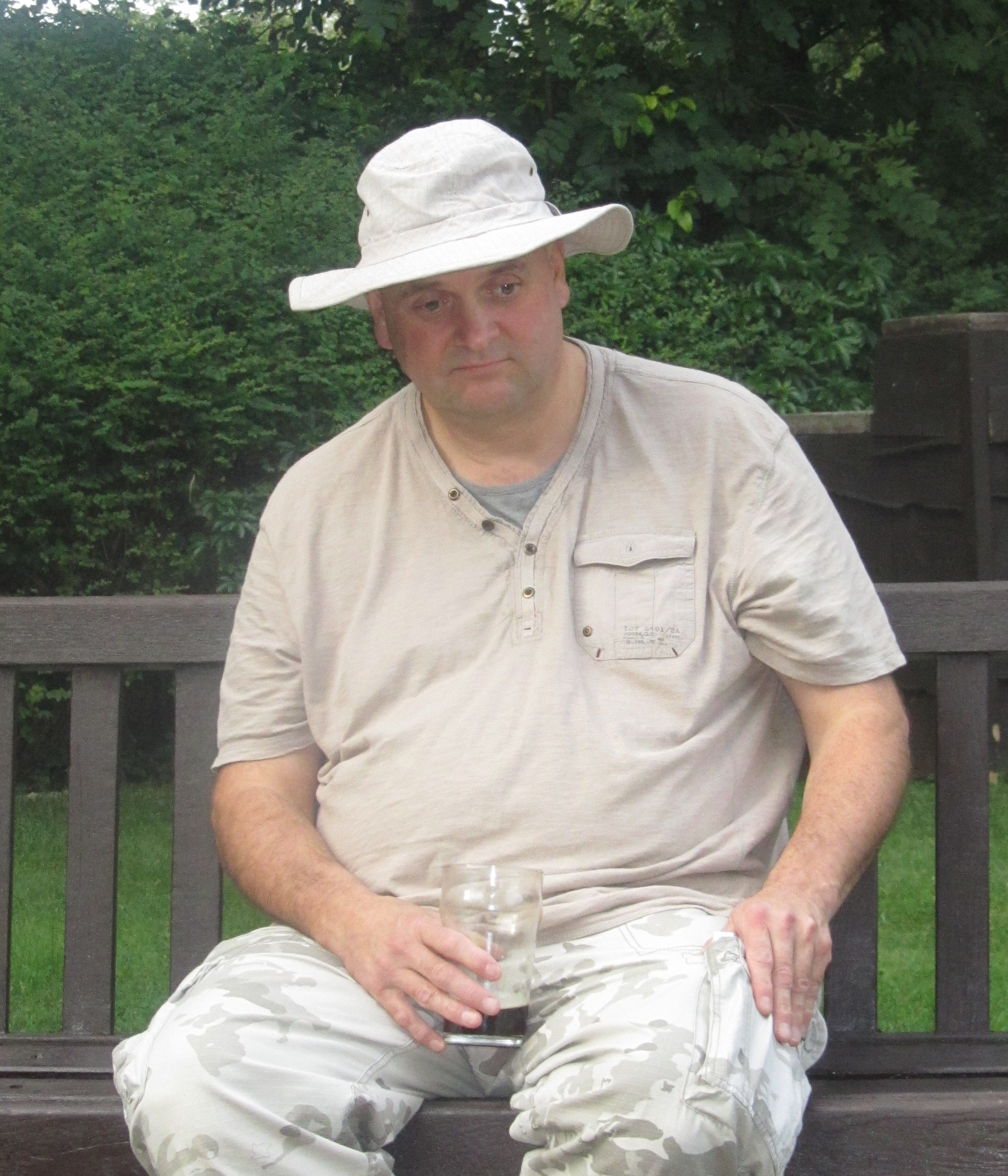
This is the face of a broken man…

IMG_5095


I was still in the Cotswolds on a sultry late-summer afternoon with the air hung charged and heavy. From time to time, darkening thundery skies threatened to silence the quintessential crack of leather on willow that rang out from the closely mown cricket pitch – from the gentlemen in white.

There was a timeless feel about this place. And little wonder, for Minster Lovell is a tiny and ancient village, a cluster of thatch, rose and hollyhock.

OLYMPUS DIGITAL CAMERA

A straggle of yellow sandstone walls, mediaeval inns – and owl cottages with happy faces …

OLYMPUS DIGITAL CAMERA

But mine was not a happy face. Far from it, because it was hot – oppressively hot – and every sinew within me was straining and aching to swim.

OLYMPUS DIGITAL CAMERA

Mentioned in the Domesday book, Minster’s history probably extends further back through the centuries, for it lies close to Akeman Street, a Roman road linking Cirencester with St Albans.

Beyond the cool peace of St Kenelm’s Church lie the 15th century ruins of Minster Lovell Hall. Henchman to Richard III, Francis Lovell became one of the wealthiest men in all England, but after Richard was killed at the Battle of Bosworth, Francis became a fugitive. A man on the run. A man with no place to hide.

OLYMPUS DIGITAL CAMERA

Legend has it that an underground room was discovered in the early 1700s and within its confines sat a skeleton, upright at a table and surrounded by books, papers and pens. Was this the notorious Viscount Lovell?

But I had made a far more notable dicovery….

OLYMPUS DIGITAL CAMERA

This is a picture of a happier man.

A man who has found water, for the River Windrush runs right past the ruins of  the great Hall.

The cool smell of its flow was in the air, but there was a problem – and a big one at that…

For it was quite busy and many children were swimming. Unusually, I was totally unprepared; I had no trunks and I knew that to skinny dip here would earn me a custodial sentence and an uncomfortable meeting with the General Medical Council!

What was I to do?

Luckily, the average Brit on a day out has an unshakeable belief that walking more than 200 metres from the car causes one’s feet to shrivel and wither. So they tend to clump together – like the ‘huddled masses’ of Emma Lazarus.

Determind to escape the ‘teeming shore’ and to ‘breathe free,’  we set out along the narrow path that first crossed a meadow, then a humble bridge before finally entering a small wood where it meandered hand in hand with the river.

OLYMPUS DIGITAL CAMERA

Here the Windrush was a chalky green colour and I hoped this was because the Cotswolds are, well, green and chalky. But there was a real risk that the hue was far more sinister.

OLYMPUS DIGITAL CAMERA

Did you ever own a chemistry set? If so, did your Christmas morning excitement fade when the copper sulphate crystals you grew were a tiny reflection of the vast blue shards pictured on the lid?

You also likely failed to generate sufficient hydrogen sulphide to make much of a stink bomb. So in frustration you probably just mixed all the little packets of powder together, added a drench of water and left the vile concoction sitting on a windowsill.

Where it became the exact colour of the Windrush…

OLYMPUS DIGITAL CAMERA

Near the bridge, where the river widens into a pool enjoyed by children through countless generations, two girls were swimming quietly together. Neither appeared to be foaming at the mouth or dissolving away so I travelled on for a few minutes and then plunged into the murky waters. Like a clockwork toy boat, I was off, shooting across the water in a wide circular navigation until my coil finally unwound and I drifted to a sedate halt.

IMG_5086

Where I stayed.

Life was casual and gentle here.

A slow drift carried me into an oxbow where the path and the river briefly parted company in a lover’s spat. In this backwater, distant from the known world, all was silent and peaceful and perfect.

OLYMPUS DIGITAL CAMERA

The reeds beside me murmured, as if, Moses-like, they sheltered a secret.

More movement, then a shuffle of water to reveal a female mallard, paddling and babbling through the verdant emerald margins.

OLYMPUS DIGITAL CAMERA

Embarking on a wldly reckless dare, a damselfly alighted close by in a shock of vivid blue. Folded-back wings, fragile body and feeble water-hugging flight distinguished this delicate insect from its bigger, bolder dragonfly cousin.

To simply float with eyes at surface level, to become immersed in this place, to be painted into the scene was a very pure delight. To be part of that canvas, whose detail unfolded with the looking, was a privilege; a private viewing.

And to turn for the shore was a wrench, tempered only by a slow bankside sun-dried half hour.

Back at the Old Swan, whose pedigree spans almost 600 years, I downed a cold pint, played chess and chatted with Marty, my future son in law.

OLYMPUS DIGITAL CAMERA

Seated in the pub garden, suffused with the saffron glow of the setting sun, Marty said he thought the way I am happy to just jump into a river and swim, unplanned and uninhibited was “real cool”.

To be honest, I was a bit pleased, a bit proud!  With puffed up chest I strolled to the bar to buy us another drink …

OLYMPUS DIGITAL CAMERA

….. Or did he say “fool”?

Swimming in a Chocolate Box

River Windrush

August 20th 2013

Today, one of my daughter’s is flying away. Flying away to sunny climes.

As we exchange airport texts, my mind drifts back to a holiday we shared last summer.

For it really was a drifting time.

Drifting off the beaten track through impossibly quaint Cotswold hamlets, drifting across golden cornfields under pure blue skies and drifting down the very prettiest of rivers and streams.

Golden cornfields above Adlestrop

Golden cornfields above Adlestrop

Pretty rivers with pretty names.

Like the Windrush.

To me, this paints a mind picture, not of a howling hoolie, but of a gently winding reed-lined stream. So I was not disappointed when, on a sultry August afternoon, I decided to retrace the footsteps of Roger Deakin, like a disciple on a pilgrimage, to find a swimming hole described with great beauty in ‘Waterlog’ – the book that launched a thousand wild swimmers!

OLYMPUS DIGITAL CAMERA

‘About a mile downstream from Burford on the meandering footpath to Widford, I found the finest oxbow bend I have ever seen. Sheep grazed the meadows and the cropped grass was in wonderful condition, springy and deep green. At the narrow turkey neck of the oxbow were two old pollard willows. One of them masqueraded as a hybrid, with dog-roses, hawthorn and elder growing from the marsupial recesses of its anguished trunk. Each was an independent world, with whole cities of insect life in the grimy wrinkles of its bark and generations of bird’s nests in its dense topknot. I slid into the upstream side of the oxbow and swam all around it, almost back to where I had begun, climbing out by the twin willows again. Two hops across the grass and I was back in the river where I began, swimming the next power-assisted lap around the grassy peninsula.’

Roger Deakin: Waterlog: Chap 25: The Oxbow (Published by Vintage Books, 2000)

I rather fancied a ride in this flowing fairground, so we headed to the small and much photographed town of Burford – cover pic of many a chocolate box.

OLYMPUS DIGITAL CAMERA

Steeped in history, Burford is remembered as the place where, in May 1649, the leaders of the ‘Levellers’ were finally cornered in the parish church and executed. These three brave men had led a mutiny in Cromwell’s army, believing that their leaders had betrayed the notion that all men were  equal under the law. This desire to level out social inequalities cost them their lives, but their pre-socialist ideals are remembered every year on Leveller’s Day – with a celebration of music, processions and political debate.

Photo courtesy WEA

Photo courtesy WEA

Wild swimming is a levelling activity…

Anyone can do it, regardless of class, creed or colour. You don’t need money or have to undertake expensive training. The only equipment you really require is the suit you were born in – and there’s nothing more levelling than that!

Leaving Burford on foot and using a local map that cost 20p – (a poor investment as it transpired – and a lesson always to invest in the Ordnance Survey) – we walked for what seemed an eternity along the busy road leading to Witney and Oxford beyond. The verge was dry and dusty – a Roman march away from the quiet footpath that I had imagined at the day’s dawning. So it was with relief that we turned downhill, left the road behind us and headed down towards the famous oxbow.

Unfortunately in the 14 years since Roger first penned his account, many a pilgrimage must have ensued.

Too many!

For now the way was barred, fenced and signed as strictly forbidden territory. The addition of searchlights and razor wire would not have rendered the scene any less welcoming. But we were a large group with small children so I did not feel that this was the right time to push boundaries.

OLYMPUS DIGITAL CAMERA

Instead we headed downstream, through fields that afforded no easy river access. A swan with two cygnets looked me up and down with a ‘make my day’ sneer that required no Dr Doolittle translation.

OLYMPUS DIGITAL CAMERA

I was beginning to feel a little crest-fallen, a little desolate, when suddenly, rising up ahead of us – Shangri-La.

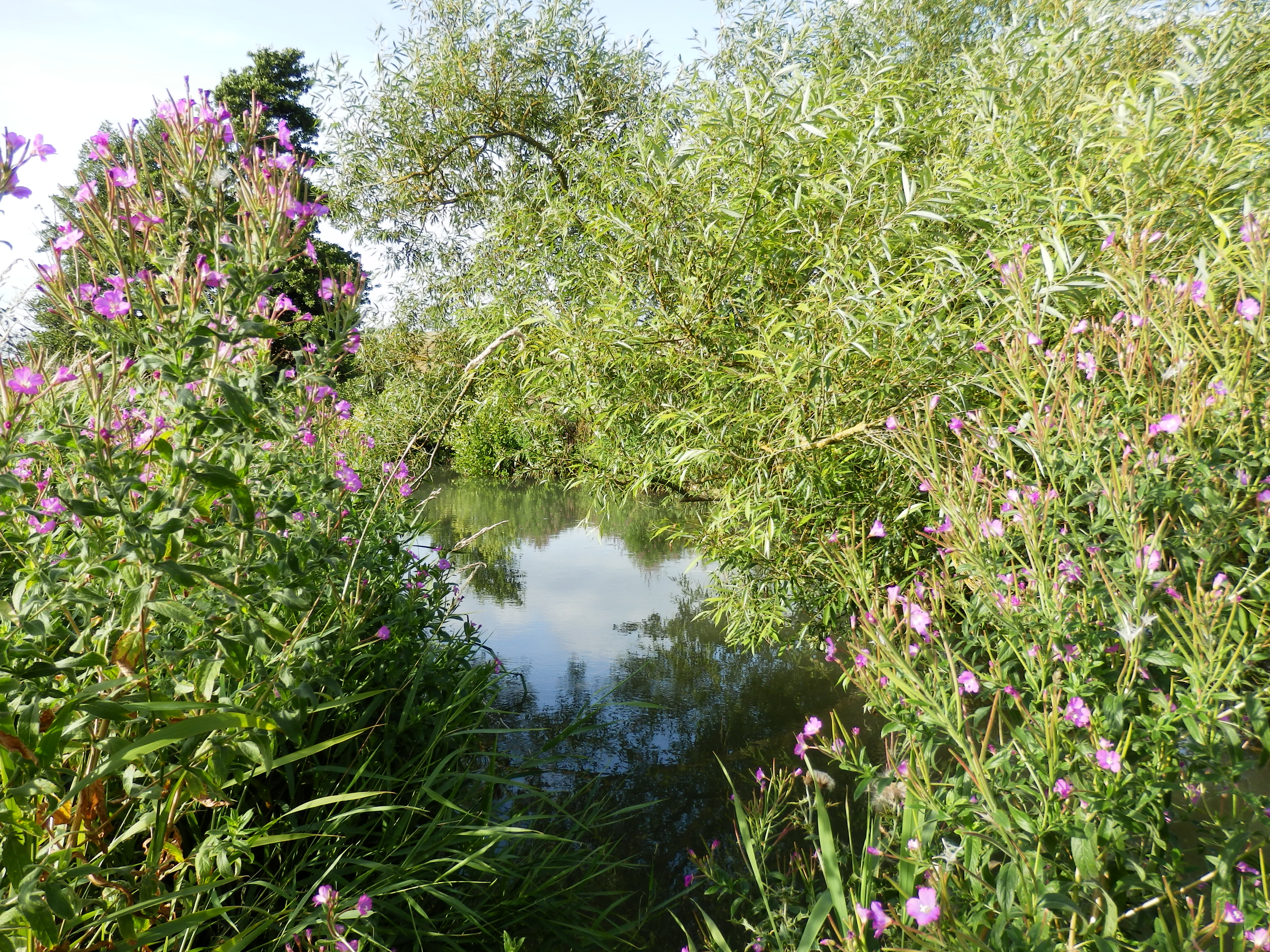
As if purposely planted as succour to the weary traveller, two sturdy willows stood overhanging a wide pool, casting deep shadows across the water and into the meadow. There could be no better place for a swim and a picnic.

OLYMPUS DIGITAL CAMERA

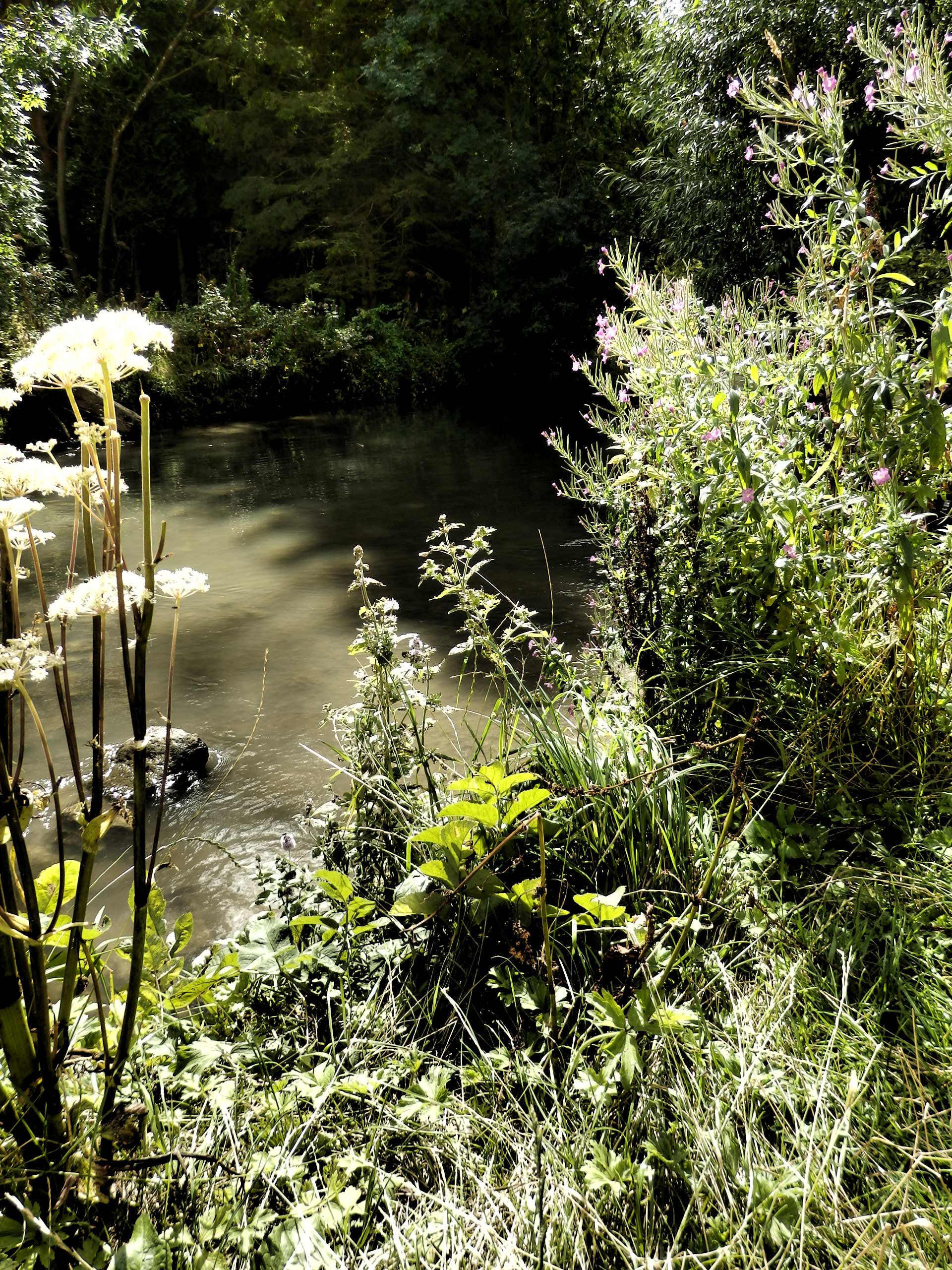
Moments later we were sliding down the muddy bank* and into the still water – slate green and barely moving, like a thin pea broth in the pan of a lazy chef.

*[Memo to self – muddy banks that are great to slide down are not always so great to slither back up!]

OLYMPUS DIGITAL CAMERA

The character of the Windrush could not be further removed from the moorland rivers that I am used to. No cool clear waters in a restless hurry, no rattle of stone or foaming fall. Instead, a slow steady procession,  straining through metre long tendrils of emerald weed. Thistledown tumbled from the banks, blown along in the softest of breezes, too little wind to ruffle the perfect reflection of reeds and sky that were painted across the water.

OLYMPUS DIGITAL CAMERA

The river bed was gravel and silt, typically three to four feet deep, so we swam upstream with ease before floating down on our backs, receiving a massage from the weed below whilst soft willow leaves casually brushed our faces. No exotic health spa could have offered more!

Like a shipwrecked sailor, Maddie clung to a small log with cries of glee as she too was softly carried down the stream, past tall grasses and fields of ripening barley.

OLYMPUS DIGITAL CAMERA

All about us were bankside burrows, speaking of lives unseen in the heat of the afternoon. Here one could meet Ratty, Mole or Mr Toad without surprise, for this English river was quintessentially theirs.

With swimmers drying in the afternoon sun, we took shelter in the shade of the trees and enjoyed a lunch of cheese, chorizo, french bread and fruit. Meadow games followed before we embarked on the tired, slow walk back to Burford with swim bags dangling.

OLYMPUS DIGITAL CAMERA

And all around us, the chatter of children and crickets …

OLYMPUS DIGITAL CAMERA


Tai Chi at Twilight

Denham Beach

24th June 2014


Dragonfly dancing

Above the slow green river

Two journeys, one end


I love the ability of Japanese haiku to create a mind picture in just seventeen syllables.

Because less can be more.

The ability of Hardy, the ultimate wordsmith, to craft a buccolic vision of Wessex in a short paragraph, the simplicity of Vaughan William’s lark, the crimson daub of a Monet poppy.

Detail from Poppy Field in Argenteuil by Claude Monet

Detail from Poppy Field in Argenteuil by Claude Monet

But no stroke of pen, bow or brush can ever truly reflect or replicate the beauty that is to be found in wild places. A beauty that must be felt, smelled, heard, seen and even tasted.

A beauty that was fully enjoyed on a sultry summer’s evening three weeks ago…

DSCF0787

After many days of glorious weather, the last dregs of sunshine were glowing like the embers of a dying fire, so a busy duty day just had to end with a cool dip on my way home.

Entirely alone, save for Marley, my clothes were soon shed in eager anticipation and I walked out across the warm sand to savour the cooling wrap of water around my skin. I swam on my back, with a curious homegrown stroke that revived  memories of pondskaters – a source of endless childhood fascination.

To swim naked now seemed as normal as my next breath and I navigated into the colours of the setting sun that carelessly dappled the surface of the river. Turning onto my back, I let the current take me downstream, gathering pace as I gazed up at a cloudless sky. Far overhead a high-flying gull headed seaward.

My ears were submerged, redundant and soundless, straining against an overwhelming silence. Gradually building, a rattling of pebbles broke the peace to warn that I was  approaching the shallow falls that lie below a leafy hazel overhang.

DSC_0118

I swam back, hard against the flow and clambered high onto the moss-coated outcrop where I dived repeatedly, reaching the river’s deep bed. Here, amongst the sand and stones, a pair of pants lay discarded – perhaps the romantic remnant of a midnight dip?

And why not?

Where better?

Like Adam in a pre-fall Eden, I felt no shame as I emerged from the water to dry, dress and depart for home.

But after a handful of steps I stopped, standing alone on a bank of bleached boulders. The solitude was subtly sensual.  It seemed too early to go home now and I felt drawn into a Tai Chi routine, first on the bank, then in the shallows and soon, without resistance, I found myself naked once again and waist deep in water that was both warm and welcoming, My slow steady movements mirrored the passage of the river as dusk descended.

Tai Chi at twilight

Tai Chi at twilight

Making the traditional Tai Chi salute, I thanked the Tavy for her kindness on this balmy evening and I also thanked her creator – the God of green places.

And then, one final swim into the softness and silence of the now dark water. Gentle strokes that barely ruffled the surface – for to do so would have felt like desecration…

DSC_0127

The Knapsack

The knapsack

The knapsack

The knapsack is a bit empty at the moment.

It’s where I will pack ‘swimming stuff’ like book reviews, suggestions and general musings.

But these will have to wait for the long, dark, wet and wintry nights when pages of photographs are the closest I’ll  get to the water.

Seasoned wild swimmers will already be well aware of most of the titles that I have tucked away – but if not, here’s a few to tempt you…

  • Waterlog – A Swimmer’s Journey Through Britain by Roger Deakin. Athough to say so seems like a cliche, this is a truly seminal work that has given inspiration to many, myself included. If you read only one book then this really has to be it!
  • Caught by the River. This collection of words on water; short essays in which the authors expound the charms of their favourite rivers is beautifully presented with sumptuous engravings.
  • The Wild Guide by Daniel Start, Tania Pascoe and Joanna Keeling. From the same stable as the Wild Swimming guides below comes this wonderful collection of quiet Westcountry swims and other ‘off the beaten track’ activities.
  • Wild Swimming by Daniel Start. Beautifully illustrated guide to inland wild swims in the UK
  • Wild Swimming Coast by Daniel Start. Sister volume to the above guide, this book describes coastal swims. A new version entitled Wild Swimming Hidden Beaches has just been published – an eagerly awaited birthday present!
  • Secret Beaches South West by Rob Smith. Another image-rich guide that describes truly hidden beaches – (be prepared to scramble) – together with walks and ‘watering holes’ along the way.
  • Wild Swim by Kate Rew. Another lavishly illustrated offering, this is more than just a guide, it’s also a journal with compelling accounts of Kate’s swims in river, lake, lido and sea.
  • The River’s Voice. Produced by Common Ground, a charity which seeks to link nature and culture, this is a rich anthology of poetry spanning many centuries and styles. Roger Deakin provides the foreword, so it seems perfectly reasonable to include it in this list!
  • Sea and Shore Cornwall: Common and Curious Findings by Lisa Woollett. Hands up, this is not a book about wild swimming. But it is an artisan publication of great beauty that will enhance your knowledge and love of any Cornish beach. It deserves to grace every coffee table in Britain!

It’s also worth diving into a few websites – possibilities include:

And finally, here’s a couple of local blogs to further whet your appetite:

… and some from further afield:

Musings of an Aquatic Ape – and Mrs Ape Reports (sub blog)   Lovers of Tooting Bec Lido and other more distant swims

Lone Swimmer  The tag-line “who dares swims” says it all – a marathon, cold water master with a wealth of experience

Wildswimmers  A year-round watery diary from the lochs and (often stormy) seas of the Scottish west coast

Ben’s Watery Travels  Aquatic adventures enjoyed in many modalities


Swim happy !

 DSCF0426


King of the River

The Silent Pool – Denham

June 11th & 13th 2014

I love the sun.

I love the feel of it on my skin. I love long lazy days, walking barefoot in shorts and an old T-shirt. I love the way life slows down and priorities change.

But most of all I love the feel of cold water at the end of a hot day. That first leap into a cooling balm. I love to sit on the river bed and physically feel the heat of the day leach away, through flesh that is strangely and suddenly porous  – and with it all tension and trouble.

So after a long and arduous day building a new chicken run, I decided to take a solo dip at Denham on my way to morris dancing. And for those who have not yet discovered the joys of morris and who are minded to smirk or sneer, may I just say that the clash of an ash stick is also a pretty efficient stress reliever!

In step with tradition - the clash of ash

In step with tradition – the clash of ash

That evening I chose to launch off from the rocky outcrop that overlooks the Silent Pool. Here the slate is wide and warm, a perfectly shaded place to shed clothes and seek solace from the heat.

The changing room

The changing room

I dived deep, kicking down until I could see the rounded rocks of the river bed, ochre painted in the diffused light.

Silence.

That amazing silence that deafens. A few seconds of peace before rising again, up through a hustle of bubbles to break the surface with a gasp.

Only on this occasion I torpedoed straight into the flailing paws of Marley who had mirrored my dive. His look of consternation and confusion was priceless!

I cruised across to the opposite bank, grounding gently in fine silt and almost becoming skewered on a submerged branch, its leaves long washed away. A short upstream breaststroke was followed by a long leisurely backfloat, under a canopy of oak, rowan and nut-decked beech.

Just chillin'

Just chillin’

And suddenly there it was. Like an incoming missile – low, fast and true to the axis of the river. This could only be one thing and sure enough, moments later a lightning flash of orange and turquoise, no more than 18 inches from my face. Although over in an instant, this was my closest ever encounter with a kingfisher and it was one of those magical moments that a river will sometimes lend you.

It was time to celebrate my good fortune, so after a quick towel down I was off to the the sleepy riverside village of Bere Ferrers, arriving just in time for a dance, cool ale and squeezebox session beside the Tavy’s slow flow.

Bere Ferrers

Bere Ferrers

_____________________________________

Two days later and I was back at the Silent Pool, this time accompanied by Sal and a delicious picnic supper.

Supper is served

Supper is served

The weather had remained fair and this was a Friday evening, so tonight the pool was not so silent. Distant cries of delight hailed from a family paddling and floating on large rubber rings,  just around a bend in the river. Blue campfire smoke snaked up into the sky, merging into dusk.

But they were too far away to bother me and soon I had strippped off and dived in, the shock of the cold snatching my breath away. As always, I was a willing victim of the river’s mugging.

Later in the evening the family passed by on the woodland track above me, all loaded with a rainbow array of bags, towels and inflatables.

But I laid low in the bank-side shadows, like the trout and salmon that find a haven here…

Laid low in the shadows

Lying low in the shadows

Spitchwick and the Heart of Stone

Spitchwick

May 14th 2014


There are two things that wild water enthusiasts know about Spitchwick:

1. It’s a good place to swim.

2. It’s a bad place to swim.

You see, it’s all a matter of timing. On an August bank holiday it’s a sprawl of bodies, boom boxes and barbecues – (more on this another day) – and if not hell, then it’s certainly getting pretty toasty!

Which is why we chose a Wednesday morning in the middle of May for a dip in the Dart.

Wherever I lay my hat...

Wherever I lay my hat…

Spitchwick, or Deeper Marsh as it appears on the OS map, has been a popular bathing place for countless generations. Situated on a bend in the River Dart, the large flat grassy expanse of common faces up the wooded hills of Holne Chase with its iron age hill fort. The pretty nearby village of Holne was, appropriately enough, birthplace to Charles Kingsley, author of ‘The Water Babies.’

The moorland 'lawn' at Spitchwick

The moorland ‘lawn’ at Spitchwick

And the water here flows fresh from the moor – pure, peaty, cold and clear at this time of year. The river bed is liberally strewn with boulders, hewn from the granite tors over millenia and then coated with a slippery green sheen. My first taste of the Dart came ealier than planned thanks to this – despite wearing swimming shoes, my grip was lost and so was my dignity!

The peaty Dart

The ochre waters of the Dart

Luckily we were the only folk around, so there was no need to pretend that my sudden descent into the depths was no accident and had been perfectly planned!

I swam across to the far side of the river, partially shadowed by cliffs where tomb-stoners line up to leap into the menacingly dark waters.

A water baby - not!

A water baby

Here I swam against the current for some time before my toes numbed – (the left fourth toe is always the first to go and has become my early warning system.) Drifting downstream and into the shallows, I half stood, half stumbled, emerging awkwardly from the water like some freak of evolution before sploshing my way onto the picnic rug so carefully laid out by my partner. A hefty kick of sand added to her disapproval so I sat in the corner, in the shade and in disgrace.

But less so than Marley Bone.

Like Sal, he had spotted the misleadingly named grey wagtail that had perched tantalisingly close to us on a large broken and bleached bough that had floated downstream in a wintry spate. It’s yellow underbelly almost glowed and the long tail dipped repeatedly, lightning fast.

As was our spaniel… For somehow, in the split second between Sal’s finger pressing the button and the camera shutter releasing, MB managed to spring towards the startled bird. Not just once – many times. We now have a fine collection of photographs displaying the blurred tail of a bird and the nose of a dog!

MB - villain of the peace!

MB – villain of the peace!

Close by, a solitary white tulip meandered downstream and into the shallows where, in a moment so poignant that it could not have been engineered, the lone flower draped itself over a heart shaped rock.

Simple and beautiful.

No words were spoken.

Beautiful and beyond words ...

Beyond words …

No doubt, further up the river at someone’s once favourite spot, their ashes had been scattered and flowers recently laid.

It reminded me of a time when we lived in a cosy rented cottage that nestled in a woodland clearing alongside the River Meavy. This too was a moorland river, smaller than the Dart, but no less beautiful. We knew every inch of its banks, every bend, every boulder. We knew every rocky fall where there was a noisy and  joyous union of white watery effervescence and mossy greenness.

Here too it was not uncommon to find ashes and wreaths – and I was reminded of some words that I once penned after making such a discovery on a cold February afternoon.

Wet Lemon Clouds
(For Alice)

Wet lemon clouds of watercolour wash
Angry river – wild and raw, claws
The shore where summer sticks were tossed
And pebbles thrown, drone
Of ferment, flood and flow o’er
Rocks and rolling stones, sugar brown
The bank’s deposit, settle and shift
Swift the current’s pulse, live
And charging …
Cerulean flash!
The fisher’s king sparks bright
In flight both low and true
And through the spume’s pale veil
Where death has left his wreath
And ash, beneath the oak’s
Soaked roots and shoots of daffodils.

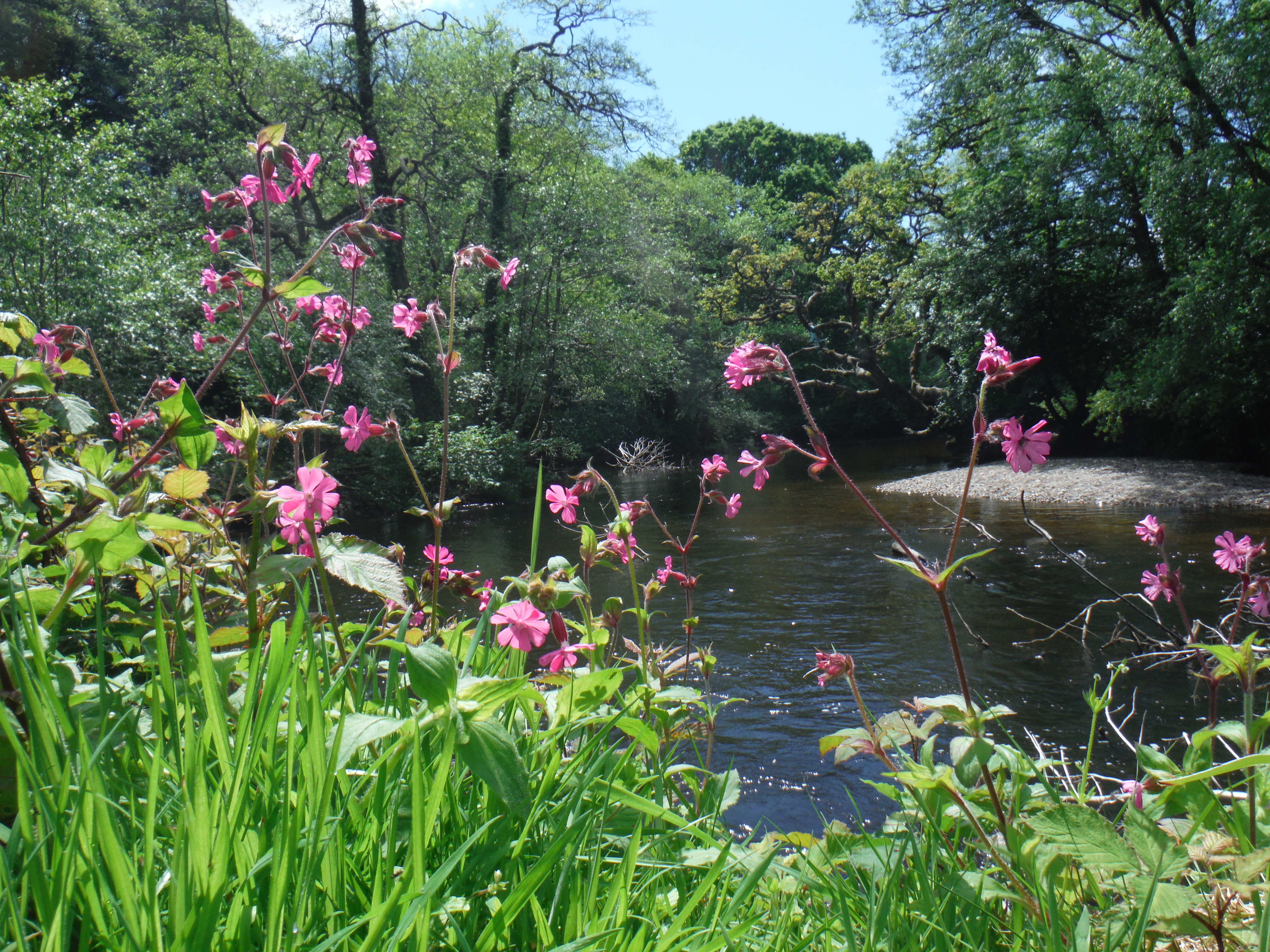
But these were warmer times and, walking barefoot across closely cropped grass, dotted with daisies, we paused frequently to gaze at the patriotic red, white and blue of campion, may blossom and bluebell.

Salute to the red, white and blue

Salute to the red, white and blue

But the warmer times had not yet reached my extremities. I may as well have been walking across hot coals in some Fijian ritual, for my feet had become bundles of cotton wool, numbed and senseless.

Feeling the cold...

Feeling the cold…

It was almost a full hour before they rejoined me!


Swimming Back to 1915

River Fowey, near Respryn

May 26th 2014

Lanhdrock has to be one of the jewels in the National Trust crown.

Home of the Agar-Robartes family, this stunning stately home was largely rebuilt after a devastating fire in 1881 and is now a ‘must see’ for any visitor to Cornwall. Described as a ‘wealthy but unpretentious family home’ , Lanhydrock is displayed much as it would have been at the turn of the twentieth century, a carefree time for the family before the clouds of the Great War cast a dark shadow over the 22,000 acre estate – (that’s almost 3% of Cornwall.)

Lanhydrock

Lanhydrock

The great house stands in extensive grounds – formal gardens, wilder plantings and parkland, these leading down to the River Fowey. Here there is good swimming to be had, particularly at Respryn Bridge, but this can be busy on fine weekends, so after a little research, we settled upon a quieter spot for some Saturday afternoon solace.

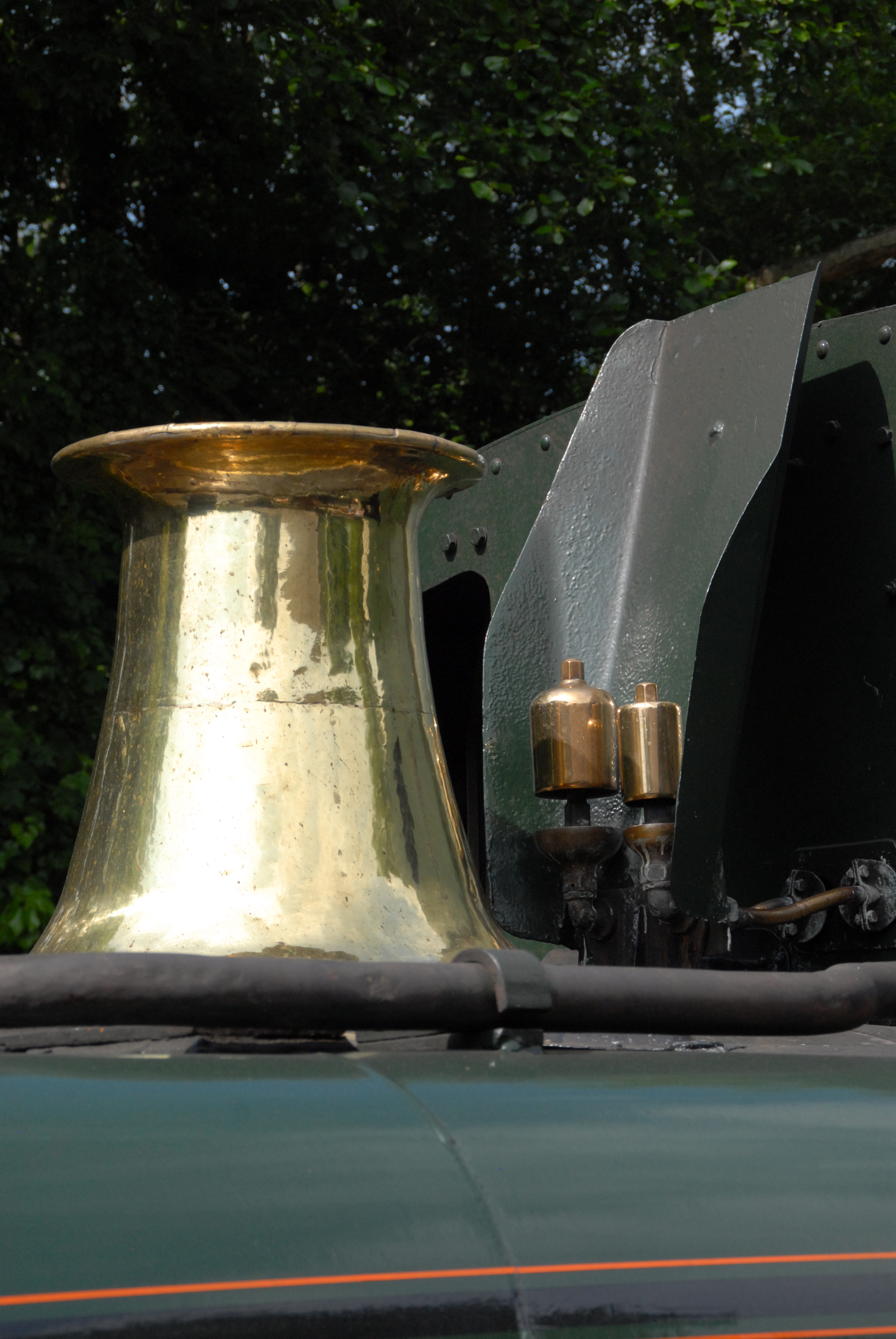
Parking at the old Bodmin Road Station (now renamed Bodmin Parkway – an act of banal utilitarian blandness) we surveyed the sleepy scene. There was little sound apart from the buzz of a bumbling bee.

Breaking the silence

Breaking the silence

Heat was rising from the platforms and I thought of the poem Adlestrop – written by Edward Thomas exactly a century ago to describe just such a station and just such an afternoon in rural Gloucestershire…

Yes. I remember Adlestrop,

The name, because one afternoon

Of heat, the express-train drew up there

Unwontedly. It was late June.

The steam hissed. Someone cleared his throat.

No one left and no one came

On the bare platform. What I saw

Was Adlestrop—only the name

And willows, willow-herb, and grass,

And meadowsweet, and haycocks dry,

No whit less still and lonely fair

Than the high cloudlets in the sky.

And for that minute a blackbird sang

Close by, and round him, mistier,

Farther and farther, all the birds

Of Oxfordshire and Gloucestershire.

I love this poem and the atmosphere it evokes, which is why I went on a pilgrimage to Adlestrop last summer. The station is long gone, but walking in the hills and fields around this tiny village (population 80) one can almost hear the hiss of steam. In just the same way I was experiencing the tranquility of a bygone age, right now, back in my home county.

"The steam hissed..."

“The steam hissed…”

Pushing open the heavy wooden gate that led from the platform, we walked down the drive that would have been an essential link between the great house and the outside world. The start and end of journeys. This was the main rail link to London and here both people and goods would have arrived and departed, perhaps family coming home and surplus kitchen-garden produce departing, bound for Covent Garden or Spitalfields.

Arriving at a bridge over the River Fowey, we diverted down a flight of steep steps and walked along the left hand bank, through lush emerald water meadows, speckled with flag iris and molehills. The skeletal remnant of a once mighty tree served to reflect the fortunes of the Agar-Robartes family – of this extensive, influential pedigree there is only one surving member, now housed in a cottage on the estate.

A reminder of mightier times

A reminder of mightier times

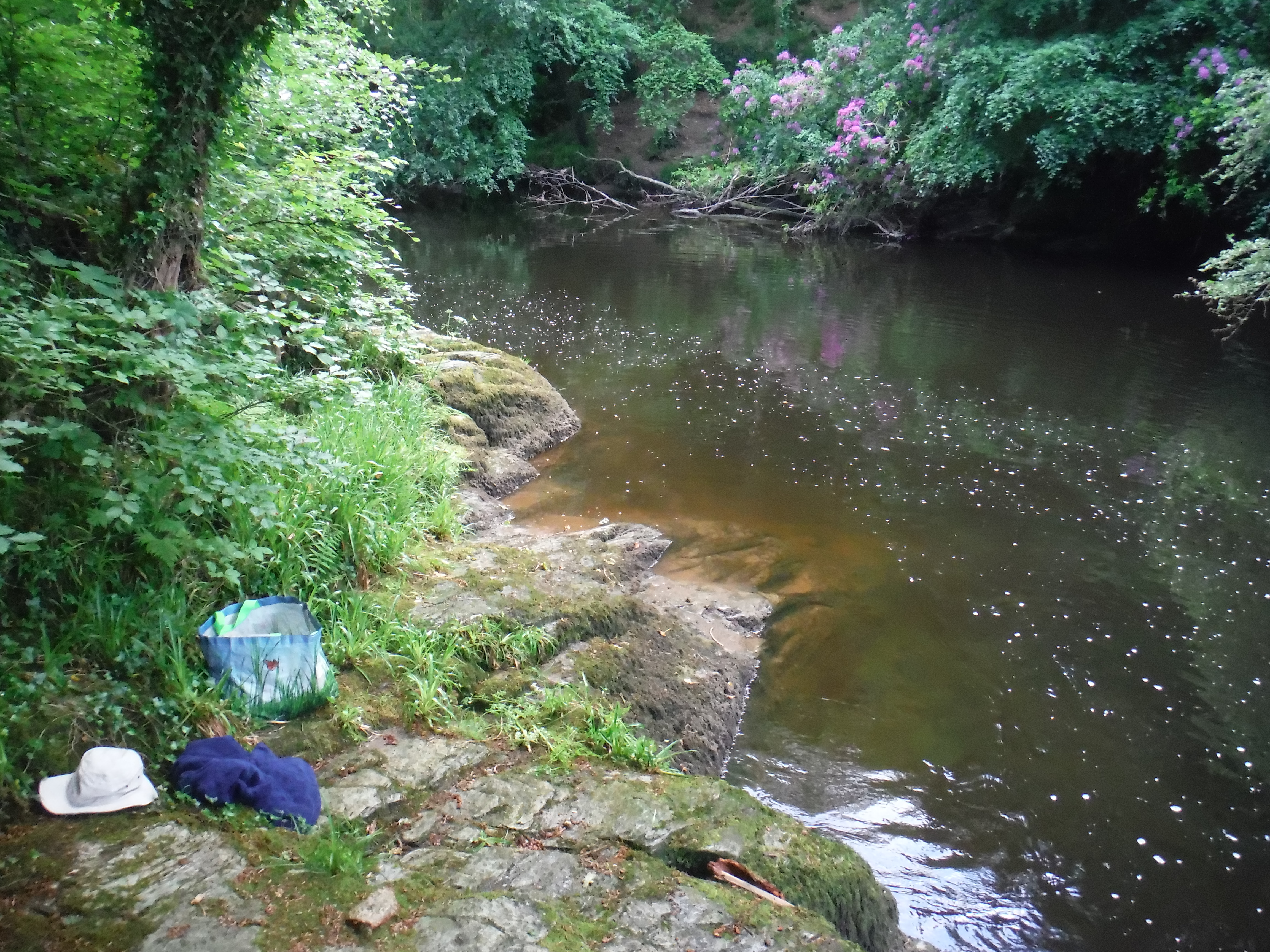
Nearby we happened upon a perfect spot for a picnic lunch, beside a right-angled bend in the river with easy access, deep water and a small beach on the wooded shore opposite. Pink campion graced the bank where a gentle slide guided me into the water. I could feel soft mud exuding through my toes as I walked in to first waist, then chest deep and I was off, drifting downstream in the gentlest of currents.

Perfect for a picnic

Perfect for a picnic

A frayed ropeswing spoke of bygone times, of excited shrieks and memories made. Of evening sunshine, exhilaration and the tiredness of children. Did the Robartes family ever come to this place I wondered?  Were they permitted to feast on the freedom of the river?

Freedom of the river

Freedom of the river

Thomas Charles Reginald Agar-Robartes, born 1880, was the eldest of ten children. Schooled at Eton then educated at Oxford, Tommy was a keen horseman who beame a Liberal MP in 1906. Famed for his dapper appearance and trademark buttonhole of violets, he once appeared on the cover of Tatler and was every bit the charming English gentleman.

Thomas Agar-Robartes

Thomas Agar-Robartes

Floating lazily in a wide gyration, I wondered if Tommy had really known the river. Had he discarded his clothes and convention before leaping into these waters? Had he swum from the shingle beach before gazing  up at the sun or stars?

My thoughts were interrupted by the sight of a woman almost towing her sullen teenage son in her wake. Having also discarded my clothes and convention, I took a few strokes towards the high river bank where the water was deep and dark. Here the brown mud was peppered with burrows, like the aftermath of a machine gun attack. Treading water to save mutual embarrassment, I heard their footsteps drawing closer, then pause. “Hallo” she called with a smile and a hearty wave. Treading hard, I echoed her greeting before floating off, back into the green stillness and my musings.

Green stillness

Green stillness

A gentle breeze carried the rhythmic pulse of a steam train over the fields, for the Bodmin & Wenford line still operates nearby. The vintage picture was suddenly complete. It was 1915 and I was enjoying a rich, slow, timeless and simple life here on the surface of the river.

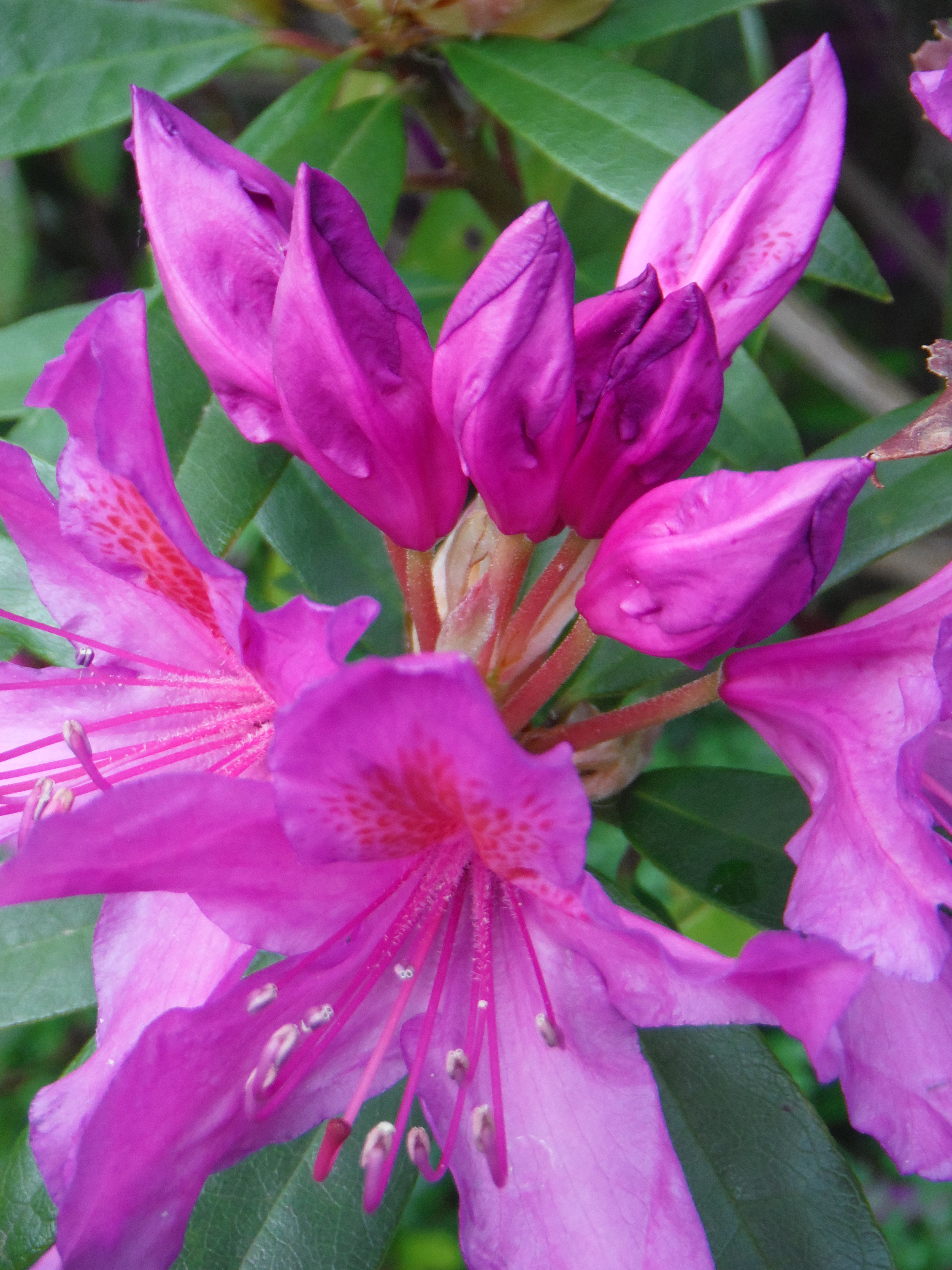
Presently, darkening skies drew over and the air chilled. We retraced the path, past an explosion of rhodedendrons to the railway road where I imagined Tommy in an open-topped car en route to the station, casting a last backwards glance towards his childhood home before rejoining his regiment on the western front.

Rhodedendrons along the river

Rhodedendrons along the river

And I imagined the tears of his mother as the train pulled away …

On September 30th 1915, Captain Thomas Agar-Robartes was in command of No. 2 Coy, 1st Bn, the Coldstream Guards at the battle of Loos. Although wounded, he rescued a comrade from no-mans land under heavy fire.

Tommy was killed by a single shot fired by a German sniper.

Grave at Lapugnoy, near Bethune

Tommy’s grave at Lapugnoy, near Bethune

The river flows on.