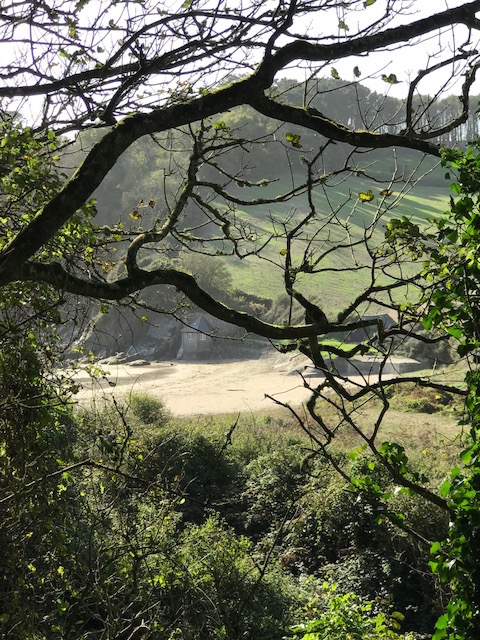
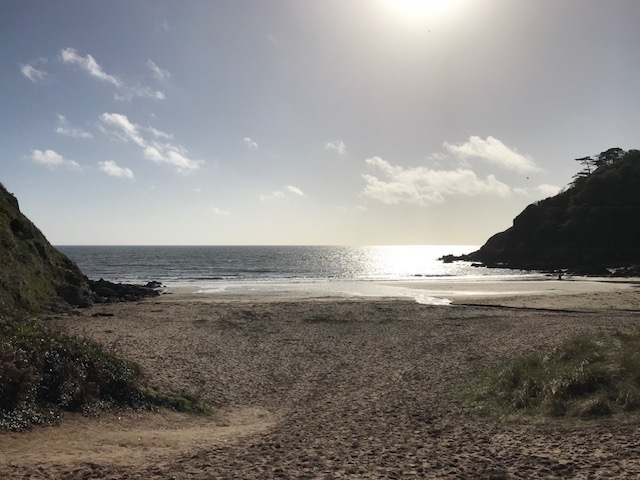
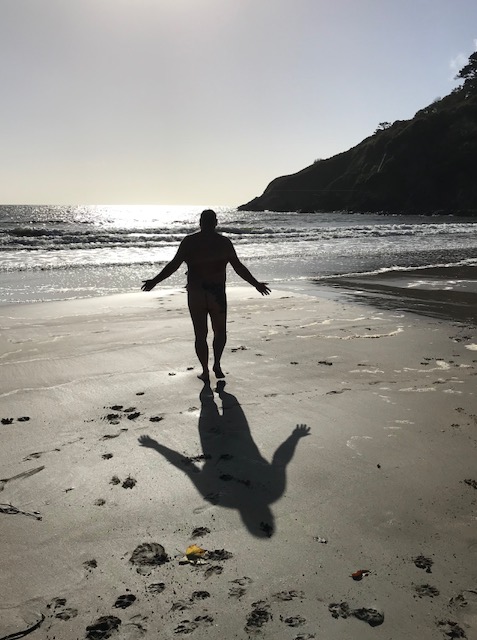
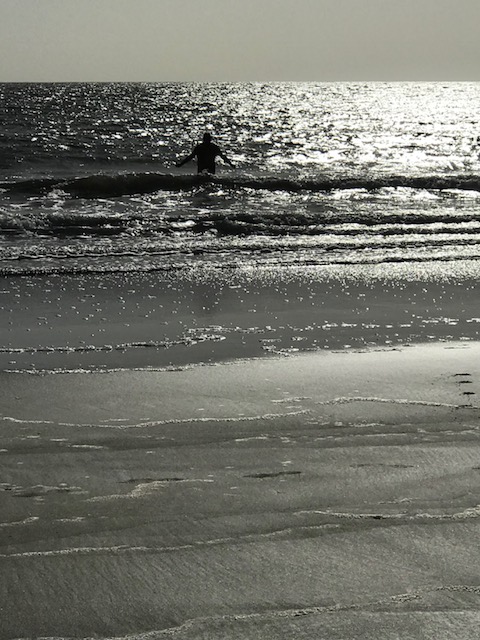
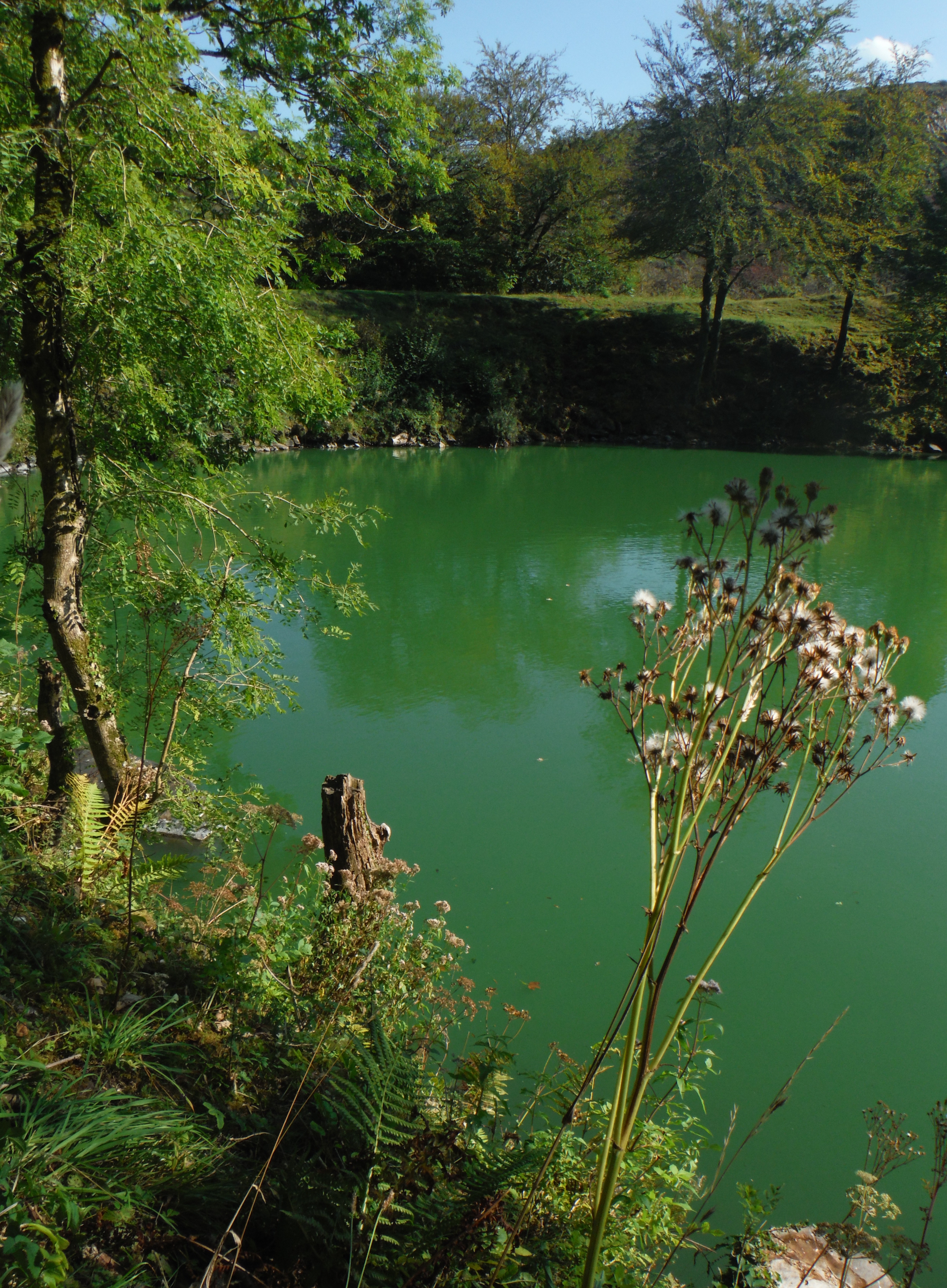
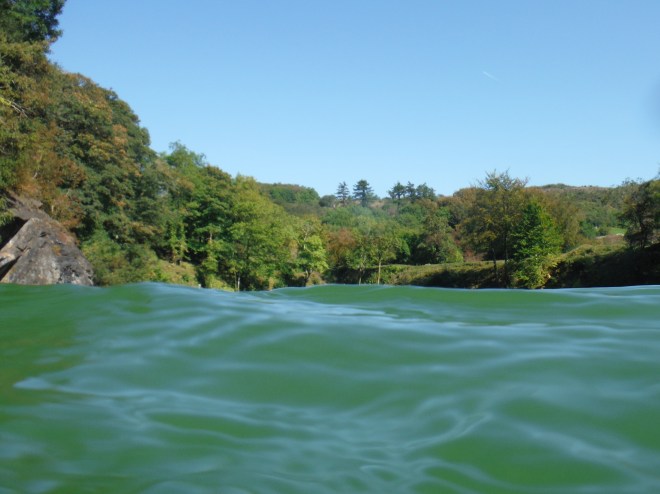
Summer is a’Come Unto Day

I have been on a journey. A long, long journey. A soul journey and a spirit journey.

A journey that has taken me from Christianity to Buddhism and back again. But only to stay awhile, for in the long days of lockdown, I began to read – tentatively, then voraciously. Devouring every book I could find on Celtic Christianity. The earliest incarnation of a new religion in this land. A religion that sought to meld the new with the old. A earthy, egalitarian religion that resonated with my seeking mind – my searching heart. And for a while that was enough.

But then came the call, faint at first, to travel again. To explore. To excavate. To dig deeper until I reached the roots. Our roots. The deep-rooted indigenous religion of this isle. The Isle of the Mighty. Albion.

And so I discovered Druidry. A spirituality based on the beliefs and traditions of our most ancient ancestors. But with a contemporary twist. A spirituality that holds a deep reverence for our natural world and for the cycling seasons of nature and life. A spirituality that honours the connectedness of all creation. A compassionate path that values community. A path without divisive dogma. A philosophy that embraces environmental stewardship and ‘otherness’. Where all are welcomed without judgement. Where peace is paramount.

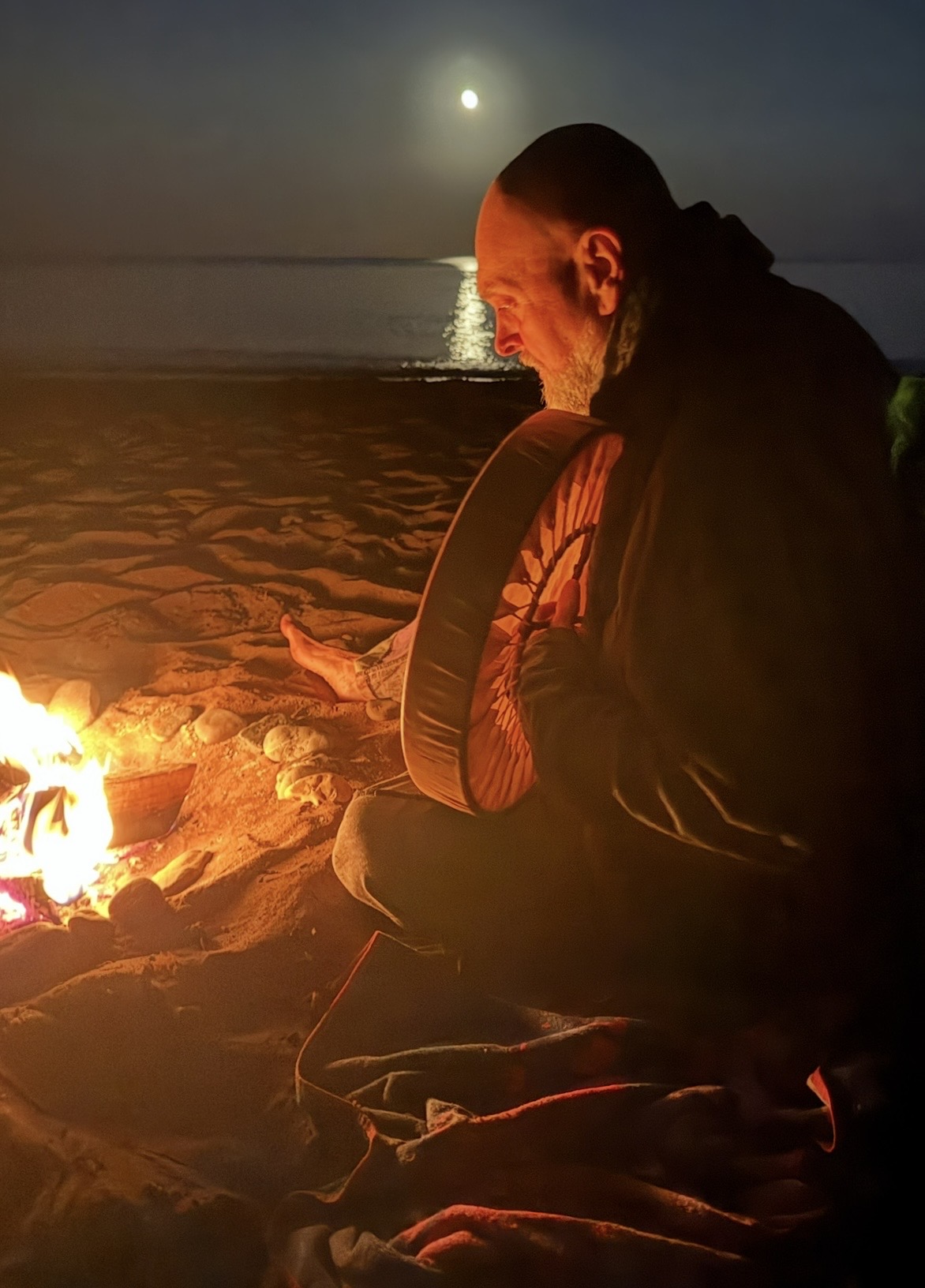
And here I have found a home. And an understanding of my deep desire to wander in wild places, to swim naked, to watch clouds and sing to the wind. To drum up the full moon, then bathe in her beams.
Which is why Beltane is the best of times.

For my Celtic ancestors knew only two seasons – winter and summer. And Beltane, May 1st, marked the first day of summer. No wonder they celebrated – the times of hardship were behind them and days of warmth and plenty lay ahead.

And there was a deeper meaning too. For this was also a festival of fertility and fecundity. In Pagan eyes, a time when God and Goddess unite in the act of love. And from this Divine Union come the crops and the creatures. The wild and wonderful diversity of life.

Which is why it’s a wild and wonderful festival. A festival steeped in sexuality.

____________

So what better way to celebrate than to wake before dawn and dance up the sun with Morris mates? As I have done for year after year. High on the tors of Dartmoor.
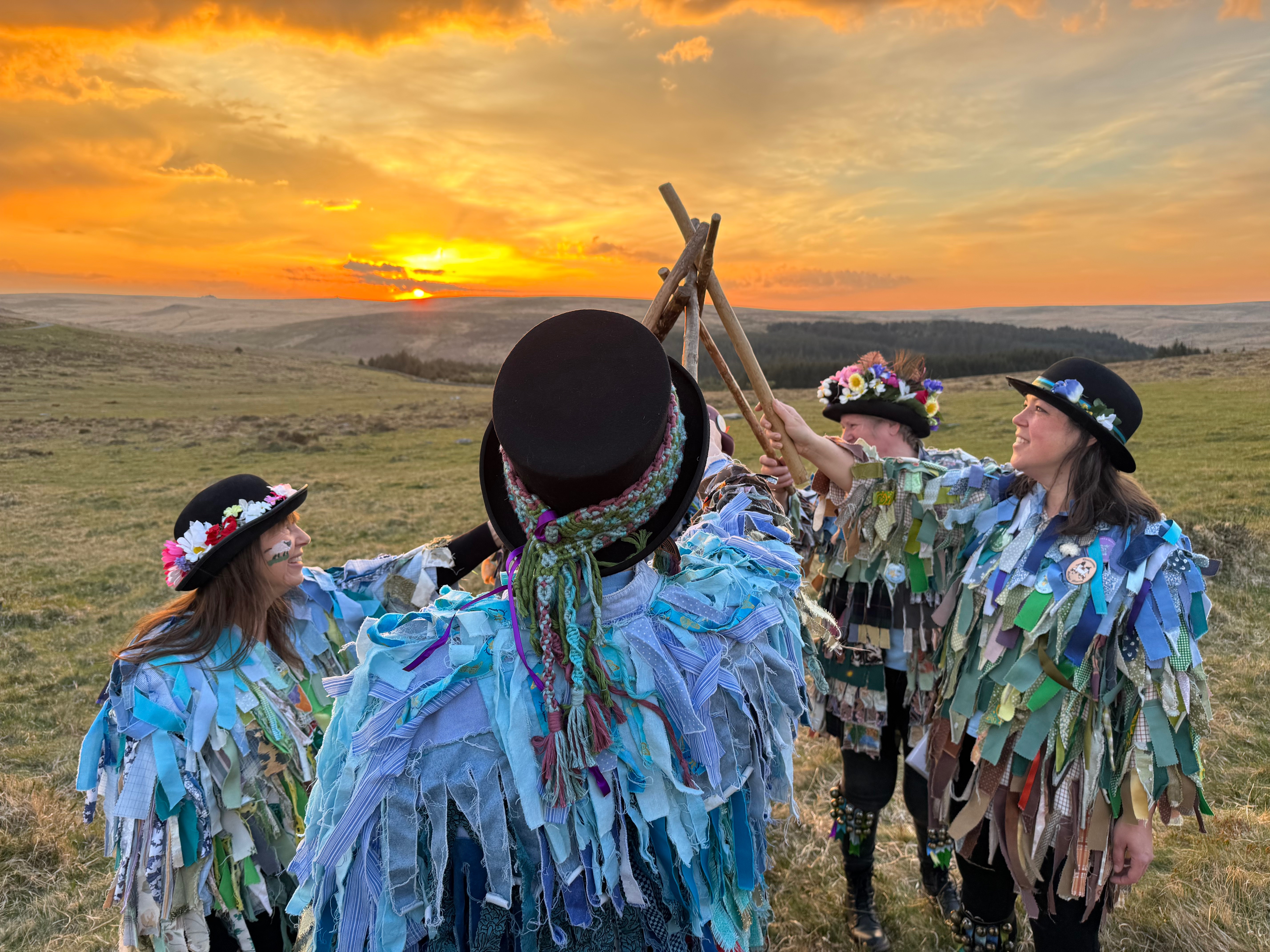
An then a hearty breakfast, sprinkled with a seasoning of songs to celebrate the traditions of distant times.

All this and still only 8am!

A whole day ahead. A day of exploration. A day of walking, wild-swimming and wonder. A magical day. A mystical day. A day of becoming …

A day that took me to Scorhill Stone Circle.

Dating back over 4,000 years, this is one of the largest Bronze Age monuments on Dartmoor. Sited in a rugged setting, this striking circle appears to align with the Midsummer sunset and would likely have been used for religious ritual. Here too, tribes would have gathered to trade, marry, forge alliances and make important decisions.

But now it is a place of silence. A place of secrets.
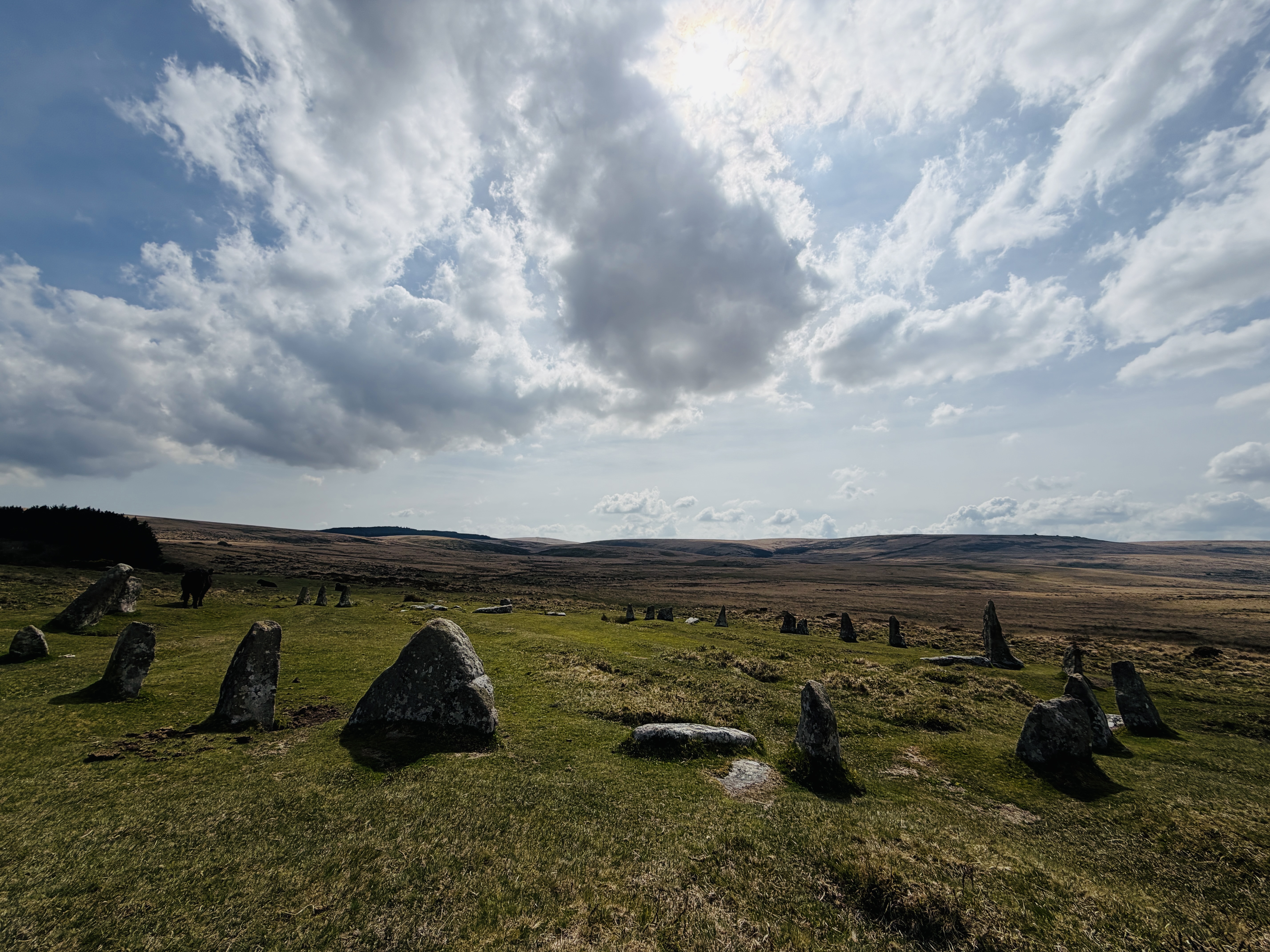
A place where the murmuring of bees is broken only by the soft moan of a breeze. A place to rest. To reflect.

A place to imagine.

A place where rituals are rumoured still to occur. A place for hand fasting. A place to make love.

And a place without shade!

For by now the sun was soaring and his heat was searing. And from down the hill I could hear the sound of flowing water. Inviting water. Calling and coaxing. Irresistible.

Here, along the course of the North Teign River, Bronze and Iron Age settlers once streamed for precious tin, and the granite channels created by their mediaeval counterparts remain clearly visible. Channels that served to speed flow and so sift sediment from ore.
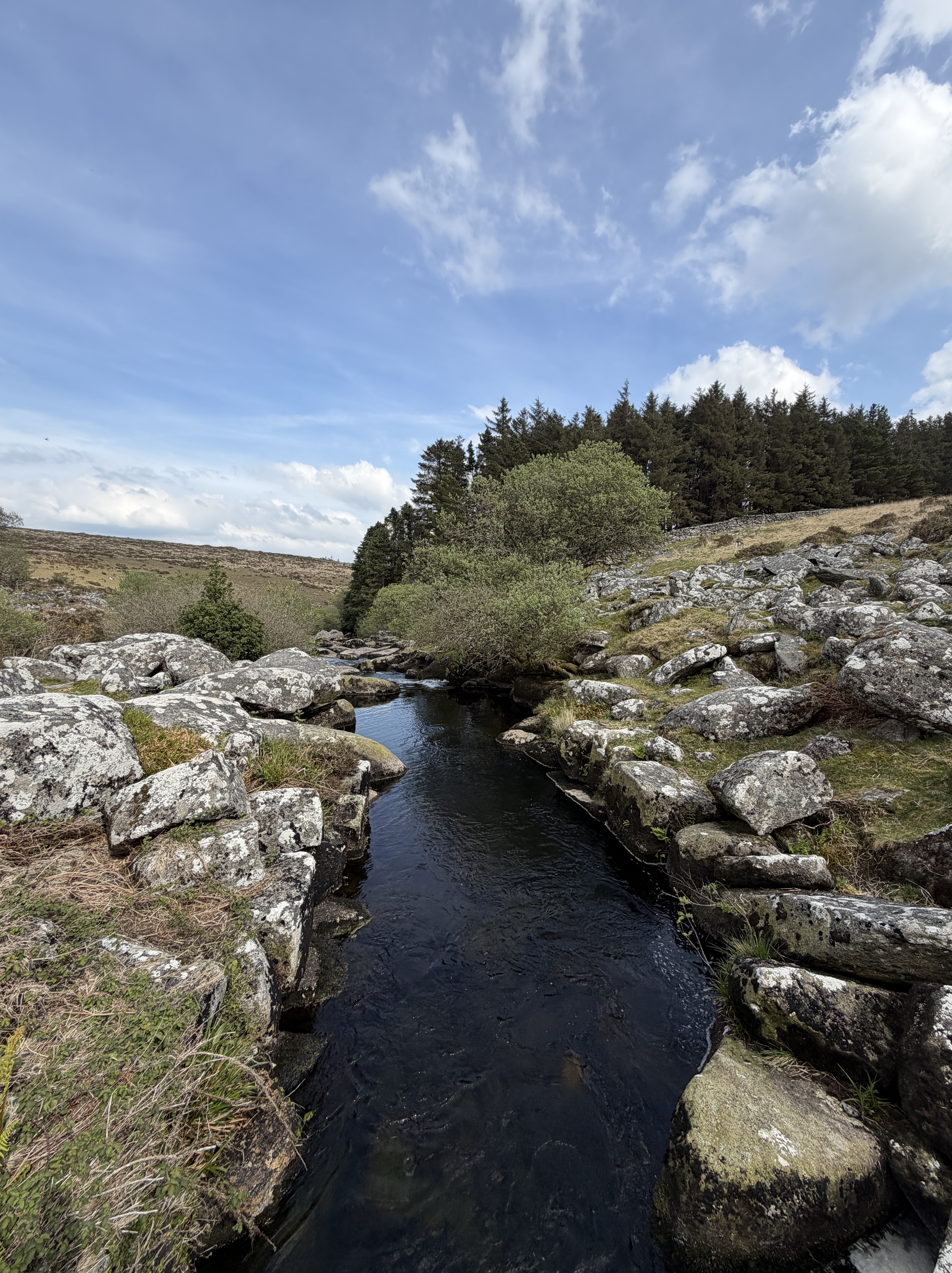
But today my interest was not industrial archeology – it was the cool pool that lay beyond the channel.

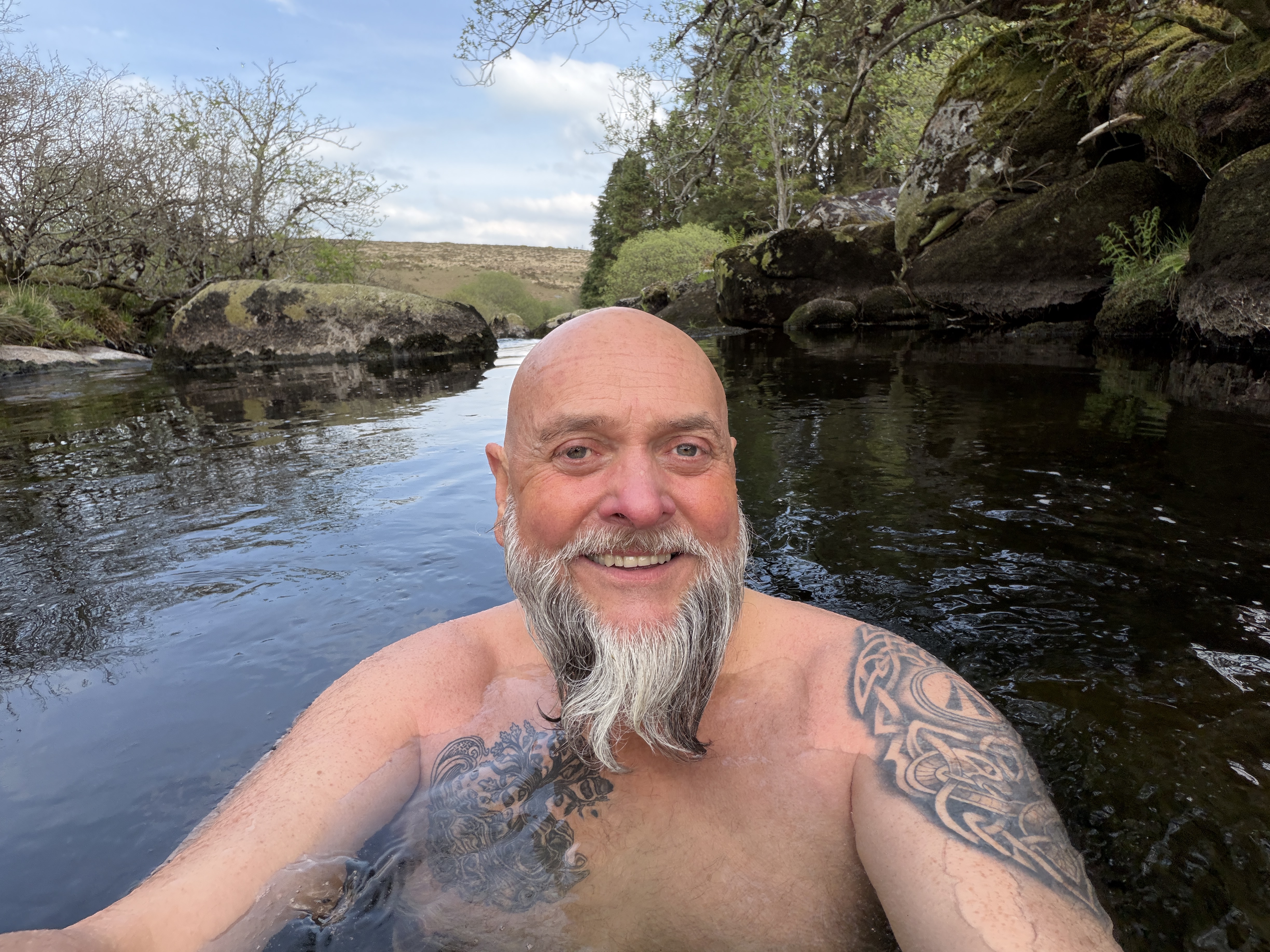
And soon I had stripped, slithered and slipped into her balm. Golden with peat and the reflection of gorse flowers.

And how good that felt.

As being naked in open water always feels.

For in these moments – these sacred moments – comes connection.

An intimate connection. Yes, a fusion. A fusion with the elements – with air, fire, water and earth. A sensual union with the Spirits of Place. A togetherness with generation upon generation of ancestors who similarly stripped and sought solace from the sun, right here. For I am just a link in a chain of succession. A chain of swimmers that flows and fades back through time.
Lunch on the bank and then the shortest of strolls downstream, past waterfalls and rapids to where the North Teign and Wallabrook meet. Here lies the Tolmen Stone. Steeped in folklore, this massive granite boulder has an almost perfectly circular hole that has been drilled and ground through its heart by centuries of stones, rotating in the rushing waters of winter.
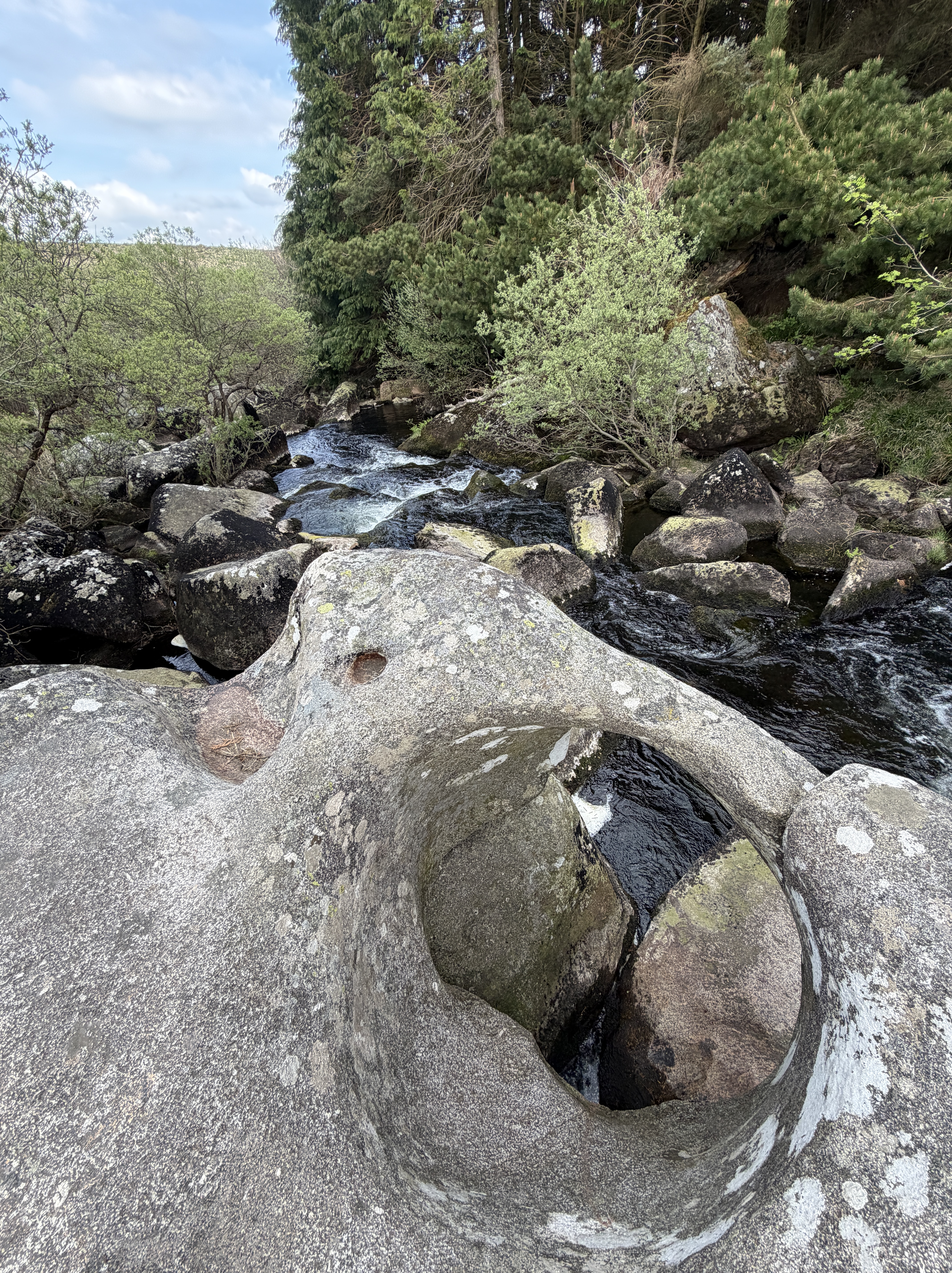
Local tradition has it that squeezing through the hole acts as a cure for all manner of rheumatic conditions and in Celtic lore, passing through a holed stone is an act of purification, a way of escaping bad luck or infertility.

Well, on this occasion I did not pass through the Tolmen, which might explain why the next stage of my expedition served to remind me that my knees are becoming a tad arthritic!

A slow, steady climb towards Kes Tor (aka Kestor Rock) accompanied by the call of a cuckoo and the ever-present song of the skylark – a quintessentially Dartmoor sound at this time of year.
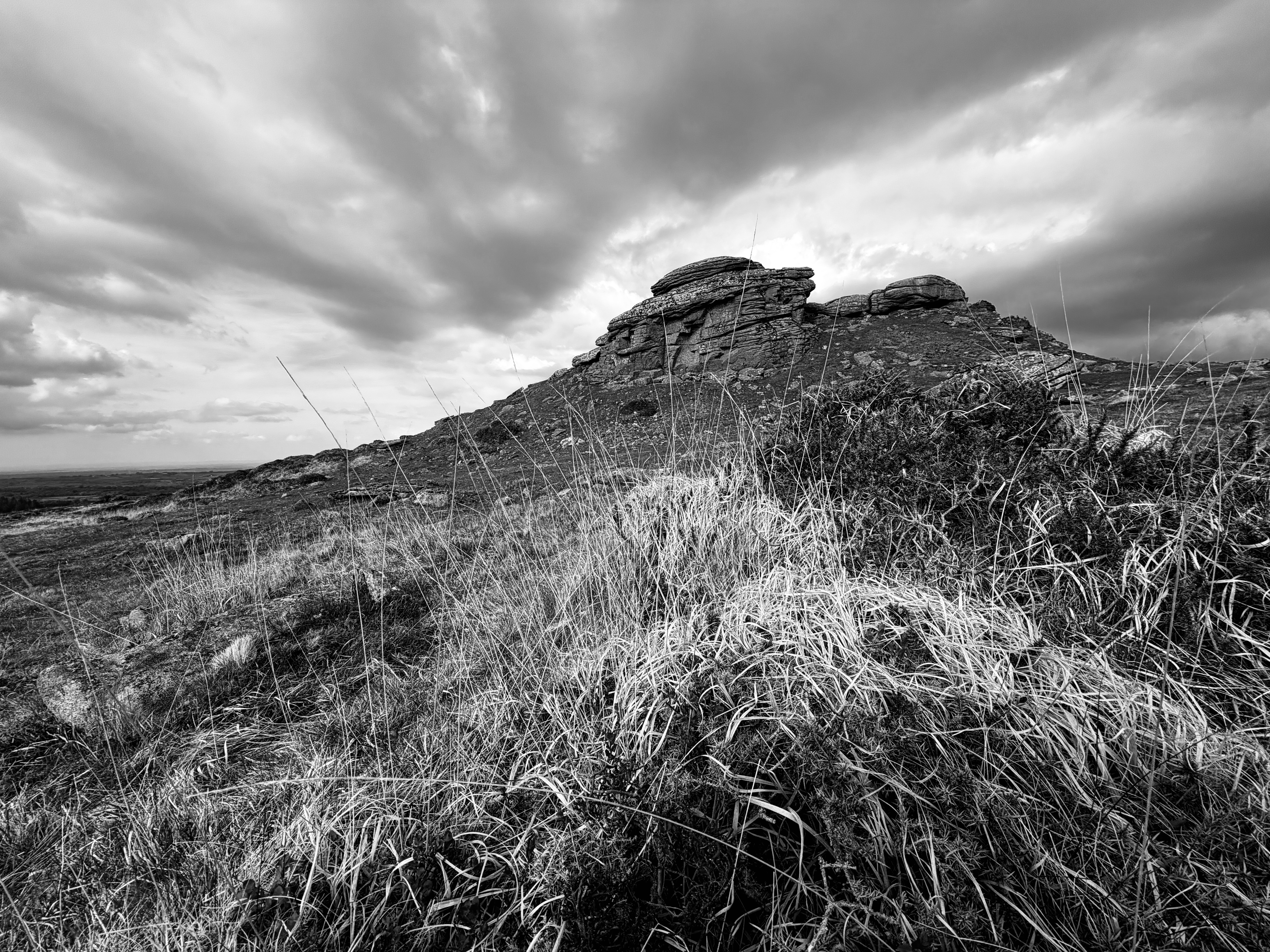
And then, another bird…
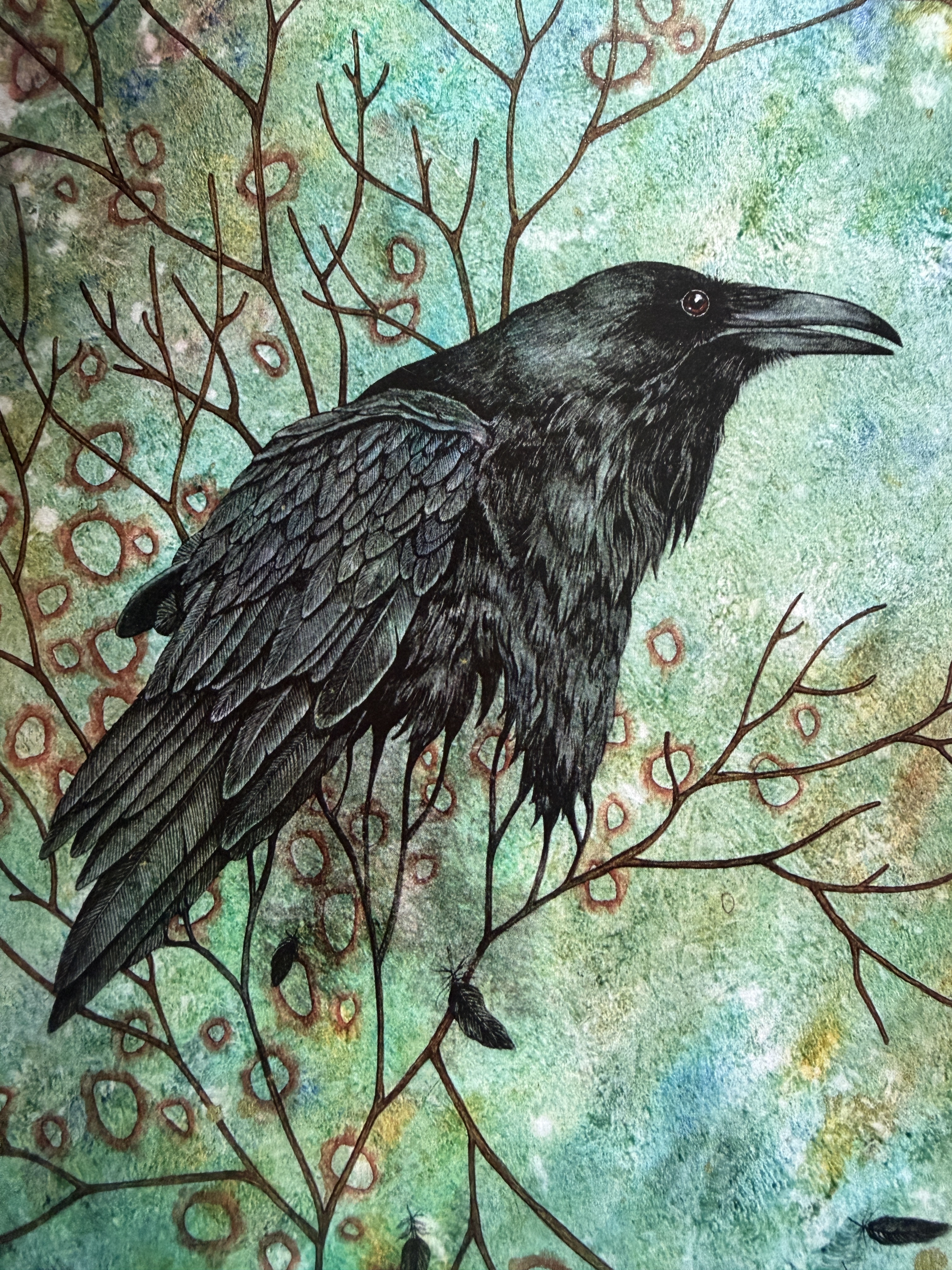
Yes, a magnificent raven, perched on a rock and looking straight at me. Staring. A piercing, knowing look. Sustained for many seconds – maybe a minute – before launching into a low, languid widdershins circle around my startled figure and then settling again. Still watching.

An omen. A warning.

Black as beak. Firm as feather.

Should I turn back?

For a moment I felt the solitude of this pace, dagger-keen.

And yet I was not afraid, for I was not alone. To quote a friend, I was “walking with the Moor”. The very best of company.

And perhaps this was not a threat, but a challenge to transform. To change. A Beltane invocation to leave a season of darkness and enter a season of light?

I strode on- and now with a spring in my step. A feeling of fearlessness. A feeling that I too could rise and fly.
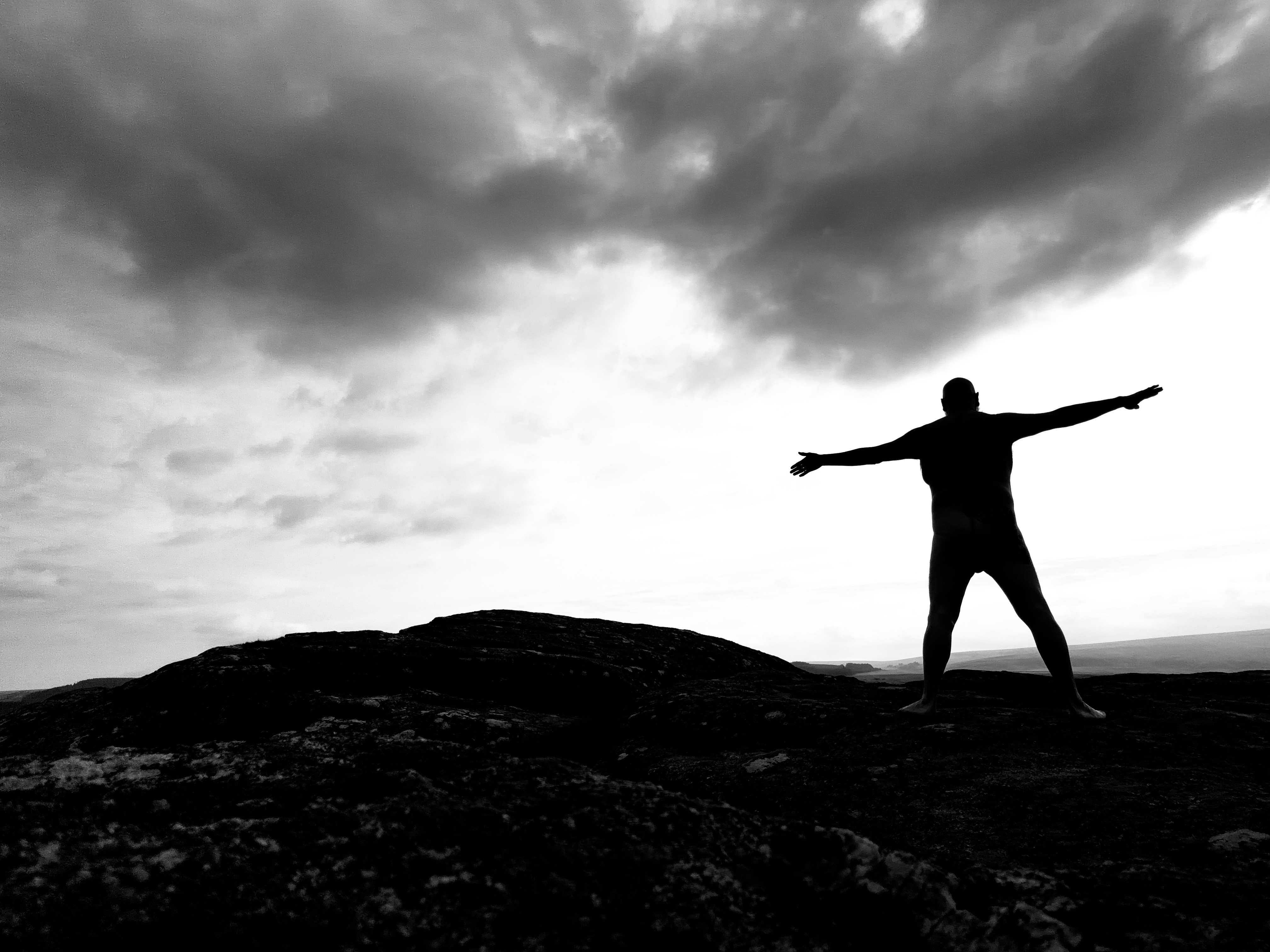
To the summit of the tor, where I stood skyclad, facing into the warm wind and watching the sun welcome the western horizon.

A lofty moment of transcendence. Of transfiguration. Wrapped only in the breeze. A moment of knowing. A moment of belonging.

Whilst behind me lay the reason for my visit:

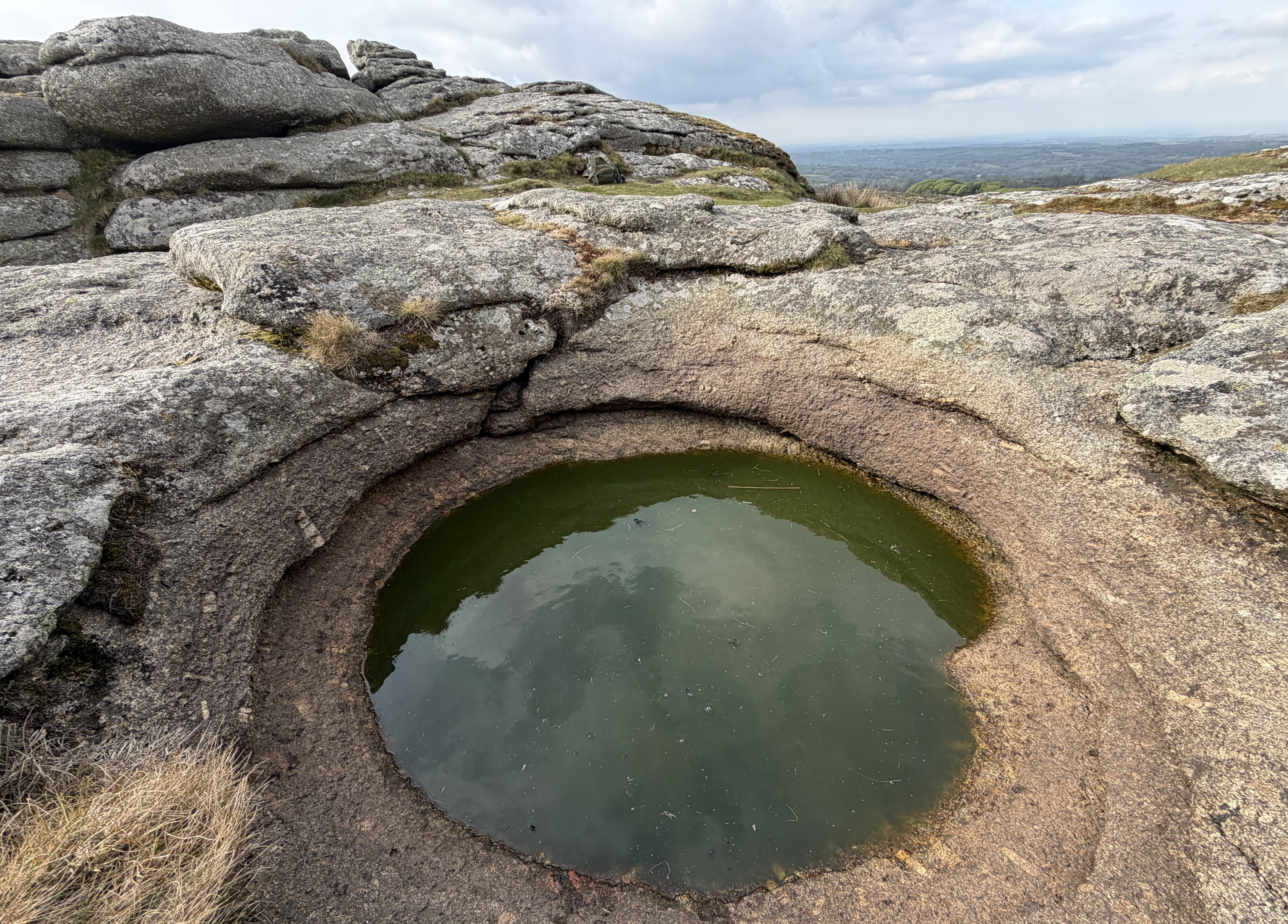
The Druid’s Basin.

The title of this place harks back to Victorian antiquarians who argued that this natural feature had, in fact, been carved out by Ancient Druids. Here could be found the purest rainwater for their rituals – or more darkly, it was created to catch the blood of human sacrifices. But rest assured – there is no reliable evidence that such practices were ever undertaken by Druidic Priests…

Phew!

In Neo-Pagan circles, cauldrons have a deep significance as places of change. Places of re-birth. So it seemed only appropriate to climb in. Until I looked at the water – so far from pure that I half expected some new life-form to evolve and emerge at any moment! So that temptation was easily resisted.
I passed some time here – but sadly, time was not in rich supply and I soon felt the need to retrace my footsteps, which by now were tired and heavy. Trapped within leather, my throbbing feet were clearly rebelling in belligerent style, and the only way to quell their fury was to head back to the river.

And there, a little downstream from the Tolmen, was the most perfect of pools.
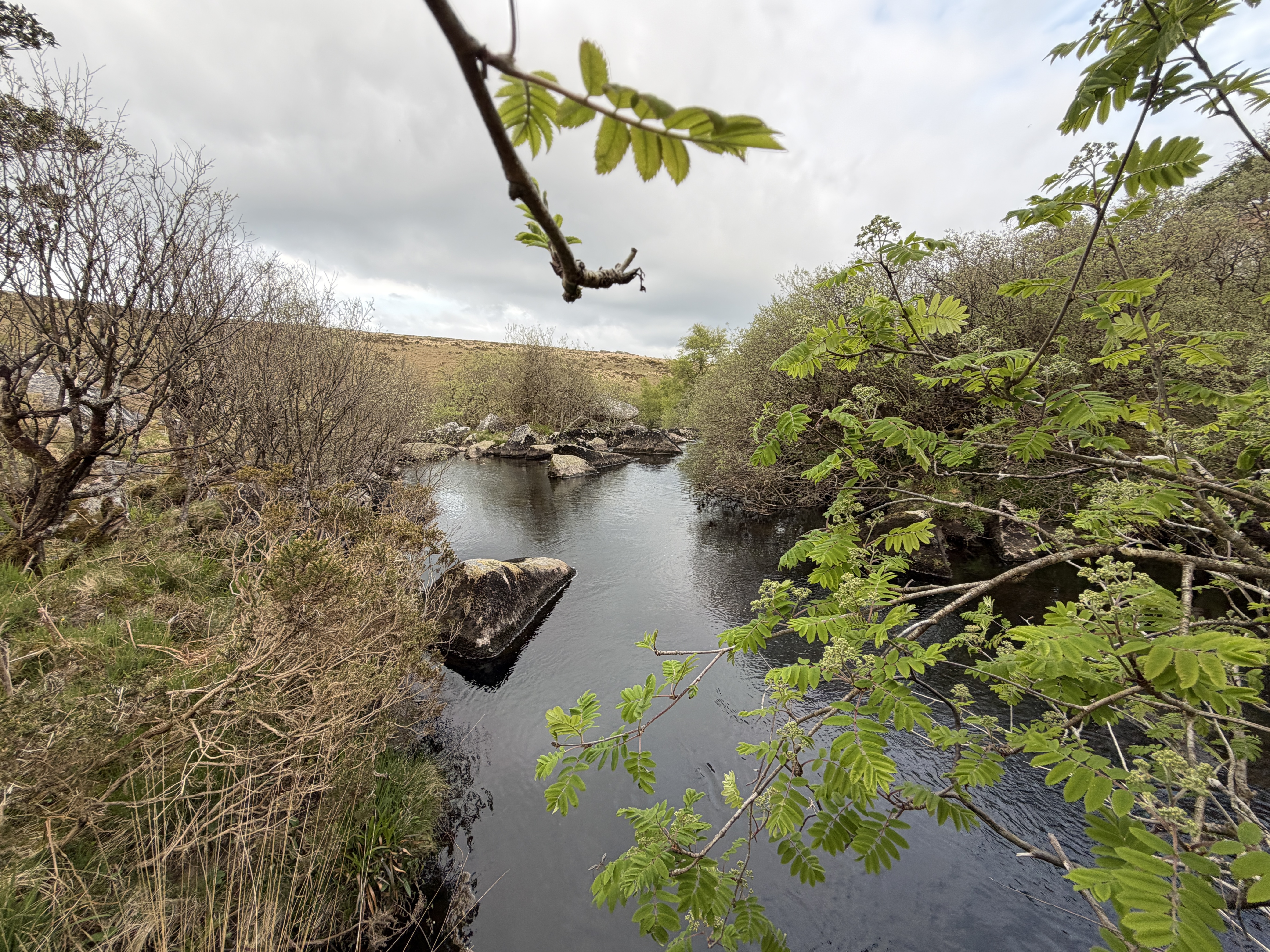
Slipping in, I swear there was a hiss of steam as feet thrilled to the chill of the water and knotted muscles relaxed into a moss-soft armchair, formed by boulders on the river bed.

Heaven on Earth.

Hard, oh so hard, to rise, dry and slowly climb back across Scorhill Down and towards the stone circle. Here, a hiker had pitched his tent and amiably offered me a bowl of noodles. He wanted to know more about the place and I was pleased to assist, But I had to warn him that he might not be spending the night alone. Undeterred, he cheerfully waved me farewell as I walked on, accompanied by the lilting music of his flute.

But from somewhere, far away in time, came another sound.

Barely perceptible, but unmistakable.

The sound of voices joined together in a ritual chant …

_________ /|\ _________

The Life Study

Haytor Quarry, Dartmoor

October 2017

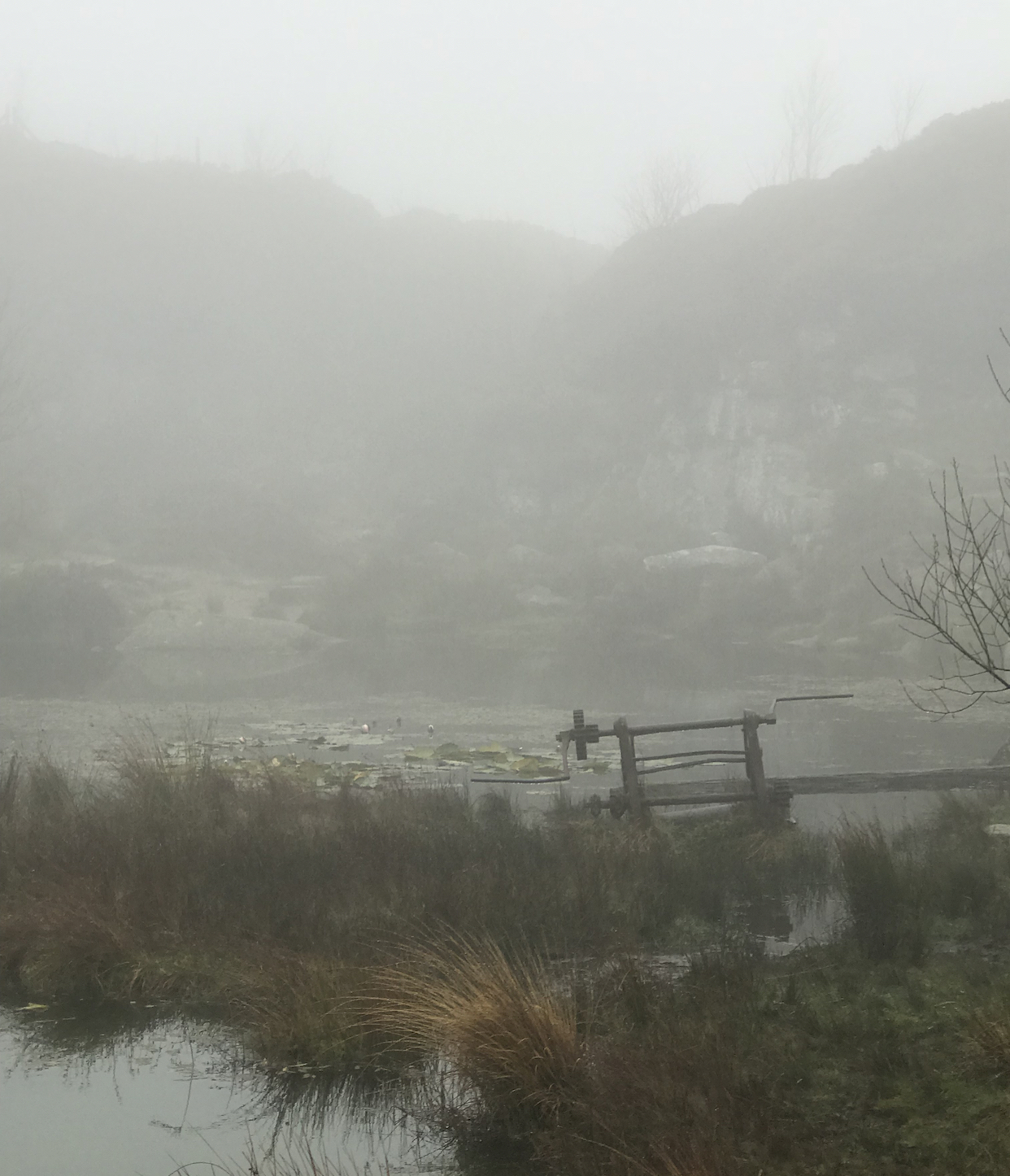
The Bowerman’s Nose was wrapped in a thick misty muffler, bleary granite-cold eyes peering into the bleakness of this autumnal morning. For Dartmoor was dreary, damp and dismal. A smothering fog had descended and all seemed lifeless, hopeless, bland and blinded. I looked about me, but could see no road, no pathway, not even the faintest of tracks to show me the way.

Lost and alone.

Physically and psychologically.

For, thirty years as an ambulance medic and family doctor had finally extracted their inevitable toll. Ninety-hour weeks of pressure and pain, of horrors and heartbreak, had wrung me dry. Taken me to the brink. Burned me out. Hollowed me into a husk – into the fragile shell of a man.

So I did what I always do in distress. I headed to the wild.

To Haytor, sad scene of many suicides.

But not for me. I was here to swim, for swimming is my salve, my healing helper.

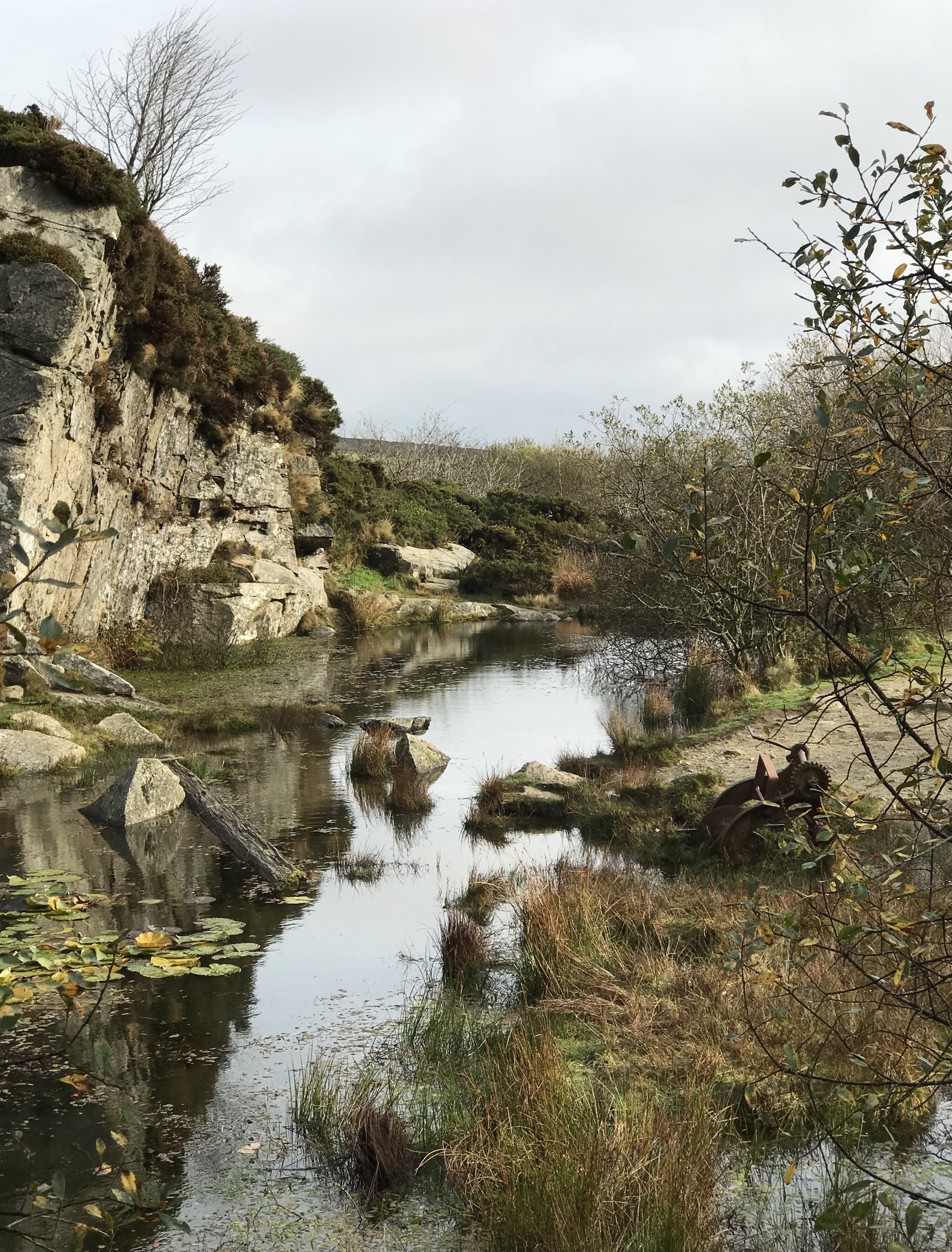
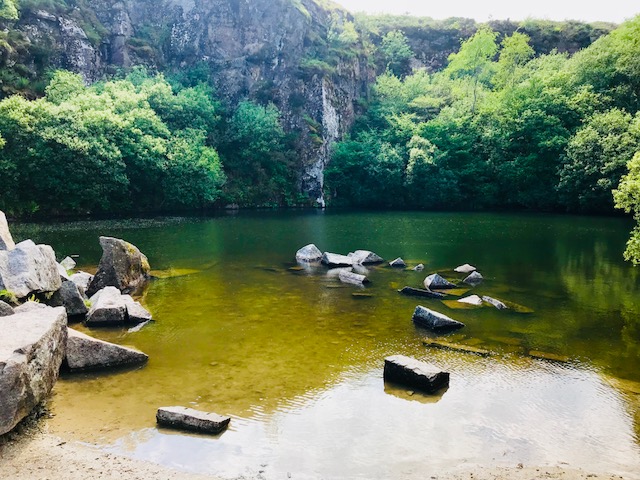
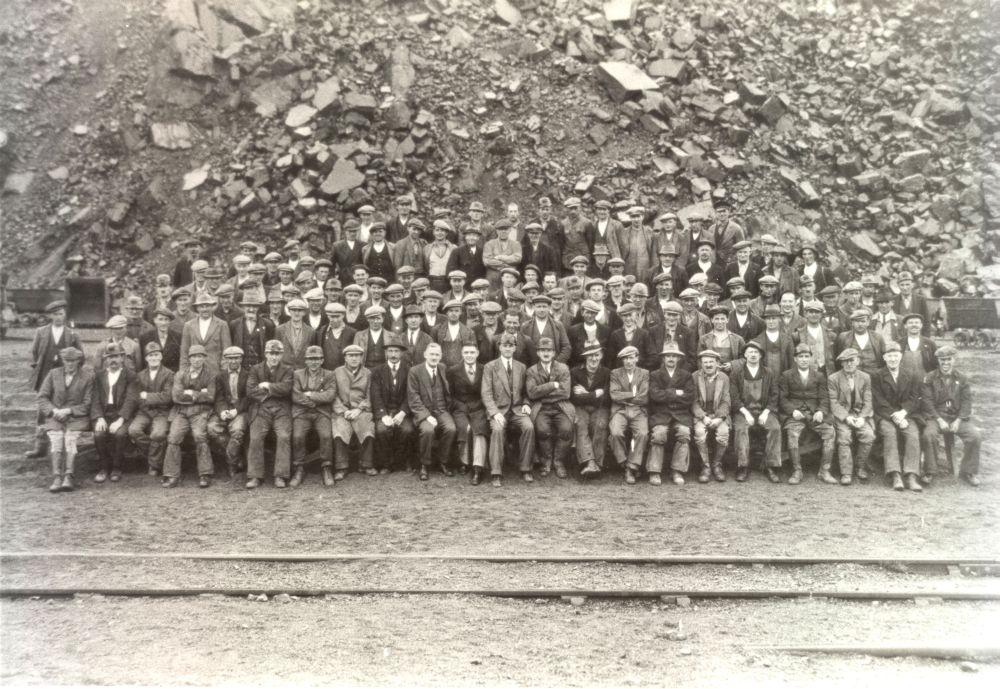
And I had read about a quarry here, nestled below the tor, amidst Bronze Age hut circles and century-clinging tin streamworks. Once bustling and busily yielding the stone that built the British Museum and London Bridge, the quarry fell silent in 1858, victim to cheaper Cornish granite.

It is now a haven of solitude.

A place to be alone.

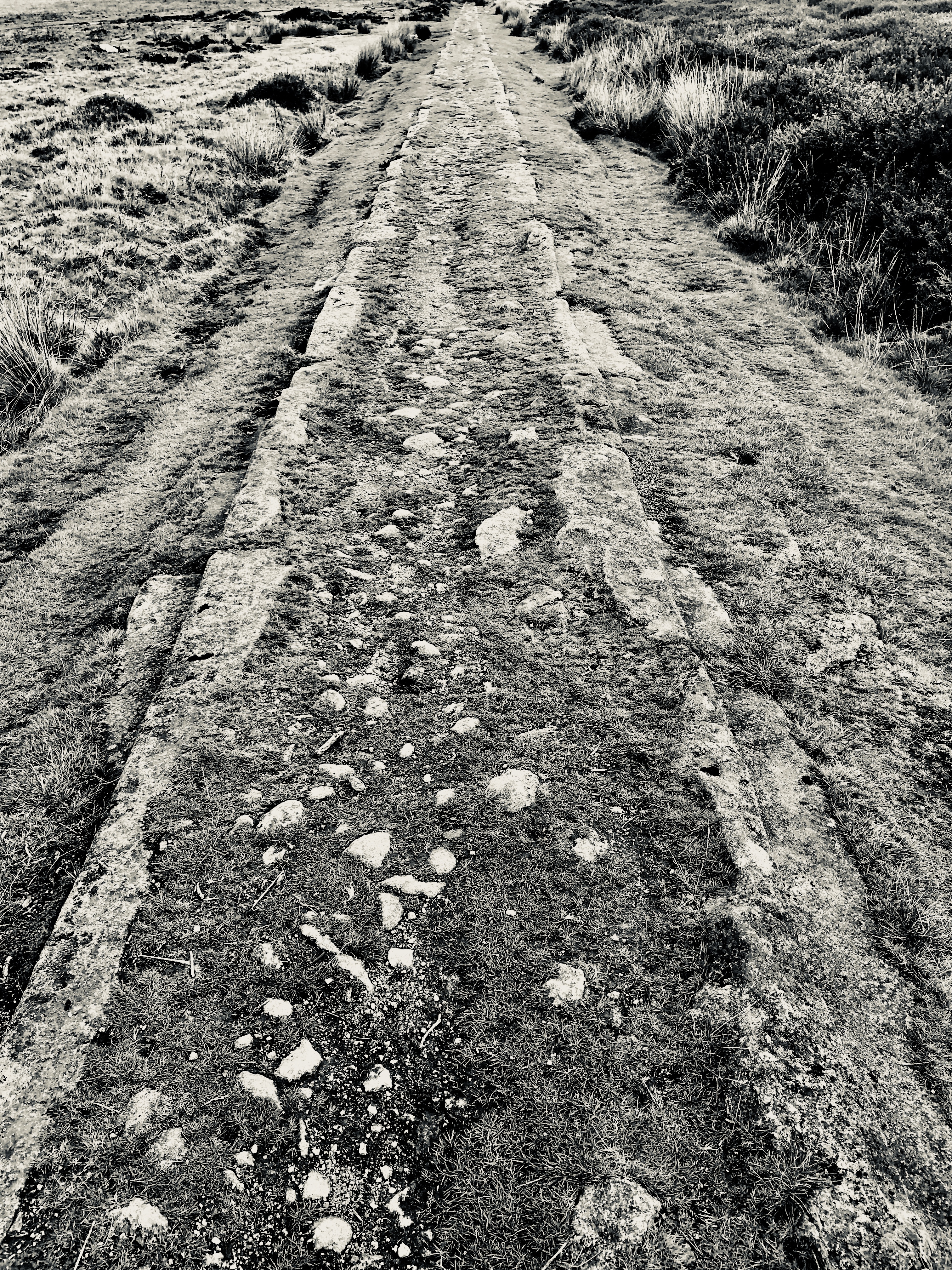
At last, a path – the old granite tramway – linking quarry to canal – forging an irresistible progress through bogland and scrubby grass.

Leading me along the straight and narrow – the road to salvation – to the water and the blessed baptism that awaited me there.

But my initial impressions were not of Paradise, Heaven, Nirvana.

Far from a being a promised land, the discarded debris cast off a rusty hue of abandonment, of leaving in a hurry.

More Mary Celeste than celestial marvel.

A lazy breeze ruffled the surface of grey, slaty water, looking every bit as cheerless as I felt. Laying my clothes on a clammy stone, I caught site of my naked body in a peaty puddle and wondered why, oh why was I here?

Gingerly picking a path through slivers of granite, sharp as flint, I made a hesitant, head-down journey into the lake.

And it was every bit as mortifying as the scene around me. As if the ice-cold hands of long-dead quarrymen were grabbing my ankles and pulling me down and down, ever deeper, through the decay of sludgy silt and towards the centre of the this languid, lily-padded pool.

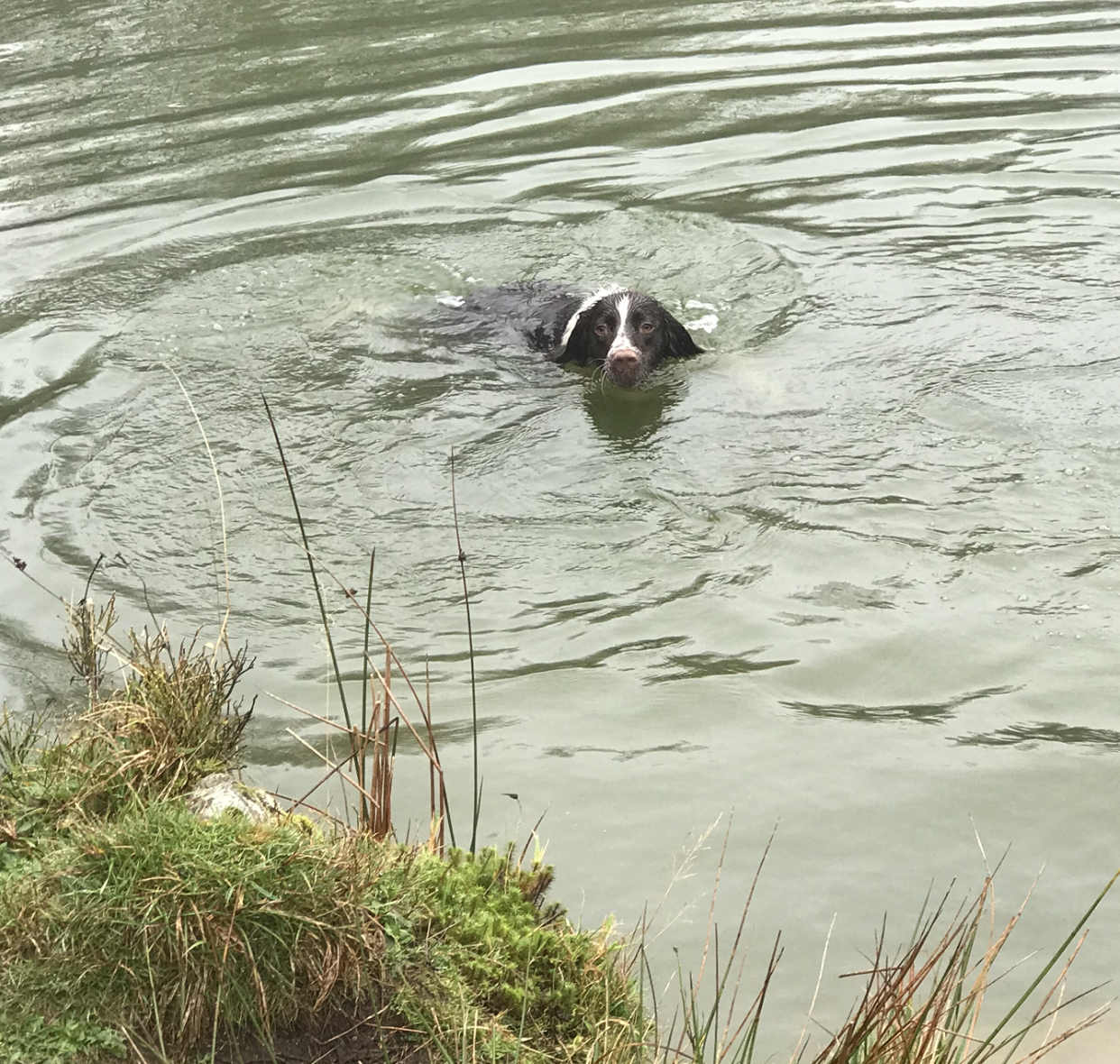
Oak, my faithful friend, panicked (as usual) and assumed I was drowning. Barking wildly to drive the ghouls away, he swam around me in ever decreasing circles, scourging my skin with his frantic claws, unable to understand why his rescue attempts were not, Lassie-like, treated with appreciation!

I lay on my back and floated in sorrow, in a pool of self-pity.

Eyes closed … the minutes drifted by … perhaps longer, until I was shocked back to life by the sound of Oak shaking on the shore and a shaft of sunlight striking my skin.

Eyes flashed open.

The fog was lifting and now the quarry was all about me. A few strokes led to the shallows, where I stood bare and basking in the Autumn warmth, watching my skin ripen from white to blue to pink, wrinkles unfolding like a juice-plumped fruit.

A smile broke across my face, mood rising with the mist, as I inhaled the barren beauty of this place.

I recalled how many times I had explained the ‘seasons of life’ to my patients; likened the ups and downs to the ebb and flow of tides, the waxing and waning of the moon. “Even the darkest of days will end – the light always breaks through.”

And suddenly there they were.

Legs.

Five to be precise – three wooden and two very human.

Glancing up towards a green tufted outcrop I spied an easel, a canvas and a woman – looking straight at me, head tilted, sable brush in hand.

She was smiling too.

We exchanged a knowing acknowledgment.

I had been painted in all my colours …

Enchanted!

Witches Pool, River Lyd, Dartmoor

June 2023

I have no idea how a consultation about arthritis turned into a conversation about wild swimming. It just happened that way – serendipity some would say.

So when an elderly patient recounted her carefree childhood dips on the moor above Lydford, my interest grew.

Witches Pool – how could any self-respecting lover of the old ways fail to be interested? And, despite living on Dartmoor for over 20 years, this was a place I had never heard of.

Stranger still, it was mentioned by another patient the very next day.

So the charm was cast, the hex was upon me, and I was powerless to resist the call to imbibe the magic of this mysterious moorland cauldron.

A little research and a late spring break saw me turning up a narrow track beside the Dartmoor Inn – yuletide log fire, laughter and a thick juicy joint of gammon; my own childhood memories served up on a pewter platter.

After weeks of sunshine, dark clouds were pummelling in from the west – moody, threatening, alluring. Warm spits of rain against my skin – like Ceridwen’s brew upon the hand of Gwion – but no chasing hounds were necessary to drive me into the water.

For I was drawn inexorably towards the siren call of the Lyd, chuckling as she weaved her sensual silky spell, winding and twisting, shape shifting into a lascivious lap dancer, urging me on with her peaty pout. Luring me downstream, on and on, faster, faster, faster, laughing now, teasing me into a run before she finally lay beneath me. Caught you!

Cross-capped Widgery Tor melded into an ever darkening, doubtless disapproving sky as I slipped off the stickiness of the afternoon and slid naked into her velvet.

Into the witches pool, her cauldron, her womb.

Here I was safe. Floating in innocence. Protected from the outside world.

No Putin. No partygate. No predictions of planetary doom.

A tranquility broken only by the distant cry of a cloud-curling buzzard and the persistent wanting whisper of the water.

Foxgloves swayed as gorse flowers gave way to the first hues of heather. Blackberry blooms foretold the sweet juice-dripping joys of Autumn. Tormentil clung to the closely cropped grass, a ewe sidled up to her lamb and sallow leaves shimmered in the lightest of breezes. Like some wild rollercoaster ride, a wagtail rose up suddenly, hung in the air, then dropped directly down onto some hapless insect.

And now it was my turn to rise from the pool, skyclad and carefree. I walked a short way downstream, savouring the sole-warming turf, before plunging into a ferment of foam, of boiling bubbles – massaging away the last dregs of thundery tension from my shoulders and back. Turning into the cascade and facing upstream, I gripped the granite and stood firm, dividing the flow, feeling the pulsing gushing thrill of elemental union.

This was joy. This was pure. This was timeless.

The ancestors of this place doubtless did the same. Their spirits live on in the river’s dance.

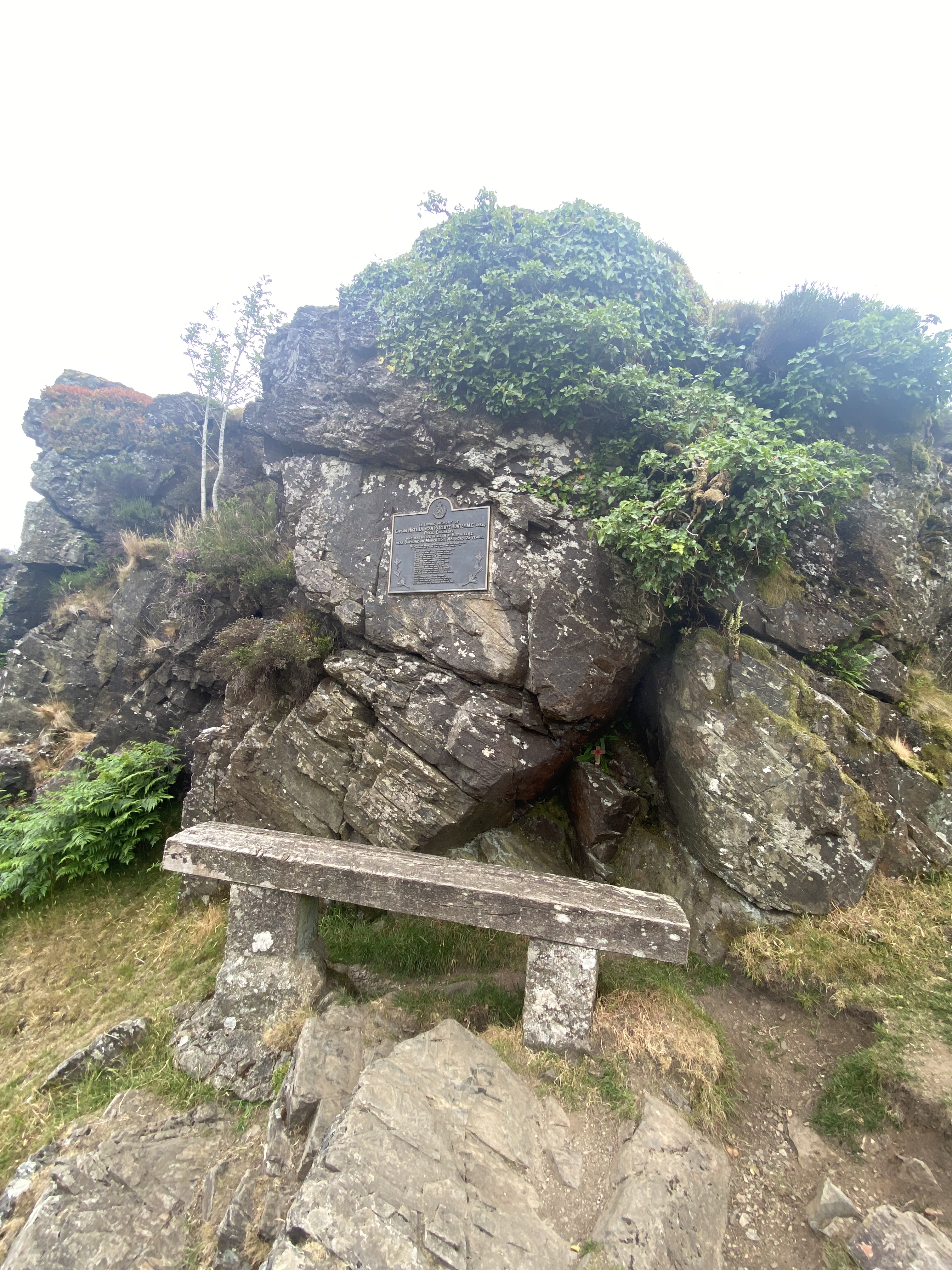
One such was Captain Nigel Hunter of the Royal Engineers. He was killed in France in March 1918, aged 23.

A plaque remembers him, for on his final visit, Hunter penned the following lines:

Are we not like this moorland stream

Springing none knows where from,

Tinkling, bubbling, flashing a gleam

Back at the sun; e’er long

Gloomy and dull. Under a cloud;

Then rushing onwards again:

Dashing at rocks with anger loud

Roaring and foaming in vain?

Wandering thus for many a mile,

Twisting and turning away for a while,

Then of a sudden ’tis over the fall

And the dark still pool is the end of all.

Is it? I thought as I turned away;

And I turned again to the silent moor,

Is it I said, and my heart said “Nay!”

As I gazed at the cross on Widgery Tor

On Hearing the First Cuckoo of Spring

Kit Hill, Cornwall

23 May 2018

The quarrying of granite was in full swing when Delius composed his famous tone poem in 1912. Using oboe, clarinet and strings, he mimicked the call of the cuckoo and painted a masterly musical canvas.

An image of rural beauty, such as can be seen and heard on Kit Hill today.

IMG_3510

For the quarry has long since closed. The heart of the hill may live on in lighthouse and London bridges, but the sound of hammer upon tare and feather has faded into the Cornish air. It is a place of silence now. Of murmuring winds. Of bee song.

IMG_3782

Kit Hill (Cornish: Bre Scowl) dominates the skyline between Callington and the Tamar. From here, one can look across a tapestry of fields towards the tanned tors of Dartmoor, view the glinting ocean and count a myriad engine house stacks, peppered about the pastures of a verdant landscape. Its name is derived from the Old English word for kite; and buzzards still ride the thermals on a warm afternoon.

An afternoon such as this.

Late spring sunshine bathes the campion, cow parsley and bluebells which line up to form a patriotic guard of honour along the path to the quarry.

IMG_3787

This is my home country. Haunt of my childhood and haunt of generations who have come to this place to swim. To soak away the heat of the day. To skinny dip under a Cornish moon. To be together. To be alone.

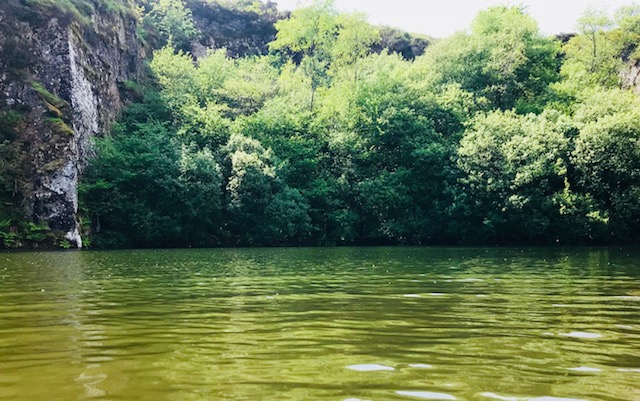
To become immersed in still water. Immersed in an alternative universe. Shielded from the known world by steep walls of stone. Where worries can be discarded like unwanted blocks and allowed to sink down into the greenest depths.

IMG_3761

Which is why I have come…

Plagued by knotted muscles and a knotted mind, I am here to unwind. To unload.

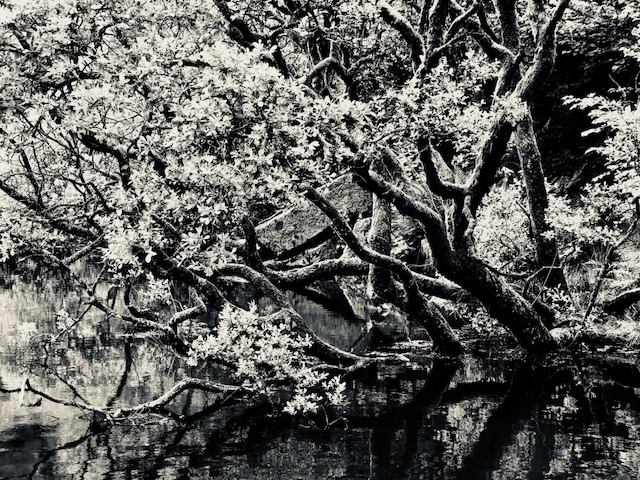
Launching off, I am attracted by the sight of lichen crusted branches reaching out to soothe swollen arthritic fingers in the limpid water. I am reminded of mangrove swamps; an image made all the more real as I peer into the shallows, teeming with tadpoles.

IMG_3745

For here I spy the olive and green form of a horse leech (Haemopis sanguisuga.) Cradled in my palm it writhes and loops before attaching a gaping sucker to my finger. But its teeth cannot penetrate human skin, so I enjoy the moment. A literal connection with nature. Despite it being an hermaphrodite, I decide to name ‘him’ Larry. Larry the leech. And I fancy we are friends as I carefully set him down in the silty mud.

IMG_3977

I swim back to the heart of the lake and float with only my thoughts as company.

IMG_3525-1

On my back. Hands behind my head. Legs crossed. Drifting. Dreaming. Hearing each breath whenever my ears sink below the surface. Feeling the breeze stroking my skin. Floating with the seed heads. And every bit as aimless.

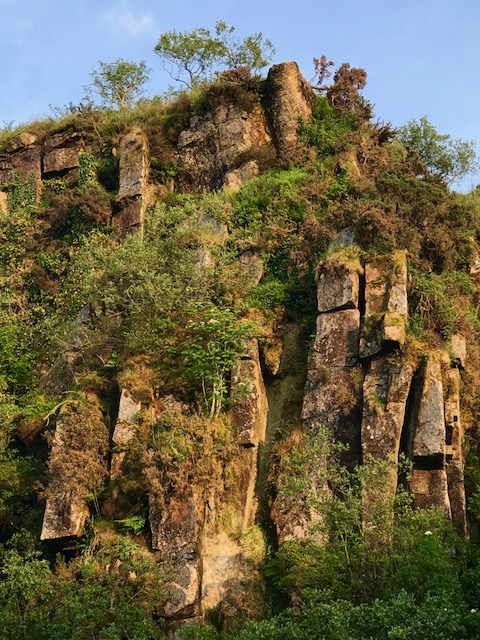
Early evening sun floods the quarry, turning rowan blossom to gold, as shadows slide across the ragged rock face.

IMG_3966

Four frog kicks and I am back in the sandy, stone-strewn shallows. Shorts drying on hot rock. Where ferns unfurl and butterflies meet buttercups.

IMG_3516.jpg

I startle to a call. A cuckoo. Close and loud and lovely.

And there it is. In front of me. Most elusive of birds.

Landing on a weathered post. Tail fanning on descent. Barred underbelly to mimic a sparrow hawk; curse of the meadow pipit, dunnock and reed warbler.

But a gift to me as I watch and hear it call again and again and again. And then an answer; distant but distinct. And another. And another.

As if an orchestra were being conducted.

In this concert hall of creation.


The Medicine of Mothecombe

Mothecombe Beach, Flete Estate, South Devon

November 17 2017

“…as he descended the hill, a sadness came upon him, and he thought in his heart: How shall I go in peace and without sorrow?

Then the gates of his heart were flung open, and his joy flew far over the sea. And he closed his eyes and prayed in the silences of his soul.”  (Kahlil Gibran)

In times of turbulence and torment there is no better tonic than a trip to the beach, moreso with a toddler in tow. And there is no better beach than Mothecombe, also known as Meadowsfoot.

Mothecombe jewell .jpg

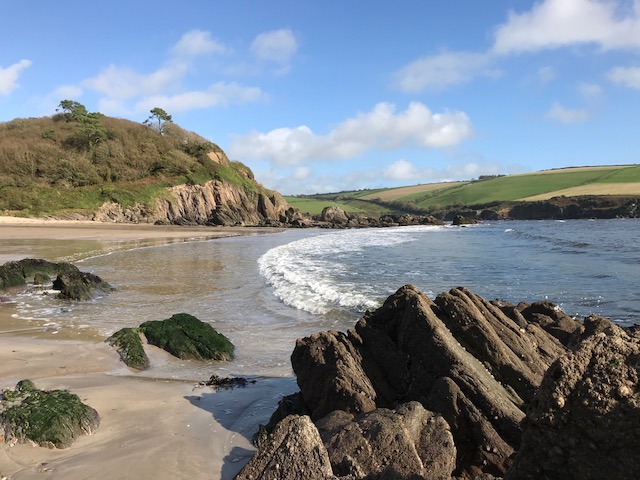
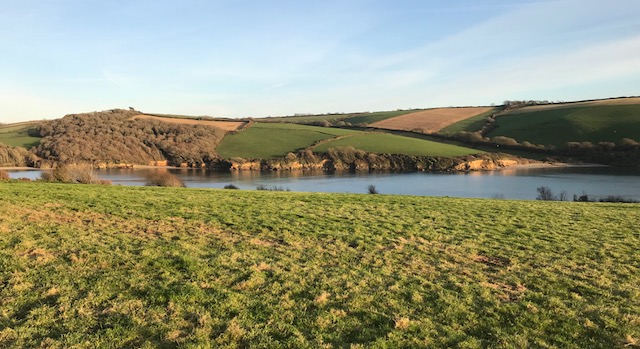
A jewel of a place; hewn from the Devonian slate of the South Hams and multifaceted, reflecting the many vistas of the countryside hereabouts. For within the gaze lie rugged moorland, rollercoaster fields and rustic woodlands that dip down into the timeless tranquility of the Erme estuary.

Mothecombe Rabbit Field.jpg

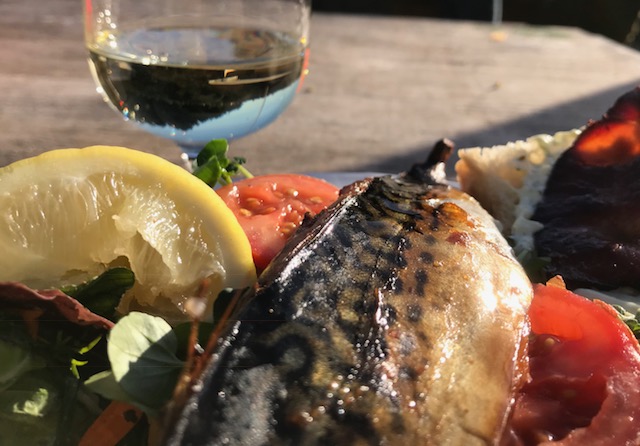
And of course, there is the sea. The soothing sea. The balm of the ocean.  And today, all that is clasped in a setting of the finest gold. For although this is mid November and the air is chilled, the sun has forgotten the season. She shines upon us benevolently as we dine alfresco and enjoy a lunch of local seafood and the gift of a good grape harvest at the Old Schoolhouse.

Salcombe smokies.jpg

The path to the beach crosses rabbit-peppered fields, then dips down through a delight of trees where the last blackberries are withering; their juices long sapped by the onshore breeze..

Mothecombe Wood.jpg

Glimpses of paradise greet us through peephole clearings before the horizon expands and sand at last presses up between our toes.

Mothecombe first sand

As usual we are alone. Access is not particularly easy and in all but the heights of July and August this is a place of peace. A place to swim naked.

IMG_1874.jpg

Today the sweetness of summer hay has passed and the high hedges no longer crush the crested lanes. It is only eight degrees above freezing, but the wind is kind and the sea is slight.

I find a perfect rocky changing room and strip off – albeit a little gingerly! Then the dash to the water; clear as glass and equally cutting. Recent storms have woven ridges and ripples into the sand as I wade up to my waist.

IMG_1907.jpg

A sharp intake of breath. I dive, deep and long into the next wave. Surfacing, I savour the fizzing freshmint feeling of the chill that coils all around me. Impossible to describe. The endorphin rush that I have craved for the past two weeks since my last cold water swim.

My fix.

DSCF5784.jpg

I drink it in – savouring the salt too, for I love its cheeky tang. The tide is rising but the beach shelves gently, so I am never far out of my depth as I relax into my stroke and begin to swim out. Out beyond the breakers. Where I can float and gaze and think and dream. A place of wonder. A place of prayer.

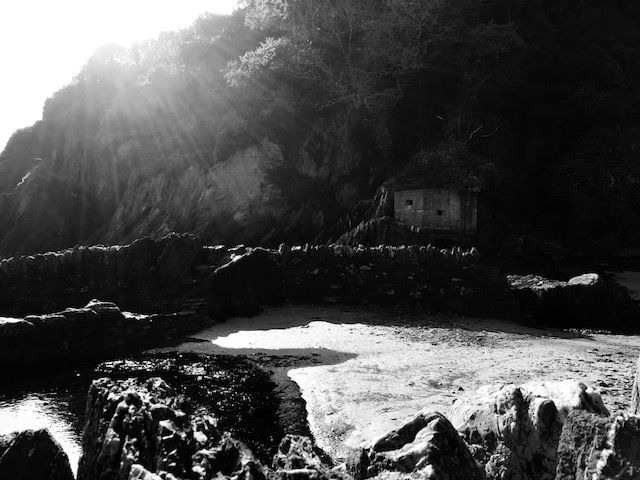
I think of the films that have been set here – notably Sense and Sensibility and Du Maurier’s Rebecca. A beachouse clings to the cliff and beyond, a remnant of war.

IMG_1849.jpg

Here the Home Guard sat and waited for an invasion that never came. And here they blew a hole in the tidal pool. Gently bobbing, I ponder why, but explanations are as sparse as the clouds in the perfect blue above me.

DSCF5795 (1).jpg

Lying still, the water around me warms, but the slightest movement unmasks a concealed chill. I languish longer than I should, gazing at the long-deserted pillbox, imagining the lonely vigil on a wild Westcountry night.

Suddenly my own early warning system jangles into life. My left fourth toe buzzes urgently then descends to numbness. The way it always does when it is time to retreat. I twist into the cold current and slowly swim back towards the excited chatter of my granddaughter.

An hour of precious beachtime memory-making follows.

An hour of discoveries and delights.


Mothecombe sandcastle delight

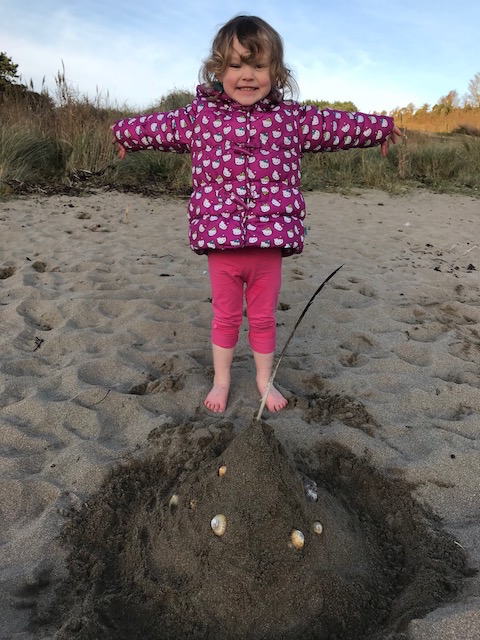
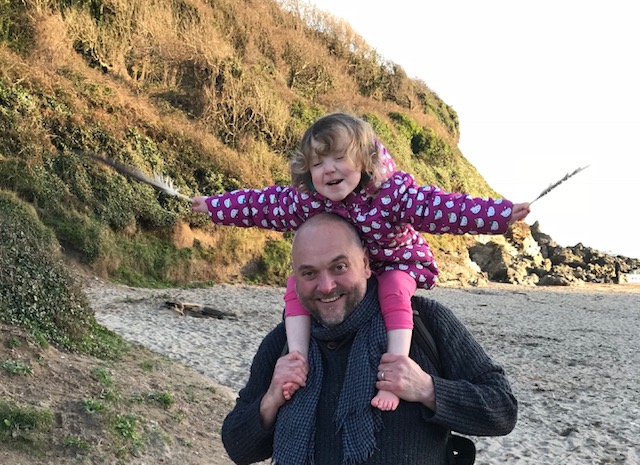
As we begin the ascent towards home, Alexa’s legs falter and she is lifted onto my shoulders. Clutching a feather in each hand, she begins to gently flap her wings. “We will fly back Grandad” she chuckles.

Flying home from Mothecombe.jpg

But I am already far above her – soaring in the thermals. Circling and content in this world of Salcombe Smokies and Sauvignon Blanc. Of sandcastles and shell collections.

Borne up and lifted high by the innocent laughter of a child.


Watch the Wall My Darling …

Lantic Bay, Cornwall

13 August 2017

If you wake at midnight, and hear a horse’s feet,
Don’t go drawing back the blind, or looking in the street,
Them that ask no questions isn’t told a lie.
Watch the wall my darling while the Gentlemen go by.

Smugglers1

Three centuries ago smuggling was the blood that pulsed through the granite veins of Cornwall. A life blood – nourishing and sustaining every part of a poor and lawless county. Few had no trace or taint of this blood on their hands. For some, ‘free-trading’ meant life itself.

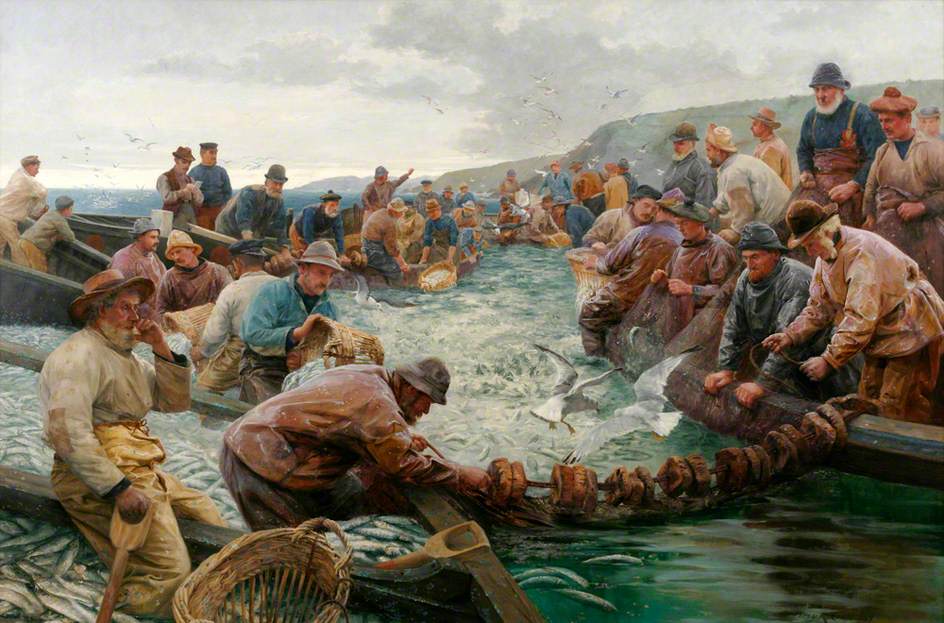
For in many a fishing community, the difference between success and starvation lay in ‘silver darlings’ – fickle shoals of pilchards that swam close to the Cornish coast as summer days began to shorten. Heva! Heva! would be the cry when their silver sparks were spotted and all around would spill into the sea for a welcome harvest.

Silver Darlings

But if the shoals stayed away, the salting barrels remained empty.

A situation made worse by crippling taxes, levied to pay for England’s military campaigns against American independence. Taxes on spirits soared, tea and tobacco became prohibitively expensive. But most serious of all was the crippling cost of salt – forty times its value. And without salt, the fisherfolk could not preserve whatever they managed to catch.

So they turned their sights towards the ocean: towards a new harvest….

Smuggler.jpg

A tax-free trade from France.

Alcohol, tobacco and a host of luxuries, smuggled ashore and spirited away into the Cornish night. A very profitable catch…

And my homeland, the south-east of Cornwall, is soused in tales of smuggling: some tall, some true. Many an isolated cove and cliff-clung community still harbours memories and mementoes of smugglers, long after the tides have claimed their sandy footprints.

lantic last view

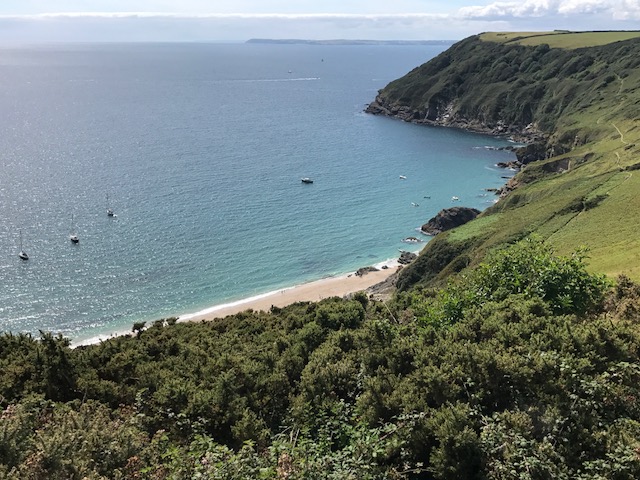
Lantic Bay is such a place. Shaped like the moon that lit the men and mules as they descended the steep footpath from clifftop to shore, this crescent of sand and shingle was a perfect place to land contraband. Inaccessible and almost invisible to the prying eyes of the excisemen.

As I stumble and slip towards the beach in brilliant sunshine and a balmy breeze, I am in awe of the men who trod these paths, in the ebony grip of a midwinter night. Silent and sweat stained. Sinews straining. Stealthy and sure-footed.

And they were many. For smuggling was about communities: covert and close.

Here at Lantic Bay, one hundred smugglers were confronted by men from the Excise. A skirmish ensued and one of the preventive men lay unconscious. But no-one was ever convicted – no one could ever be – not by a Cornish jury!

For everyone had a part to play – squire, parson, publican and magistrate – all stored the contraband that was hauled and manhandled up from the shore. At nearby Talland, the priest was said to raise the dead in the midst of night, so honest villagers stayed away from the churchyard, fearful of the dark shadowy figures seen moving in silent procession towards their ‘resting place’.

At the very least, gentle-folk would turn their backs on the business: seeing nothing, hearing nothing.

Blind eye

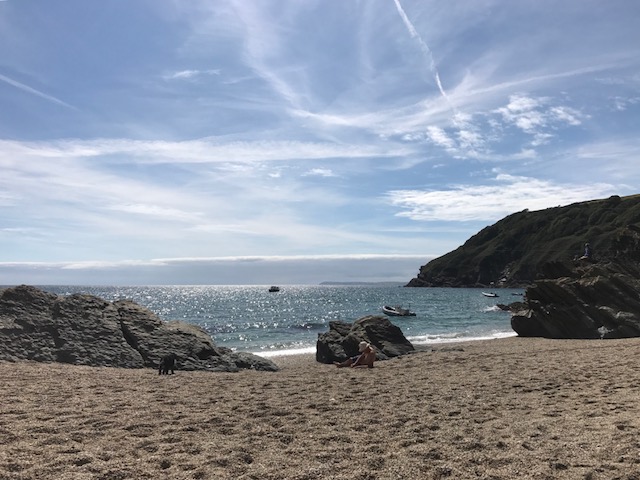
But on this August afternoon, the only sight is the sand and shingle, the sun and the sea. The only sound is a rhythmic lapping along the tideline. The only vessels anchored offshore are yachts gently bobbing in blue waters and today the only danger comes from an occasional jellyfish.

View boats 2

It is a good swim, clear and cool, but caution is required, for rips are common and the sea here should be avoided in all but fine weather on an incoming tide.

TGC swim lantic.jpg

Th beach is quiet. Few venture to this remote place. Lying back on the sand, I drift and drowse in the gathering heat. Creak of wood, flap of canvas, a muffled oar.

So far away ….

Lantic sands

Cry from on high, like a cliff top lookout. I wake with a start! A gull is circling, weaving the thermals like fine french lace.

A westerly wind is gathering and fingers of sand are reaching from the sea to grip the grasses marking my route home.

Lantic Daisies

It is growing late. The cliffs rise above me and, although unburdened by barrel, brandy or baccy, I am still breathless by the time the gorse-sharp track yields to an unfolding softness of emerald grass.

Sitting at the summit, I pause awhile, enjoying the tang of salt and sense of satisfaction.

Lantic Bay from clifftop

And there is admiration too. Admiration for the grit and guile of my my Cornish kin who cheated hunger and injustice.

There is little smuggling here now; Lower taxation, a reinforced Customs and Excise Service and the rise of Methodism put an end to the free-traders.

But their legacy remains and today it is the history of smuggling that brings a valuable cargo to this still poor county – the trundle and tread of tourism.

For in this place of mist and mystery, the muffed murmurs of yesterday still echo all around…

Five and twenty ponies,
Trotting through the dark –
Brandy for the Parson, ‘Baccy for the Clerk.
Laces for a lady; letters for a spy,
Watch the wall my darling while the Gentlemen go by!

[Rudyard Kipling] 


Napper’s Halt

26th May 2017


The 1449 from Buckfastleigh staggers and pants into Staverton Station, disturbing the steady drone of bees and the ripples of heat arising from the baked platform.  There is a steady wheeze of steam and, in this moment, I am sat beside the lines of an Edward Thomas poem…

Yes. I remember Adlestrop—
The name, because one afternoon
Of heat the express-train drew up there
Unwontedly. It was late June.

The steam hissed. Someone cleared his throat.
No one left and no one came
On the bare platform. What I saw
Was Adlestrop—only the name

And willows, willow-herb, and grass,
And meadowsweet, and haycocks dry,
No whit less still and lonely fair
Than the high cloudlets in the sky.

And for that minute a blackbird sang
Close by, and round him, mistier,
Farther and farther, all the birds
Of Oxfordshire and Gloucestershire.

I visited Adlestrop once, but found the station gone, victim to Beeching and all trace erased. But its spirit lives on in places like Staverton. Here, entrenched amidst the undulating fields of rural Devon, it could still be 1914. This a timeless scene, painted in steam, and framed long before the mighty metallic hand of war swept away the old order of life in the country.

IMG_9877

I cross the track, pass a sleepy signalman and head towards the River Dart.

May is one of the finest times in a hedgerow. Adorned in patriotic bunting for Whitsuntide, the red, white and blue of campion, cow parsley and the last blush of bluebells bob in the warm, but welcome breeze.

The leaves and grass are still tender as I follow a track into the woods, all heady and suffused with the scent of wild garlic.

IMG_9889

Crossing via a sluice, I tread carefully along a narrowing, dusty and root-tangled track – eyes peeled for the ‘Still Pool.’
IMG_9939

Peering ahead , I overlook the rabbit hole at my feet, stumble and swear. As I pick myself up, wipe the dust from a grazed knee and glance up, my destination unravels before me.

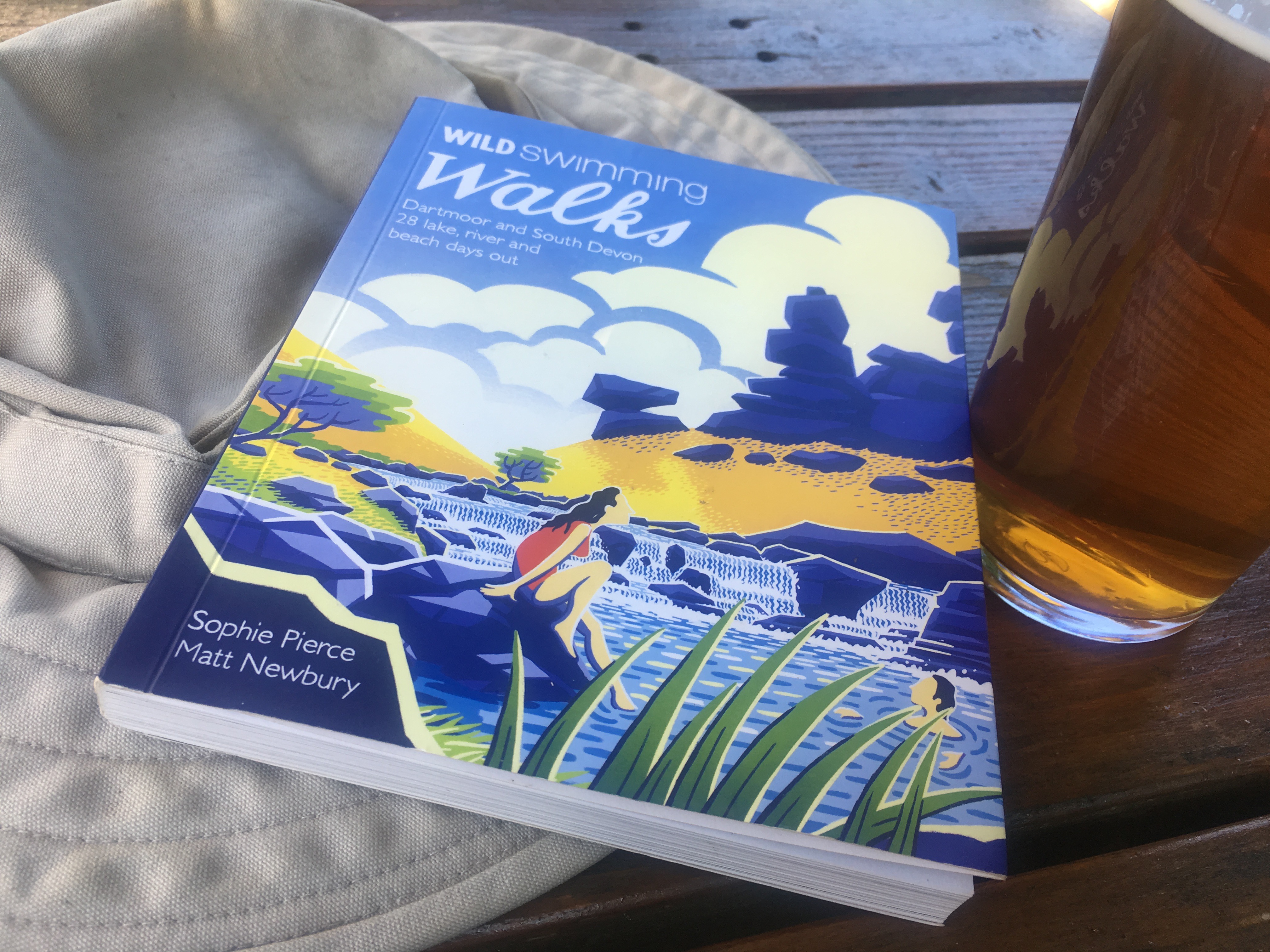
Just as described in ‘Wild Swimming Walks’ – (my guide for the afternoon) – this is “a swimming hole straight out of a Mark Twain story.” I scramble down the bank to a small sandy beach. Here a myriad branches have been dashed to matchwood by the wild spates of winter, but they provide a soft spongy descent into the Dart – welcome relief from the usual slip, sliding stones that guard this river.

IMG_9902

Along the warm and rippling edge, the water has the hue of an Islay malt – and all its peatiness too. Deeper, the river turns dark and pulls with a cold embrace – welcome under these cloudless sun-seared skies. A sheen of insects hurry about the shimmering surface, scooped up from time to time by a swooping swallow.

DSCF5688

Oak, my spaniel, sets off ahead of me. Stick in mouth, ears streaming behind, he cuts through the current with ease. I drop my clothes and chase him – and soon we are swimming side by side – gliding through a kaleidoscope of colours and temperatures as we head for the far shore.

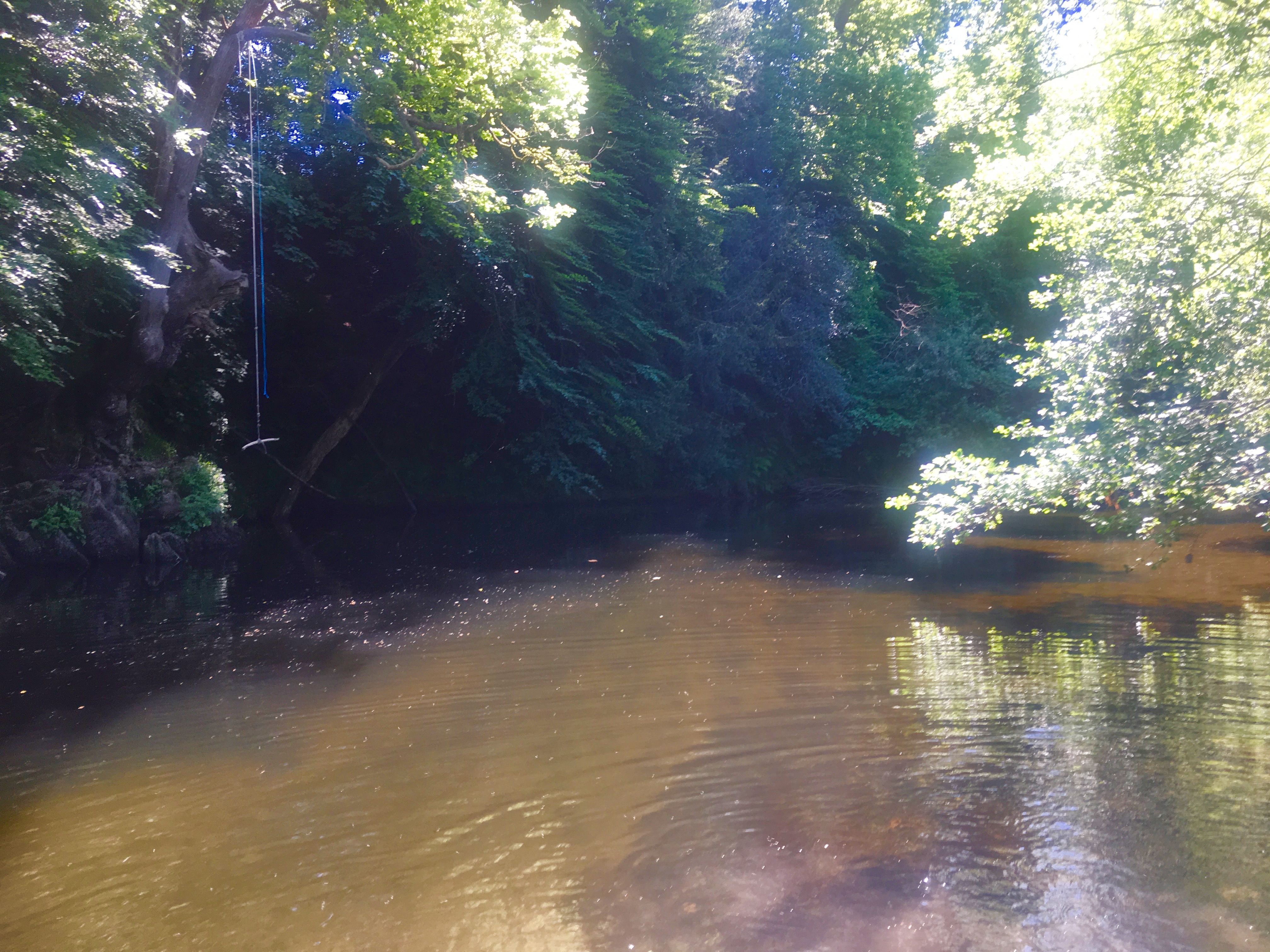
DSCF5650Here, steps have been fashioned into the bank by generations of children and a swimming rope hangs from an gnarled oak tree.
IMG_9903

A rocky outcrop marks a rite of passage for local youths. I hesitate, then leap into the water – black and cold as newly dug coal.  My feet just touch the river bed before I am torpedoed back upwards – expelled by the dark mysteries of the depths. Spat out. My eyes are open as I watch the dawning light of the approaching surface, before breaking back into the air in an explosion of breaths and bubbles.

DSCF5674

We swim upstream and glide lazily down – me on my back and Oak circling – endearing but abrasive, his claws frequently scouring my flesh. There is birdsong and blue skies. Nothing else touches our world as we drift.

DSCF5655

Rolling over, I see that a young woman has arrived at the beach. She lays her towel down, undresses to her underwater and lies in the gaze of the heavens. Her eight year old daughter tucks her dress into her pants and paddles in the shallows – discovering a plethora of wonders and delights. There is a beautiful innocence and simplicity in this scene and I am loathe to disturb them. But after a further thirty minutes I shudder and know I must return to the sand. We smile, a little awkwardly, before she discretely paddles in to collect pebbles – saving embarrassment as I change on the shore.

IMG_9905

Downstream, a group of teenagers are celebrating the start of half term – and a respite from examinations. A splash then a cheer; their May revelries ring out – as they always have. Thomas would have known such scenes a century ago. River joys….

Apple finished, guide open and back to the dappled path, long grass and humming orchard that lead to nearby Napper’s Halt. Distant whistle in the valley and a ring along the tracks. I have just enough time to tie Oak to a post for fear that he will startle. And then the engine is upon us, driver grinning down as gleaming wheels glide by, inches away.

IMG_9943

We exchange greetings and he is gone. All is countryside again, save for the waning whine of the rails – a soft, slow slip into silence.

Climbing the lane, past church and courthouse, I arrive at the Sea Trout – a 15th Century inn where a cool beer provides an antidote to the late afternoon heat.

IMG_9929 (1)

The breeze ruffles my pages as I begin my quest for the next swimming adventure.

IMG_9926

From the steeple, five sonorous chimes.

A blackbird replies.

There is no place I would rather be….

_______________________________________________________________


War-poet-Edward-Thomas-ph-009


Edward Thomas was killed at the Battle of Arras in April 1917.

His memory is carried on the birdsong of the Cotswolds 

______________________________________________________________


The Talland Boiler

Porth Tallan

October 26 2014


It is not the sight of the sea, but the stench of the seaweed that takes my breath away as I round the last steep bend into Talland Bay.

Black, russet, amber and brown. Heaped high and shining in the lazy drizzle of an October afternoon. The putrid reek claws at my throat and I swallow hard.

Beyond, under a grey sky, lies a small grey beach that grates and groans to the rhythm of a grey sea, skulking skywards into a grey mist.

All is grey. All is grim.

My spirits are damp as the day. Heavy as lead.

This is far from the scene I imagined: Quiet, unspoiled, beautiful; an Aegean idyll in South East Cornwall …

fullsizerender


I slip, trip and slide across to the rocks that slice this smuggler’s haven in half – Rotterdam Beach to the east and Talland Sands lying westward. Here, at least, there is colour in a scattering of deep, crystalline pools.

dscf3293


But little life – the anemones are closed on Sunday and, like a parson at the door, a hermit crab peers blankly out. An occasional shrimp flusters by, then all is still again. Limp and languid and lifeless.

Clambering on, I finally spy the reason for my visit. Exposed by the lowest tide….

A rusted boiler.

fullsizerender-1


All that remains of the ‘Marguerite’ – a French trawler who lost her bearings during a south-westerly gale in March 1922 and foundered on the rocks. Heavy breakers crashed over the doomed vessel, but the crew of 21, including a ten year old boy, were all rescued by the lifeboat ‘Ryder’ thanks to the skilled seamanship of Coxswain Thomas Toms. The locals also tried to ‘rescue’ the 50 tons of fish on board – but were distressed to find that the prized catch had been turned pink by carbide contamination from the ship’s lighting!


The clouds are lifting a little now and, like a crack in cast iron, the horizon reappears as a sliver of ochre. The wind is rising with the tide and I sense that the opportunity to swim will soon fade with the day.

Returning to the sand and shingle, littered with pebbles of pink and purple, I avoid a recent rockfall and toss my clothes away from the reach of the sea.

Where a wonderful calm sweeps over and suffuses me. A warm, silky saltiness that triggers a relaxation response as intense as it is instant.

dscf3326


The sea always feels like an intimate friend and so, although I often swim alone, I never feel lonely. There is both a delicious freedom and a tender togetherness in swimming out and out. In rising and falling with the swell. In being a creature of the deep.

I can understand why Peggy Oliver wrote:

‘..Where salt breezes act as balm

To my troubled mind to bring me calm.

And so when times are hard to bear

I dream that I have journeyed there

For every single worldly care

Can cease at Talland Bay.’

My solitude is shattered by a group of girls. Students I would say. They appear from nowhere, swim around me for a few minutes in an excitement of chatter, and, like a pod of playful dolphins, are suddenly gone again.

All is silent and special once more.

It is just me and the waves.

dscf3341


And the distant tower of St Tallanus.


Polly Joke

Porth Joke 

July 30 2015

Sometimes a name in itself is sufficient to invite exploration.

Polly Joke is such a name.

As soon as I saw those words in my ‘Secret Beaches of the South West’ guide I knew that I would go there.

The detail did not matter. The name did.

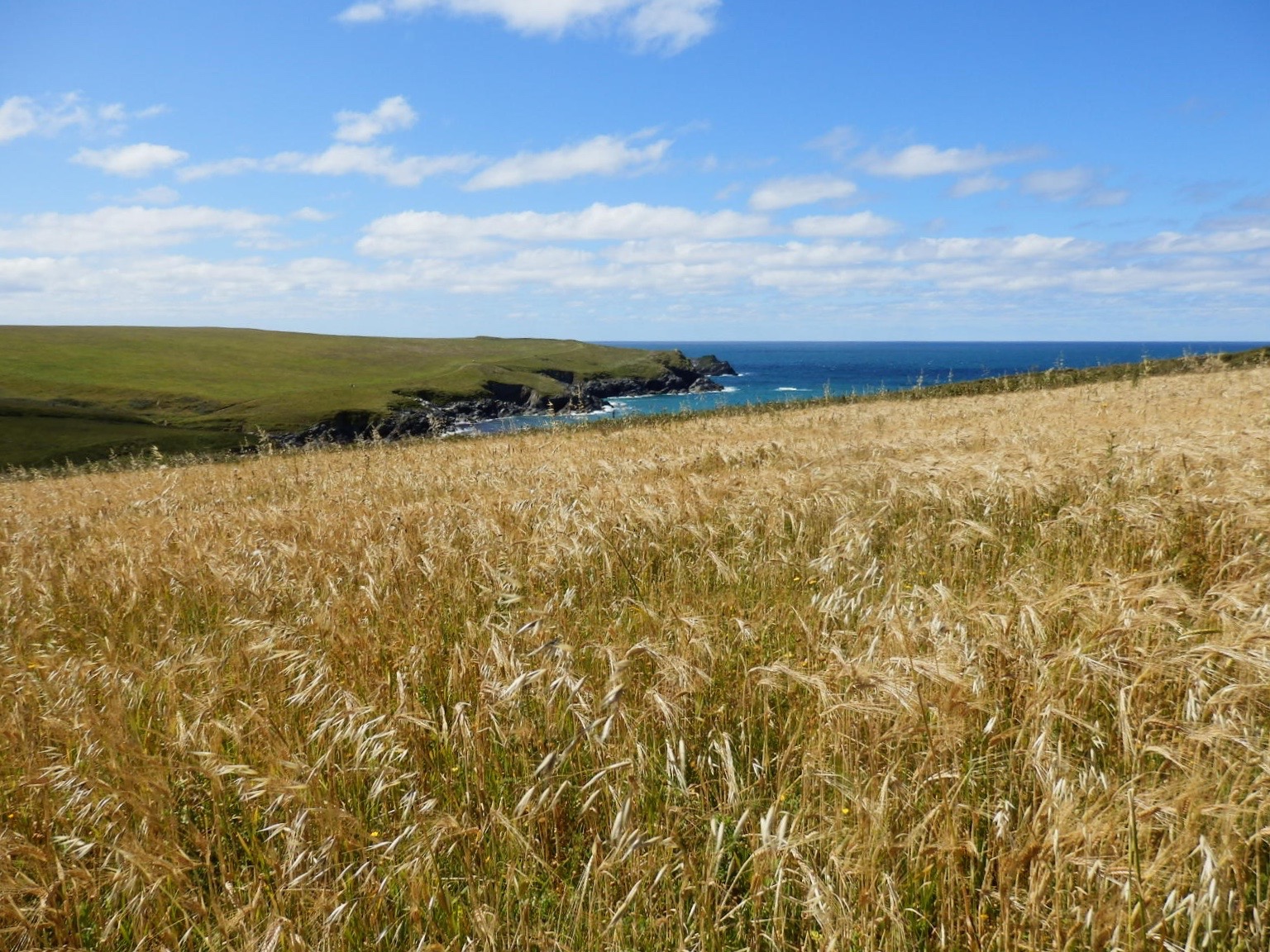
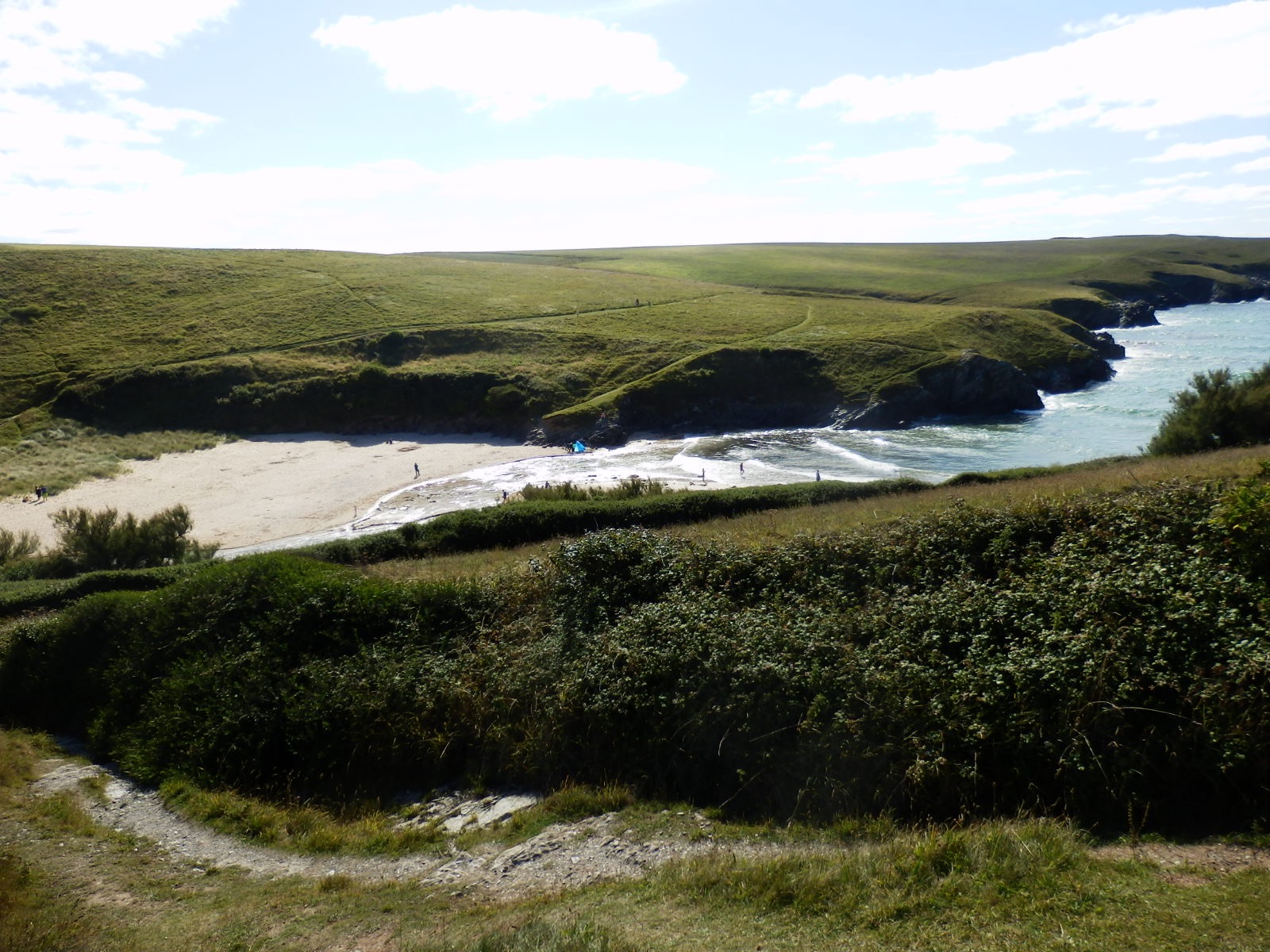
So on a sun-soaked afternoon in late July, I find myself parking in a field and stepping out on the half mile trek through poppy-peppered cornfields, rolling downwards to the sea.

OLYMPUS DIGITAL CAMERA

Polly Joke is a name of endearment and familiarity, used by the locals. But to most this is Porth Joke; a north westerly facing inlet beach between the prominent headlands of Kelsey Head and Pentire Point West on Cornwall’s Atlantic coast. Completely undeveloped, this is a natural gem; geographically only a handful of miles – but galaxies apart – from nearby trendy Crantock and the crass commercialism of Newquay.

The walk to the beach is also a thing of beauty, passing blackberries that are beginning to swell with Autumn promise, graceful grasses and golden grain. Bees, bugs and butterflies abound.

OLYMPUS DIGITAL CAMERA

A gentle drone and rhythmic breaking of distant waves – their crashes; a ragged remnant of a recent unseasonal gale.

DSCF4849

For the last hundred metres of my descent, the business of bees is gradually replaced by the clamour of children and I realise that I will not be alone this day.

OLYMPUS DIGITAL CAMERA

How naiive to think I would, for this is peak season. But nonetheless, there is no feeling of crowding – no confusion of windbreaks – no radios – no barking dogs. Just a happy murmur of childhood, softened by an Atlantic lullaby.

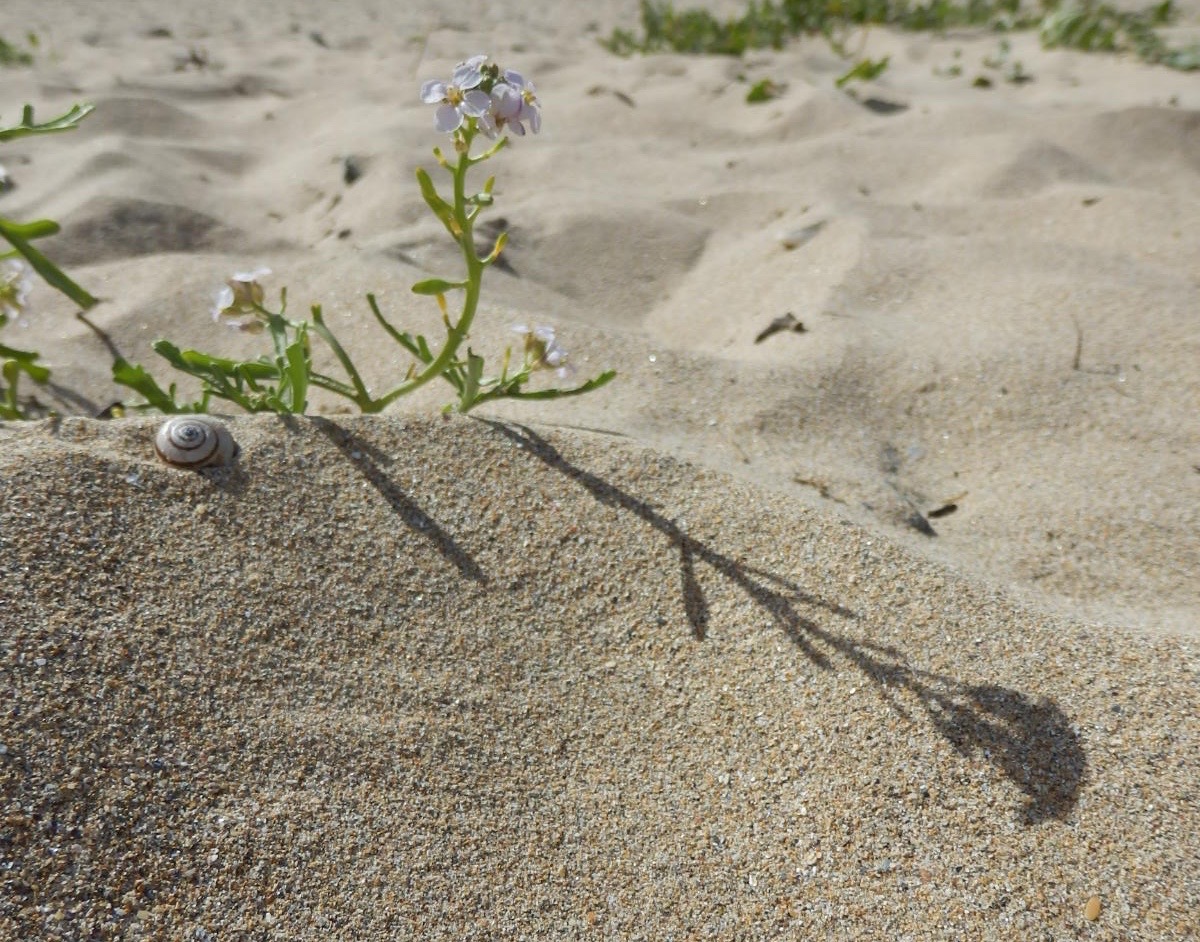
Crossing the chilled stream that traverses the apex of the beach, I choose a spot on the edge of the dunes – all marram and thistle and wisps of hot sand coiling to the tune of an onshore breeze.

OLYMPUS DIGITAL CAMERA

The general advice at Porth Joke is to avoid swimming except in the calmest of conditions and then only on the rising tide. This is on account of the strong swell, lively surf and strong rips that feature prominently in the cove.

But today, despite a recent force 8, the swell is manageable and the tide rapidly consuming the vast, almost flat expanse of sand, so I wade into the gorgeously warm (18.5C) and clear waters.

OLYMPUS DIGITAL CAMERA

Heading out, through a straggle of weed and past a handful of optimistic body boarders, I am soon swimming alone in the surf, which is lively and playful.

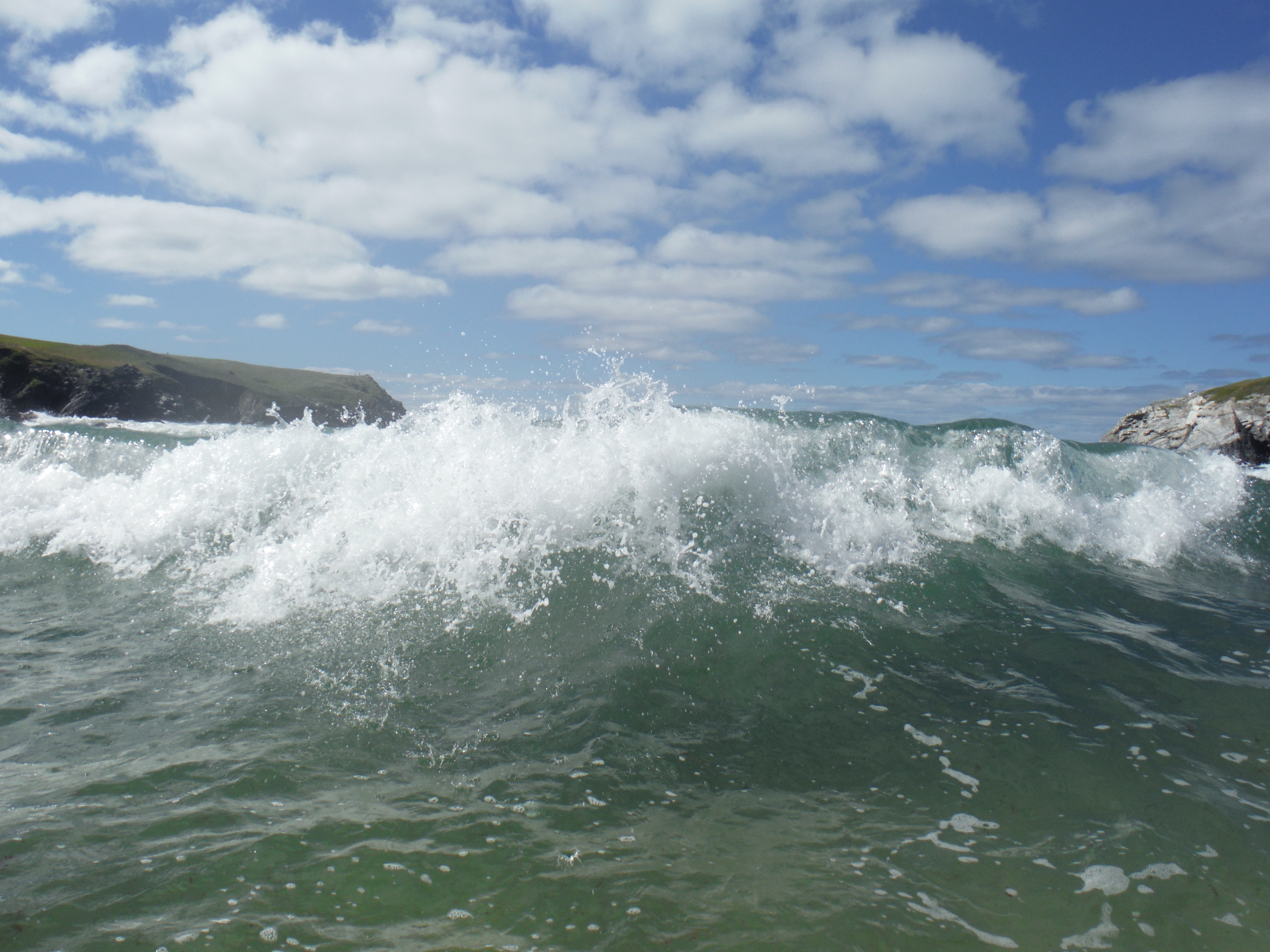
I dive into the first wave; indigo at it base and rising through turquoise to the purest white foaming crest.

DSCF4832

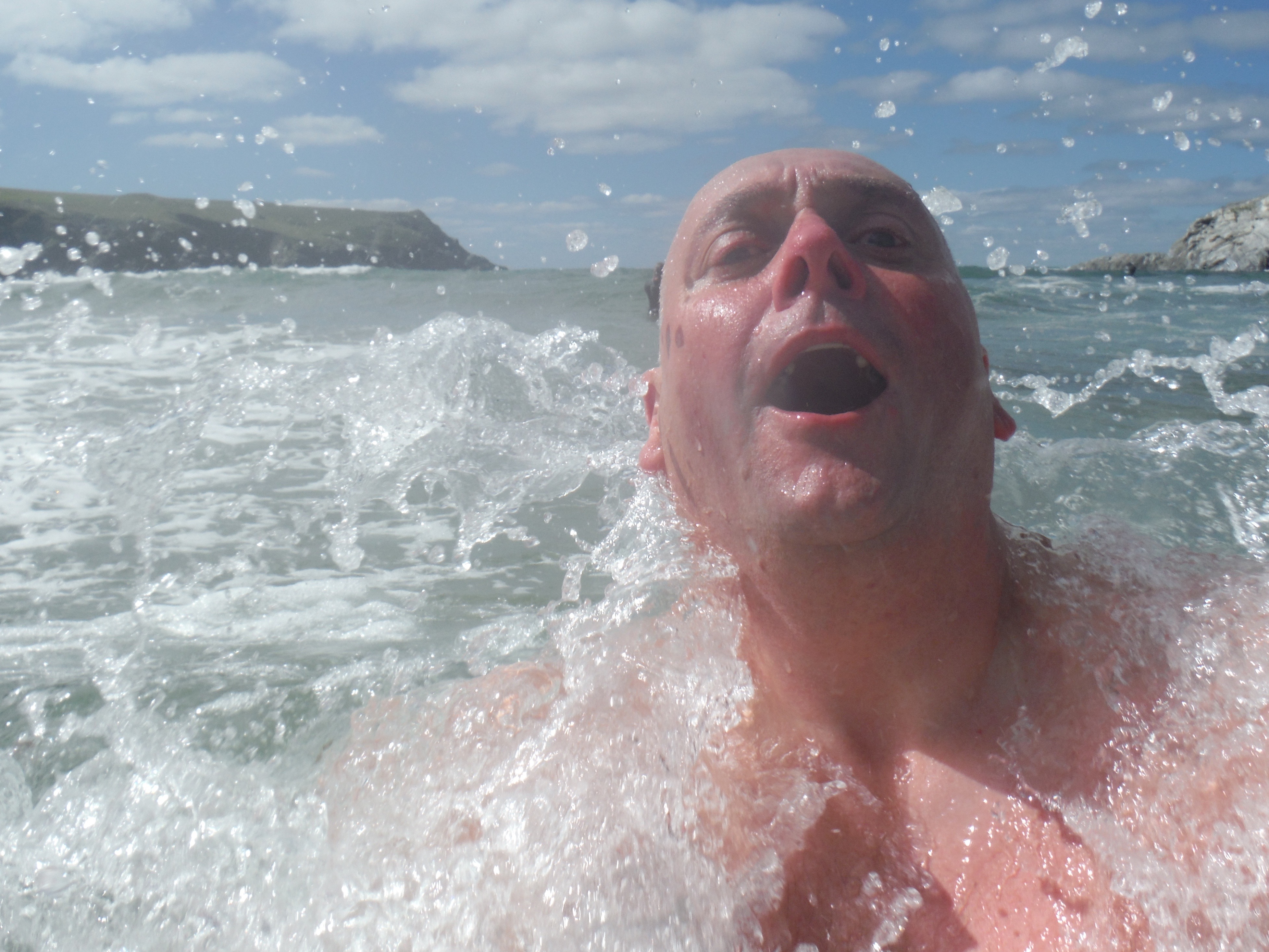
Tossed about in its heart; powerless as a grain of sand, I break free from its grip and explode back to the surface.

DSCF4840

My sense of conquest is short-lived, for I am instantly battered around the back of the head and flung forwards by its accomplice – stealthily creeping up on me from behind.

DSCF4842

I feel salt gush into my nose and mouth, see a kaleidoscope of spinning blues, hear the rush of the wave above me and the shuffle of sand below. …before I again escape and rocket back into fresh air.

And it feels so good. Like a toreador, I emerge to face the relentless charge again and again …

DSCF4838

An hour surges past like the relentless breakers, leaving me bobbing in a timeless place.

The beach has contracted and a trickle of families are embarking on the uphill trek towards home.

I face the shore and launch into each advancing wave, surfing on my stomach until the water is again shallow, warm and tranquil.

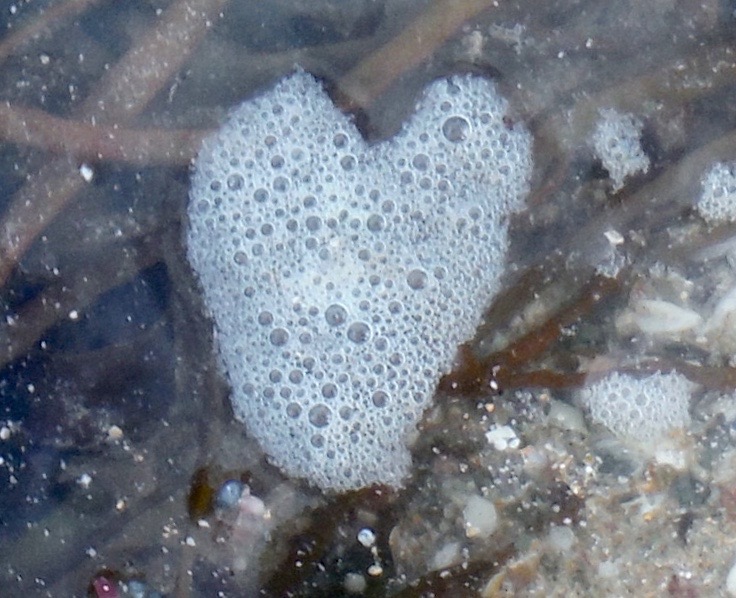
And where sea and river meet, amidst the turbulence and change, I see a shape outlined in foam.

Perfect …

DSCF4851

Singing the Body

Meldon, Dartmoor

September 20 2014

‘… but when I try to imagine faultless love, or the life to come, what I hear is the murmur of underground streams, what I see is a limestone landscape.’  (WH Auden)

OLYMPUS DIGITAL CAMERA

Meldon has a story rooted in limestone.

On the northernmost fringe of Dartmoor; where the roughness of granite yields to rolling pasture and where, on a fair day,  the horizon widens to embrace the sea, the hamlet of Meldon is best known for its quarries.

Today, ballast for the railways is still excavated from one site, but beyond this, through woodland and under the vast spans of a viaduct, rests a peaceful place. Where drills and powder, tares and feather have long fallen silent. Where quiet has replaced the calls of the quarrymen.

meldon men

At Meldon lay a deposit of limestone, sandwiched between layers of hard, flinty chert. Being quite distant from the coast, there were no ready supplies of seaweed and sand to nourish and neutralise the peaty, acidic fields. So lime was quarried, kilned and spread to ‘sweeten’ the soil hereabouts.

Excavation began on a small scale in the late 1700s and by the time the quarry became exhausted, early in the 20th Century, a two acre crater, some 130 feet deep, had been gouged from the ground.

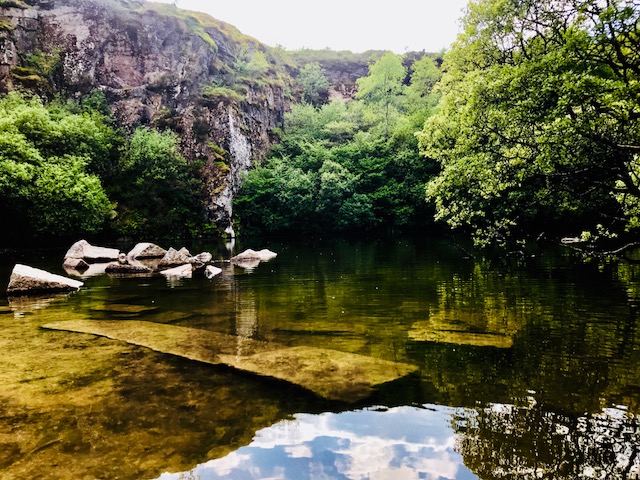
With time, moorland rains and Auden’s murmuring streams poured balm into the earth’s wound and today this quarry offers one of the finest swims on Dartmoor.

Or so the wild swimming sites proclaimed – with pictures reminiscent of a Mediterranean idyll; all sunlight and serenity.

DSCF2427

To be honest, I had never really believed that colour. It seemed too vivid, mystical, unearthly. Certainly it was unlike the night-sky blackness that envelops the swimmer in most moorland pools.

_______________________________

So, it’s with towel and a generous portion of scepticism stowed in my rucsac that I head for Meldon on a sultry Sunday afternoon in late September. Marley Bone is clearly as intrigued as me, for he leaps out through the car window before I have even parked. A bark of surprise and bemused face in my wing mirror shows that he has forgotten the harness he wears in the car, but his tail is still wagging as, gently swinging, he awaits rescue with an air of patient trust.

OLYMPUS DIGITAL CAMERA

Emergency over, we head downhill, passing dense bracken and spoil heap fingers that grasp the hillside. The bronzed hues of early Autumn are painted here and there and skeletal remnants of rosebay willow herb loom up beside the gnarled remains of a long dead hawthorn. Thistledown trips along the ground. Wisps of cloud follow suit in a deepening sky.

OLYMPUS DIGITAL CAMERA

The air hangs heavy with the drone of bobbing bees and I begin to doubt my direction, for there is no lake to see.

Finding a bridge, I cross the West Okement and moments later, through a parting of trunks, it is there.

DSCF2471

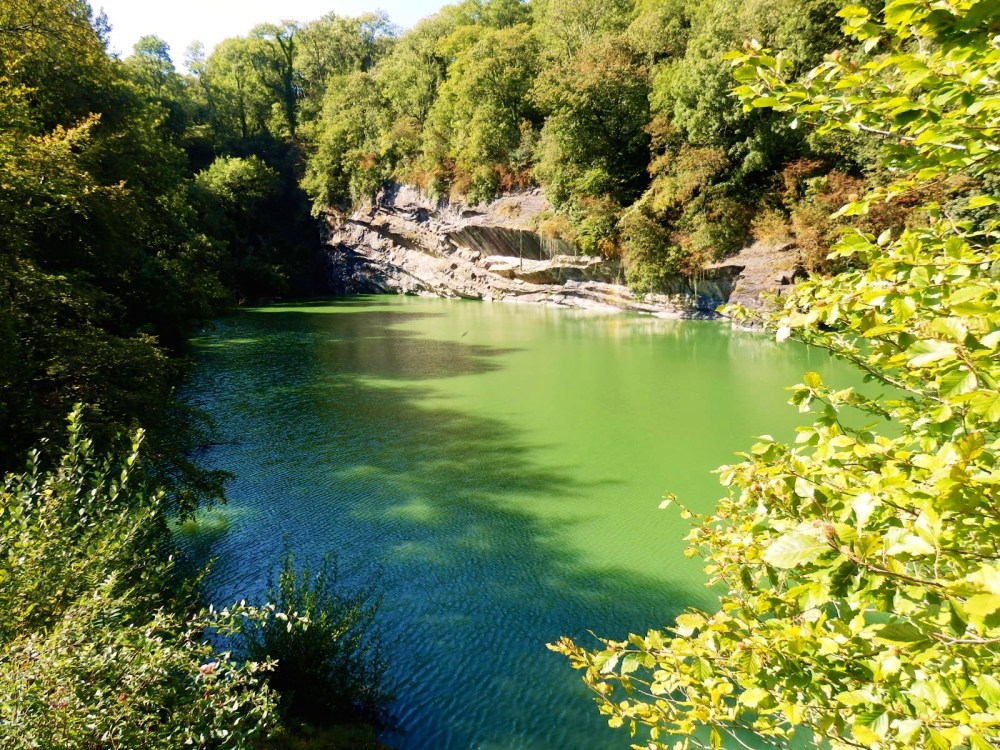
Tree-ringed and pretty as the proverbial postcard. And that colour! It was true…

So intense that I can only sit in awe – absorbing what I had failed to believe.

DSCF2478

Scrambling down through scrub and sending a cascade of stones into the water, it’s clear that the pool is instantly deep. No gently shelving entry here: In or out – all or nothing.

DSCF2504

So in it is …

And how good! For the heat of a long summer has suffused these green waters. Dragonflies and a swooping wagtail become my crewmates as we set off on an exploratory voyage; traversing the length and breadth of the lake.

OLYMPUS DIGITAL CAMERA

Voices above send me into a grove of trees that dip and drape into the water on the far bank.  I shelter amongst shadows where all is still and stagnant. Like an alligator floating with eyes barely crowning the waterline. This is ‘Deliverance’ without the duelling banjos.

DSCF2378

The voices pass and silence floods back into the quarry. Leaving my lair, I slide back out into the sunshine, into the heat and light that is focussed by the lake as if through a magnifying glass. I dive down, through a palette of greens that change from sage, through emerald to bottle as I probe deeper into the opaque water. Rising back, to float lazily at the heart of the pool, I am reminded of a more sombre day.

DSCF2422

A day back in 1936; when a local man went missing and was believed to have drowned in the murky waters of the flooded quarry. But no corpse had been found so a decision was made to ‘sing the body.’ This was a traditional practice on the moors whenever a drowning occurred but no trace was evident. It was believed that by singing sacred songs at the water’s edge, the body would be attracted to the surface where a Christian burial would be waiting.

So a choir from Okehampton was duly assembled. Hymns were sung, psalms chanted and prayers said over the waters of Meldon.  Within a few days the corpse was found floating on the surface – the last recorded occasion of a body being ‘sung’ from the depths.

To my left, a sudden splash!

Excited shouts…

DSCF2395

Three lads have clambered onto a ledge of chert far above the water. Here a sloped overhang, created by the undercutting of limestone, towers 40 feet above the lake. This is the site of the ‘Meldon Bomb’ – as infamous as it is dangerous – for, from this height, any dive that lacks needle-precision is potentially lethal.

I can almost imagine the spirits of that 1936 choir assembling once more beside these virescent waters…

I feel a shiver. I’ve been in the pool for over an hour, so set off for the steep bank that leads to a towel and picnic.

From my new vantage point high above the lake, I see a shimmering surface and shadows of sycamore in the dryness of the dust.

OLYMPUS DIGITAL CAMERA

But in the breath of a breeze, an occasional crusty leaf drifts across my gaze.

A sign that all must change.

For these languid days of summer stand numbered now …